

Summary
So what did we think of Ireland and the new van?
Firstly, I should say. These are our notes, for us, so we remember what we thought of the trip. We’ve put them on the blog in case it’s useful to anyone else. It is not a place of literary excellence or riveting reading. You’ve been warned!
And I should add that where we express thoughts on Ireland then it should be remembered that these are just our observations after only a very short, three-week visit.
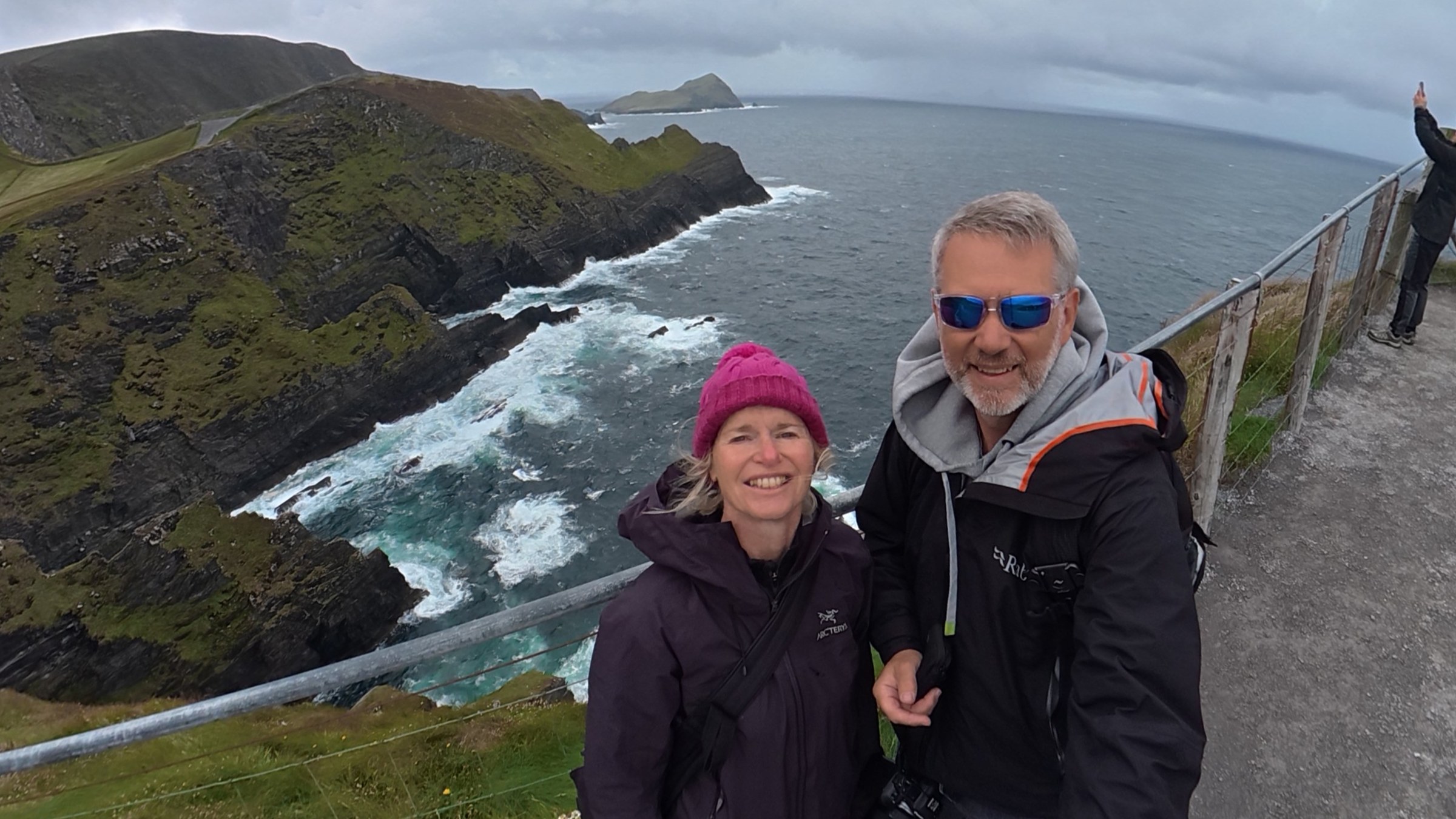
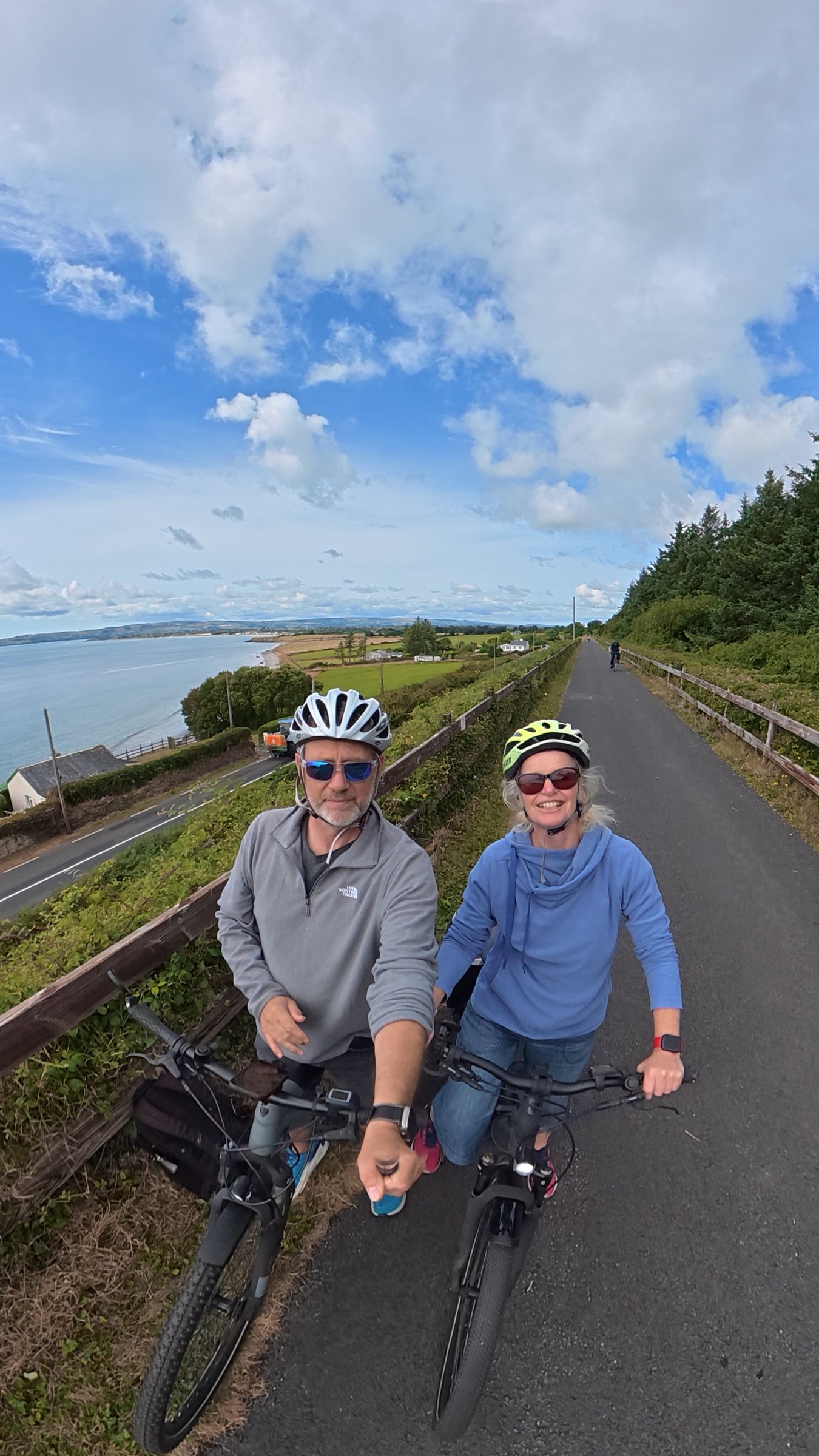
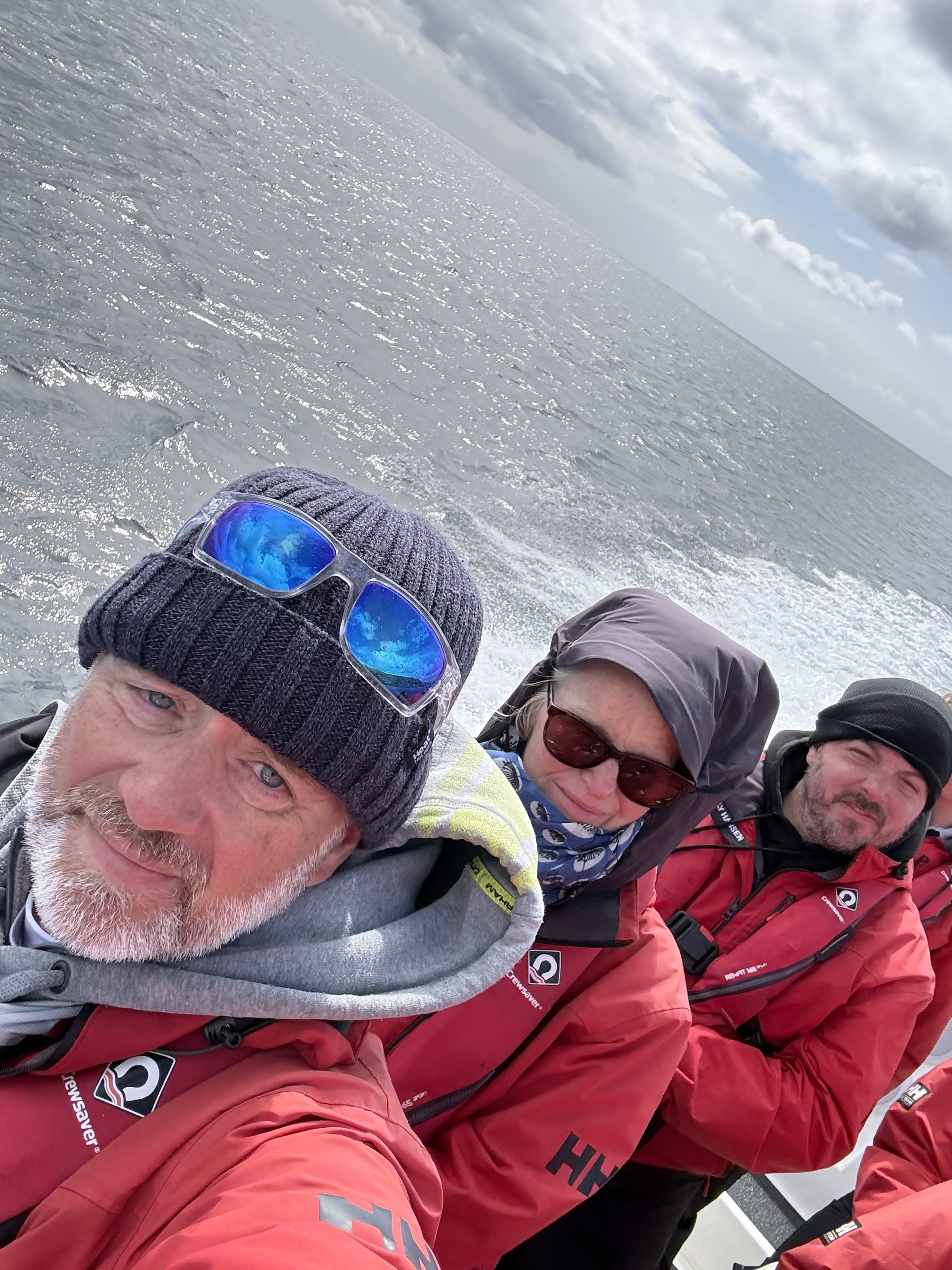
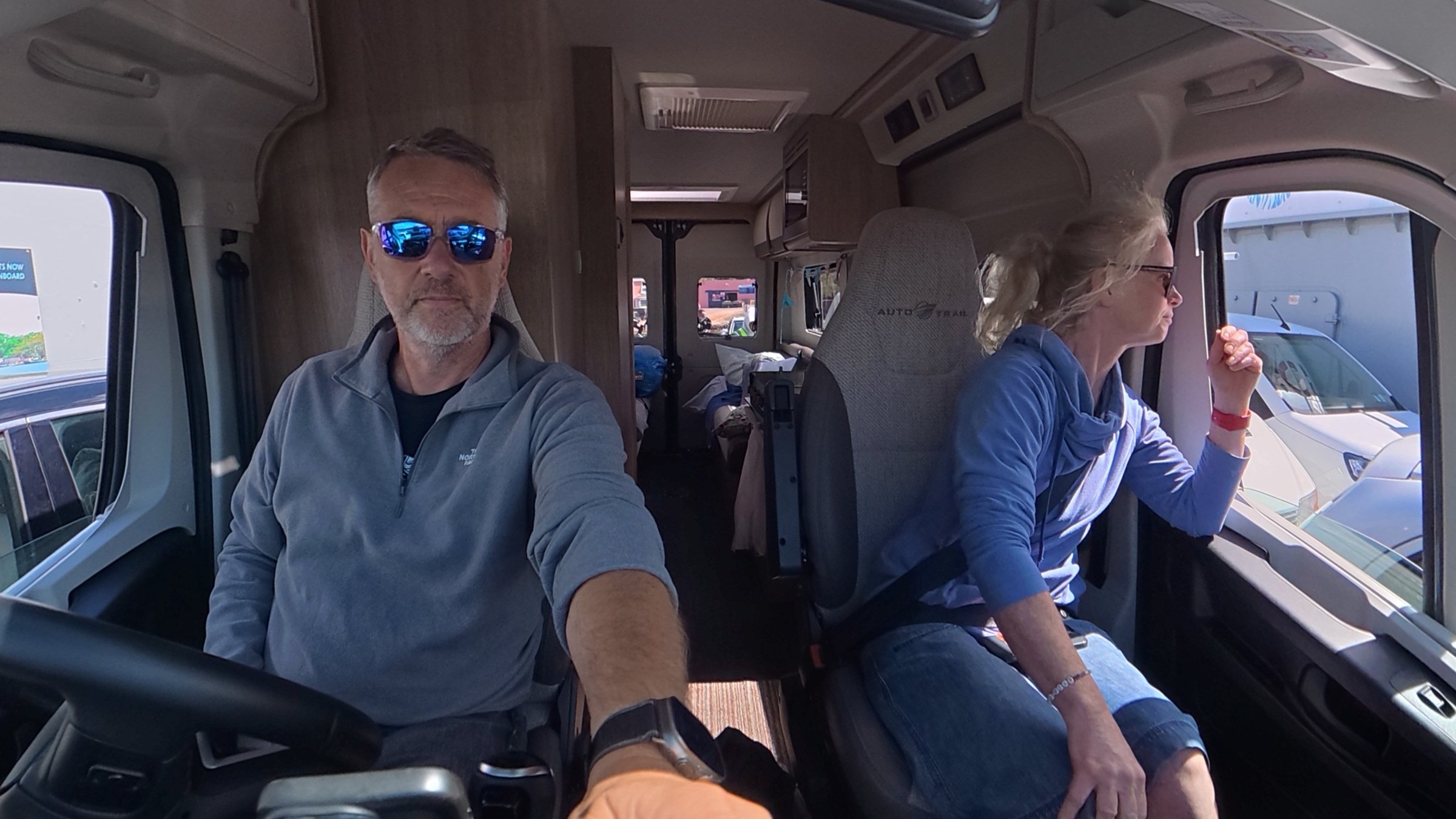
The Trip played out with a few Obligatory Selfies
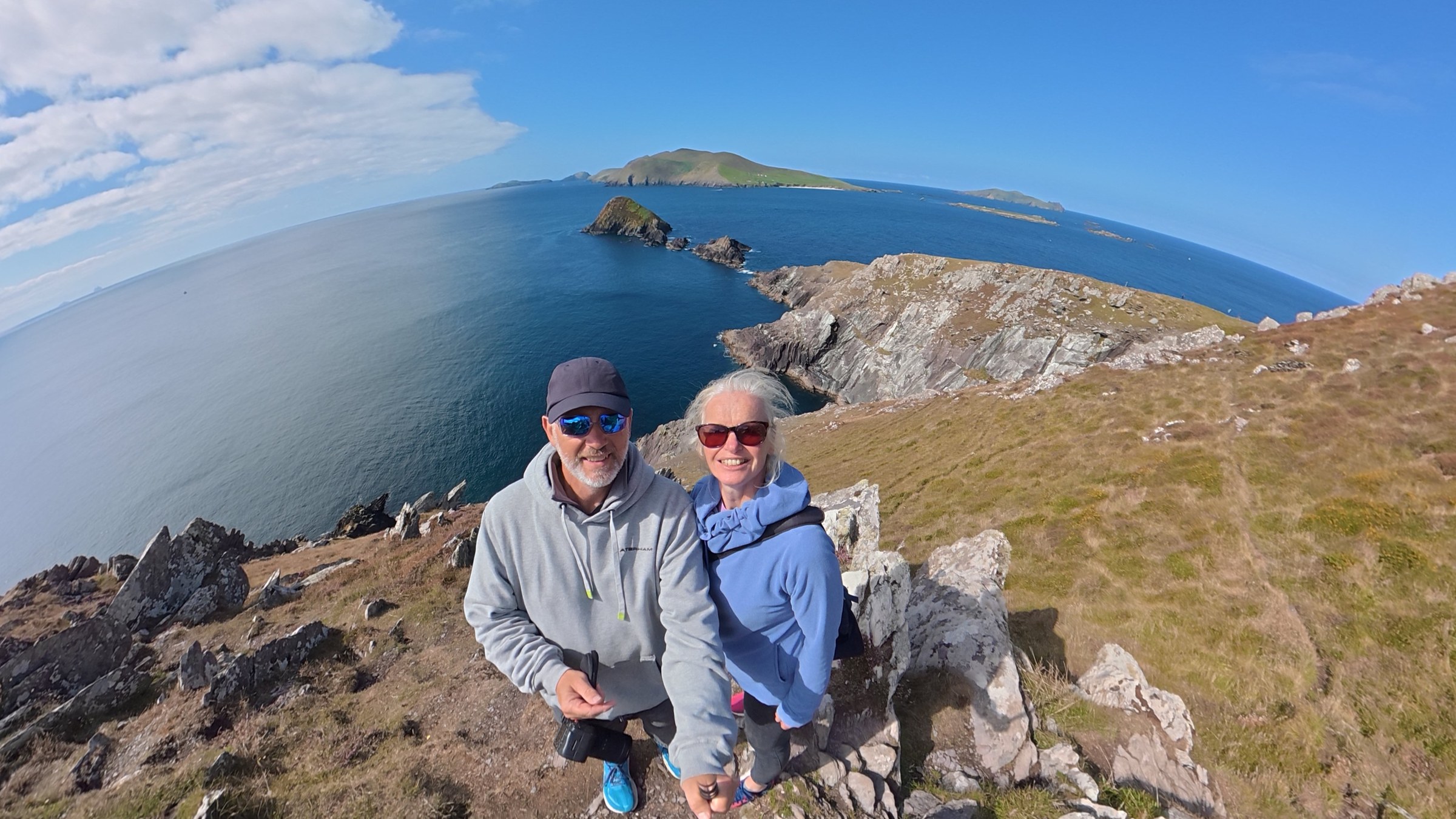
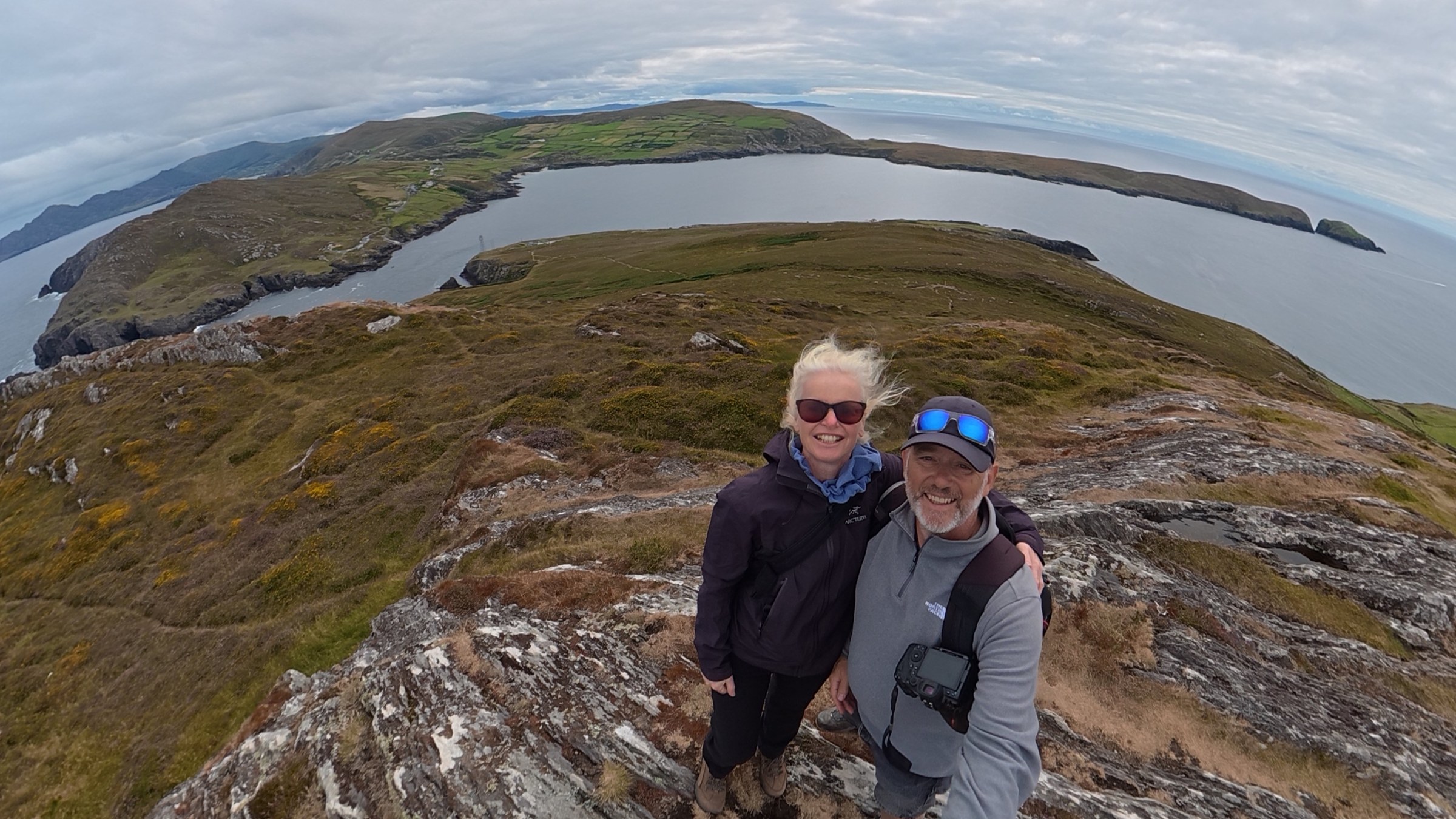
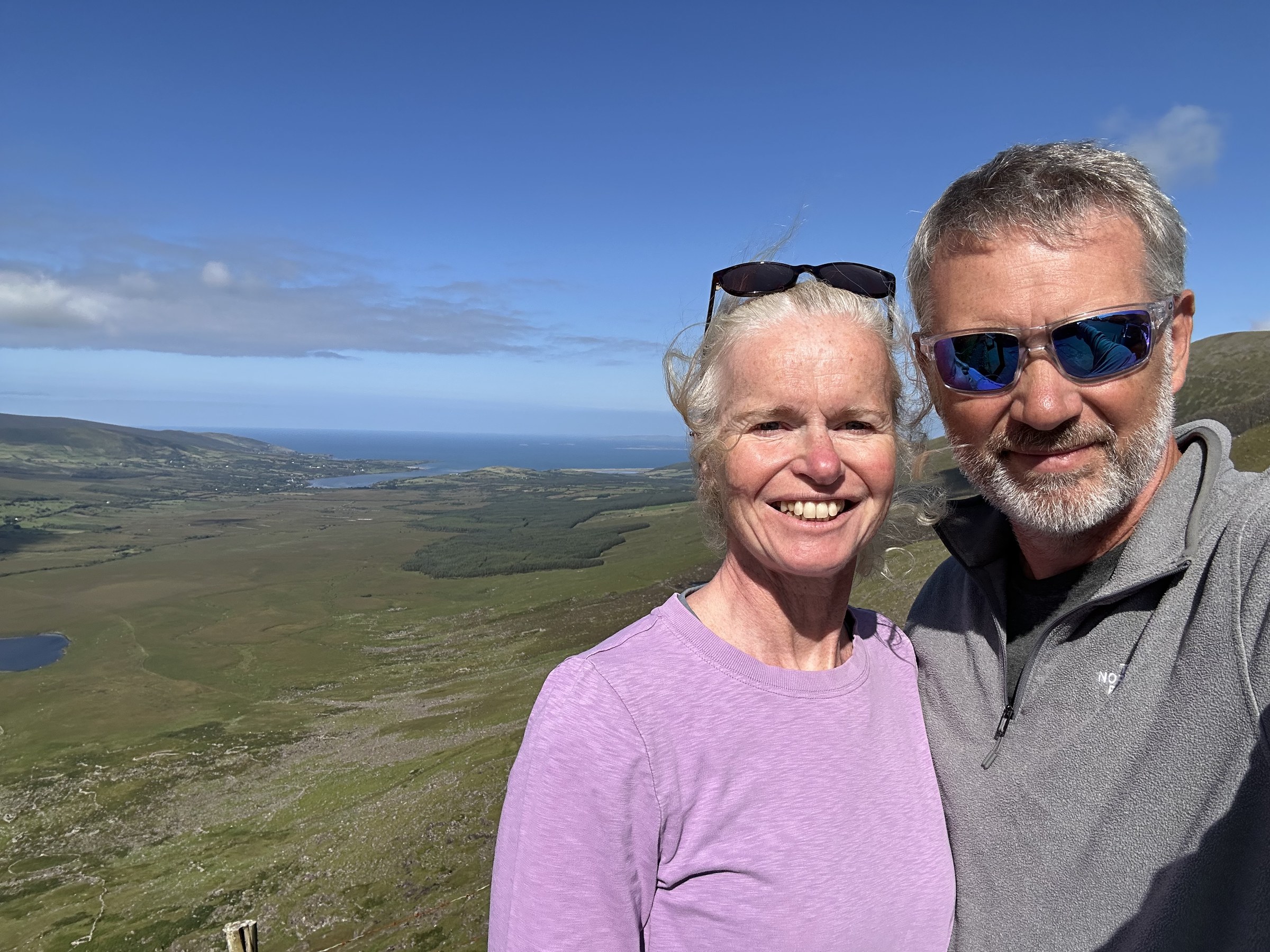
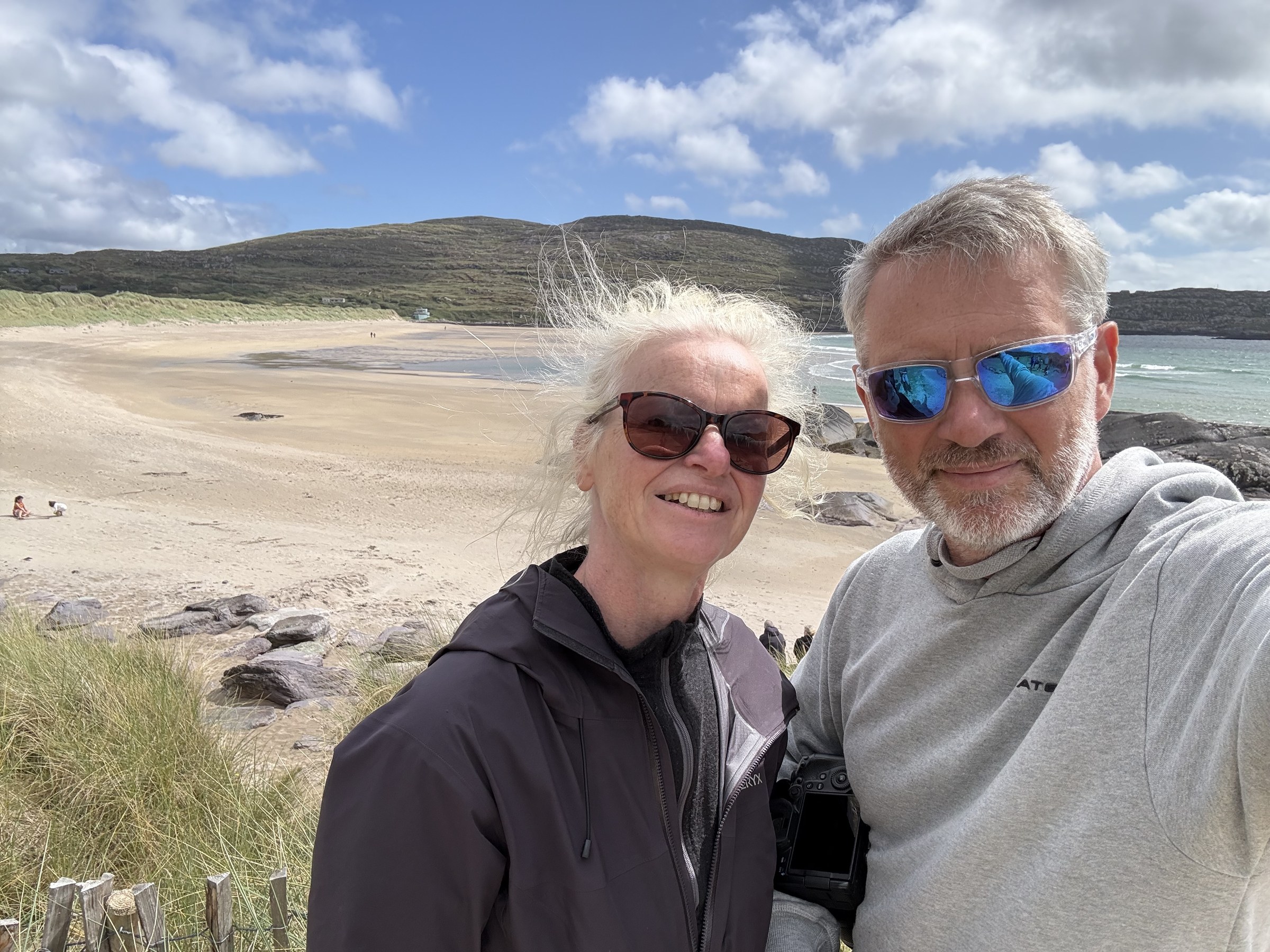
And so to the trivial rubbish: my (our) thoughts on the trip.
Some overview stuff:
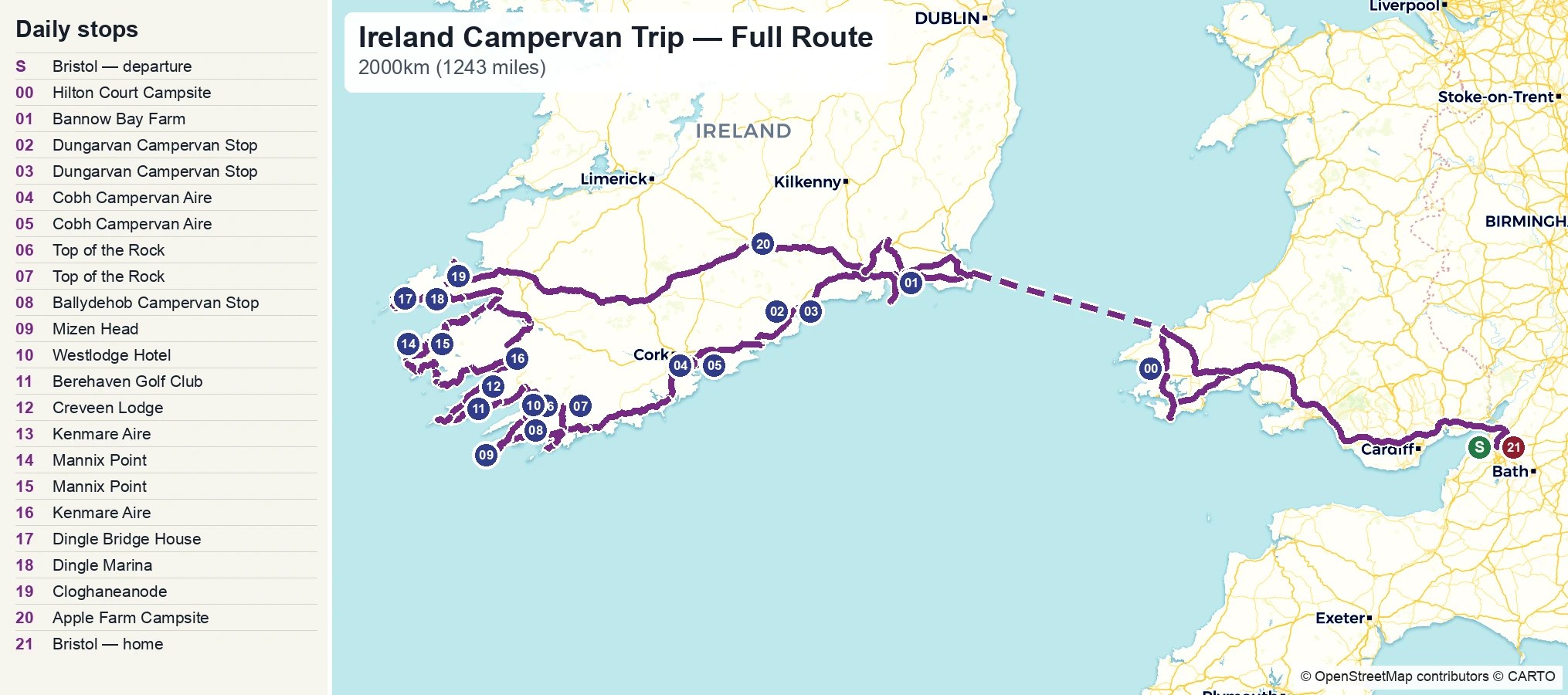
- Clocked up almost exactly 2,000km on the trip, door to door.
- Used about 3 tanks of fuel, should have checked the trip computer from mpg before resetting it… grr!
- Stopped in 16 places over 21 nights.
- Stayed on campsites, aires, a golf course, behind a pub, in someone’s front garden and in a visitor centre car park.
- Cycled two decent routes.
- Counted 16 derelict churches and abbeys — using my relaxed and inattentive counting system.
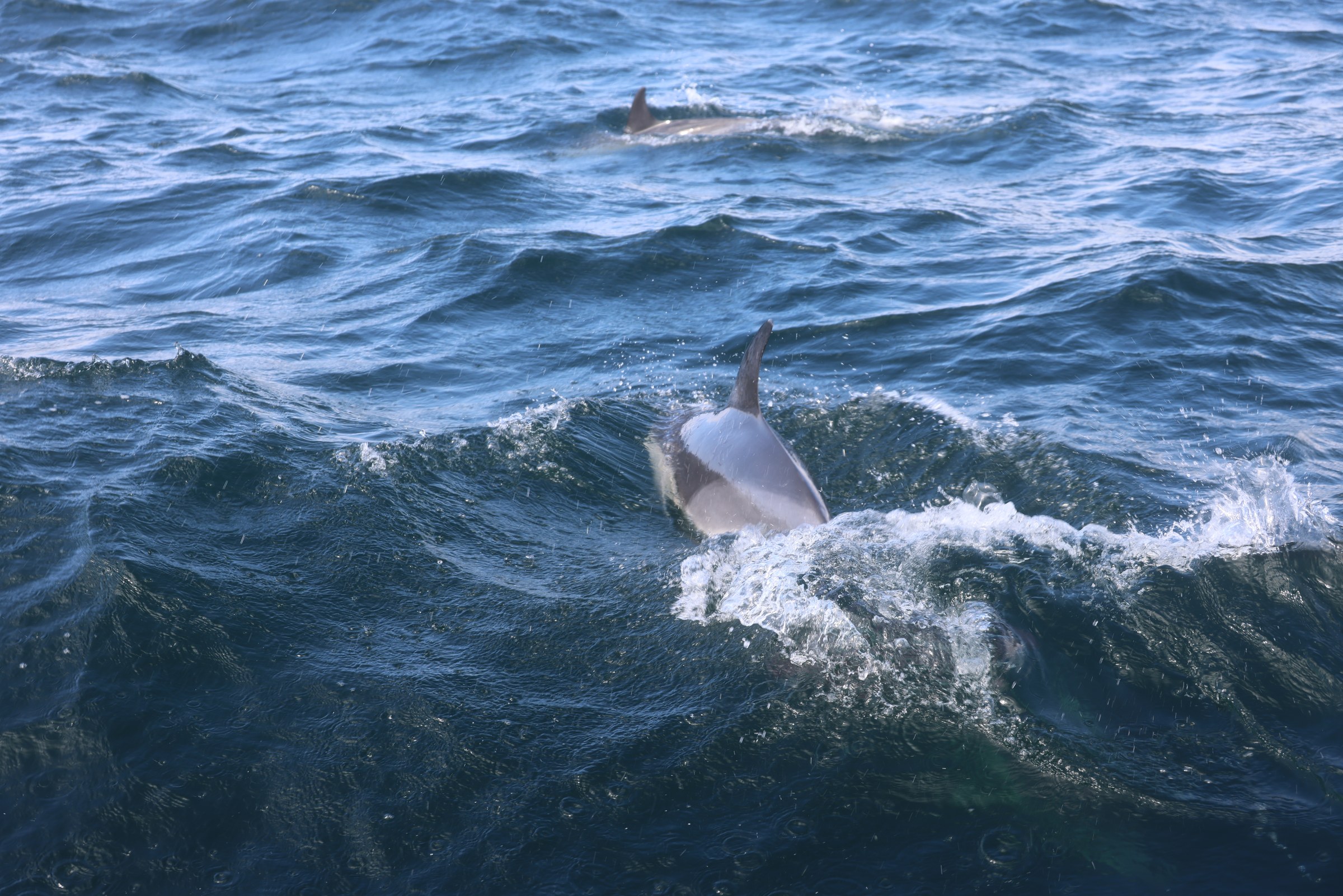
- Saw some fantastic scenery as well as seals, minke whales and common dolphins.
- And of course we met some wonderful people.
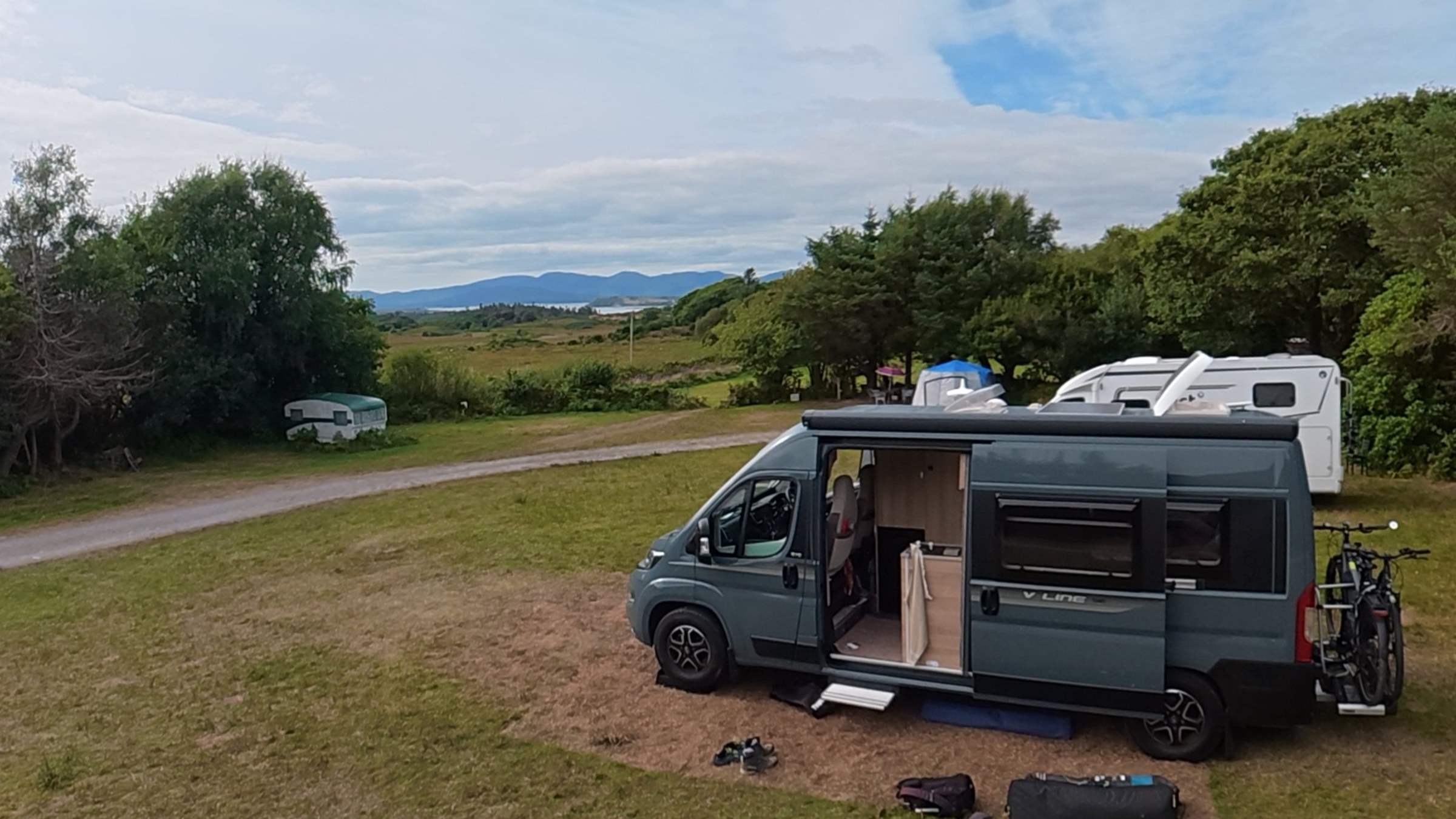
The Trip We Actually Did
We set off talking about a four-week trip around the south, west and then north of Ireland. We did the south and a fair chunk of the west, but after 21 nights we turned inland and headed home. We didn’t get north of the Dingle Peninsula, let alone to Northern Ireland. That will have to be another trip.
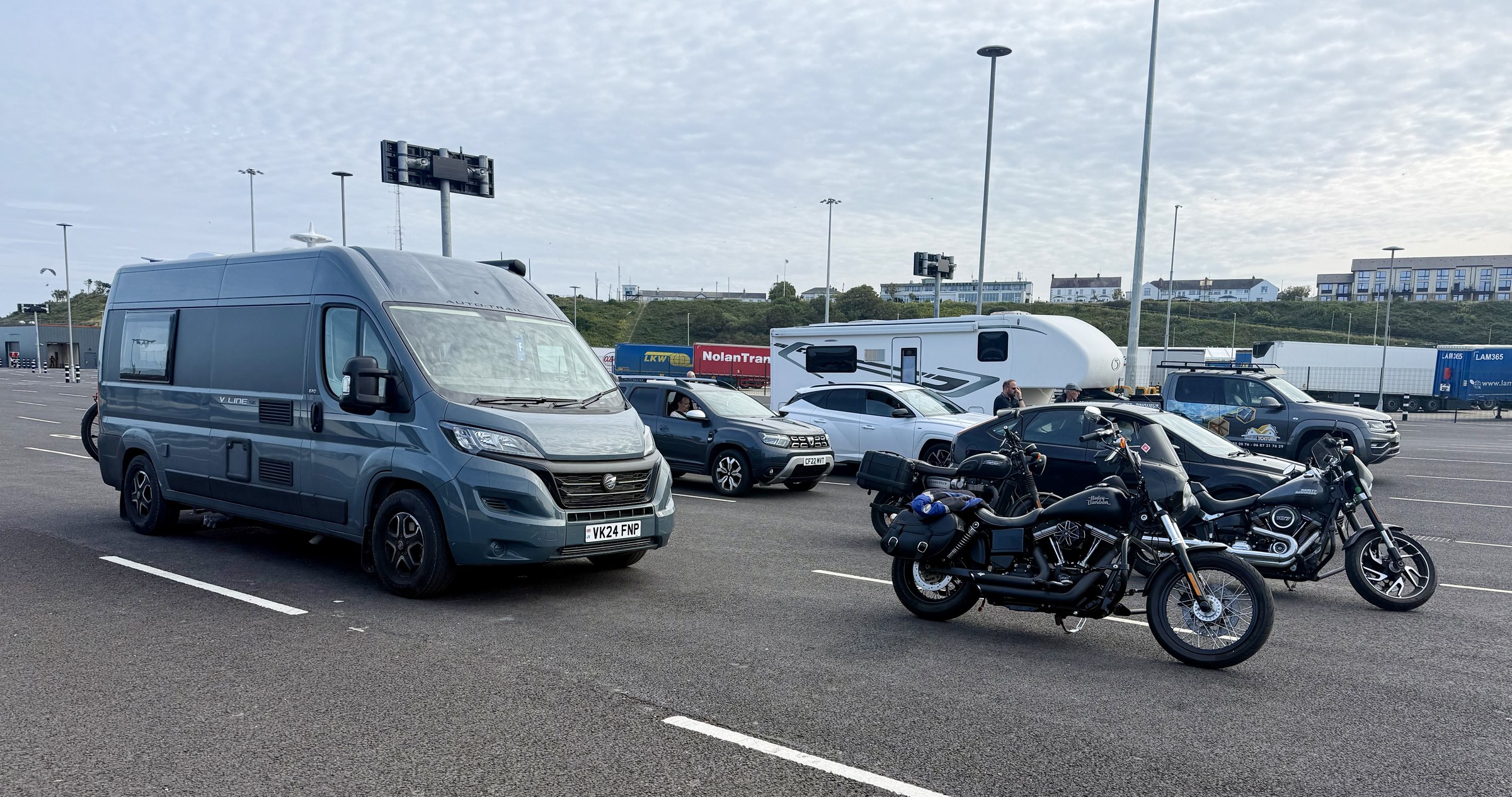
It didn’t feel as though we’d failed to finish the trip. It felt like we’d done enough. We’d moved 16 times in 21 nights, walked miles (averaging 14,000 steps a day), done two substantial bike rides and tried to fit something into almost every day. Even the days we called rest days had a habit of turning into 47km bike rides or lengthy walks along rivers.
That pace caught up with me. I had a couple of CFS crashes and there were days when Sue deposited me on a bench while she went off to find out what we were doing next. We got better at pacing as the trip went on, but we still made days longer because we thought we ought to reach the next place. The southern Ring of Kerry day was a good example. We could have stopped near Sneem, but pushed on to Kenmare because it felt more like a full day. That was probably the wrong decision.
Next time we’d move less often and allow more genuine nothing days. Having more time in one place also means you can wait out bad weather rather than trying to make every booked activity fit into the day you’ve given it.
And weather did change the trip. The eclipse at Mizen Head happened behind cloud. The Skellig boat trip was cancelled. Sherkin changed from a cycling-and-swimming trip into a walking trip. The washing at Mannix turned into a damp night with clothes strung through the van. But changing plans also gave us some of the best experiences. We took the Dingle wildlife RIB trip instead of landing on Blasket and saw seals, minke whales and common dolphins. We’ll take that trade.
Ireland
We really enjoyed Ireland and the Irish.
As we travelled from Fishguard around the south and then west coasts, I suspect we were in a bit of a tourism bubble. Less so in Cork, but probably everywhere else. It was only when we left the west and headed inland (on the last couple of days) that we realised there weren’t campervans roaming the whole of Ireland. We saw only a handful of vans and motorhomes all the way from Tralee to Rosslare. And hardly any non-Irish number plates either. When you’re in that tourist bubble you can forget you’re in a modern 21st century industrialised European country. Life in Ireland is also factories, shops and offices. Not the endless brown signs of things to do that we’d been used to.
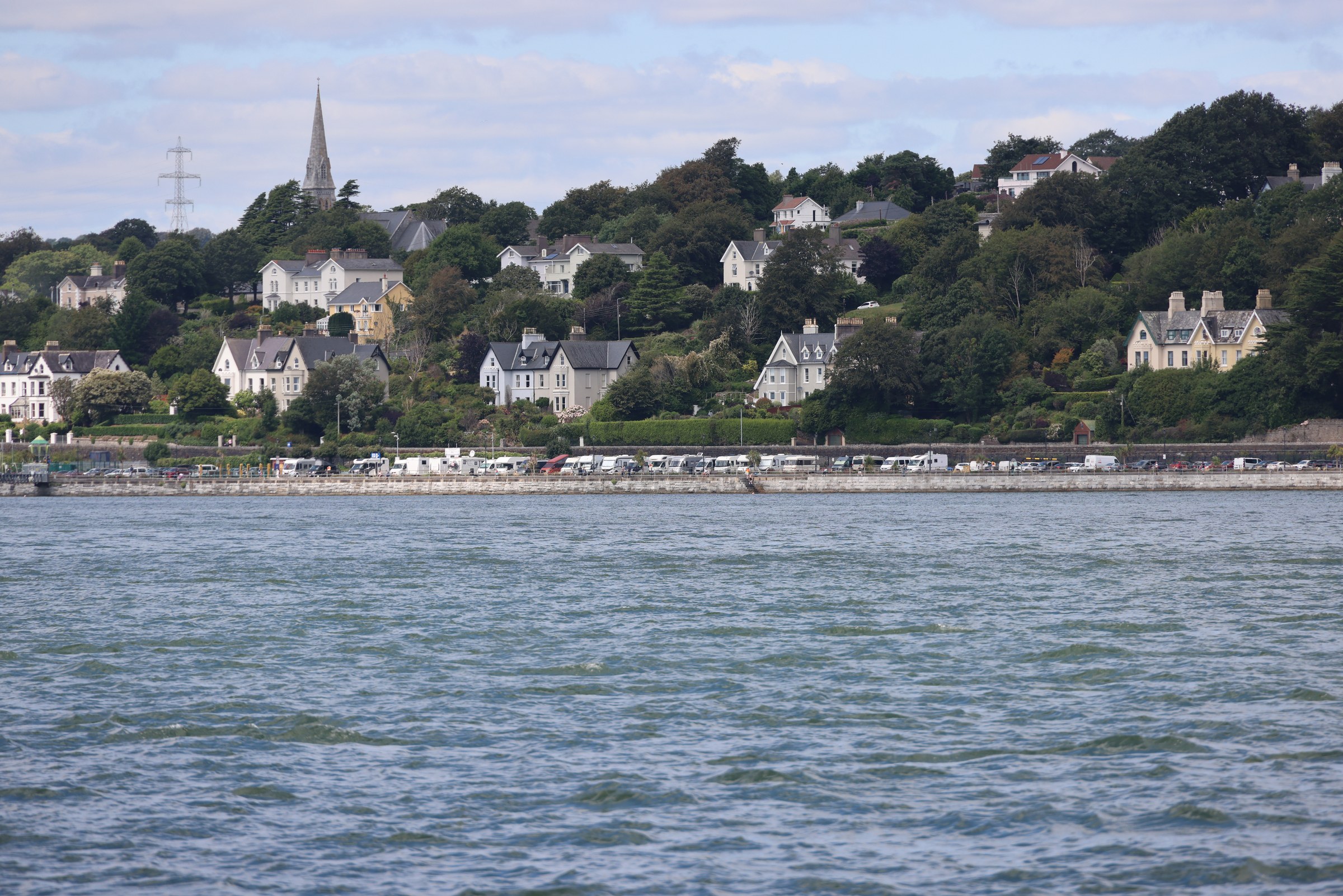
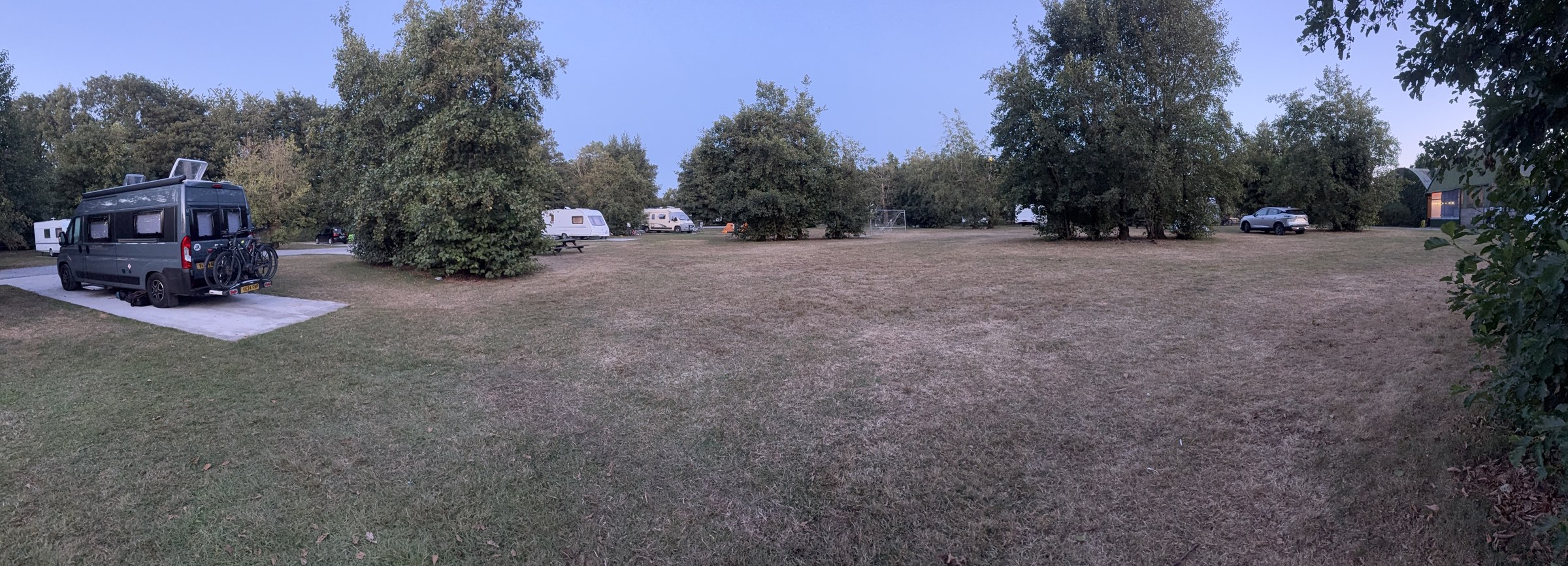
The places we stayed in were tourist areas. Everyone was very welcoming, and we never felt that our presence as tourists was resented, something you can’t take for granted anywhere.
The Irish state has been independent for over 100 years, but the histories of Ireland, England, Scotland and Wales have been tightly entangled for centuries, often violently and unwillingly. Of course the same kings, queens, politicians and invaders crop up across the western world, but in Ireland, that history felt more closely intertwined with ours than when we travel around mainland Europe.
Parts of Ireland felt surprisingly familiar to us, but familiarity should not be confused with sameness. Everywhere we travelled, the historical sites told a specifically Irish story of invasion, plantation, political domination, famine, independence and partition. Three weeks of tourism could only scratch the surface of that history.
Ireland’s population story after the famine is unusual in Europe. The population of the island is still below its pre-famine peak, despite recent growth. There are all sorts of socio-economic consequences that I’m in no way qualified to even frame, so I won’t get into that.
But one thing that a tourist quickly sees is the space. Ireland is much less densely populated than the UK and that’s very obvious, very quickly. We never quite got away from “people” on our trip, but there were certainly fewer around than we’re used to. And way fewer than you’d expect in a similar tourist hot spot in the UK.
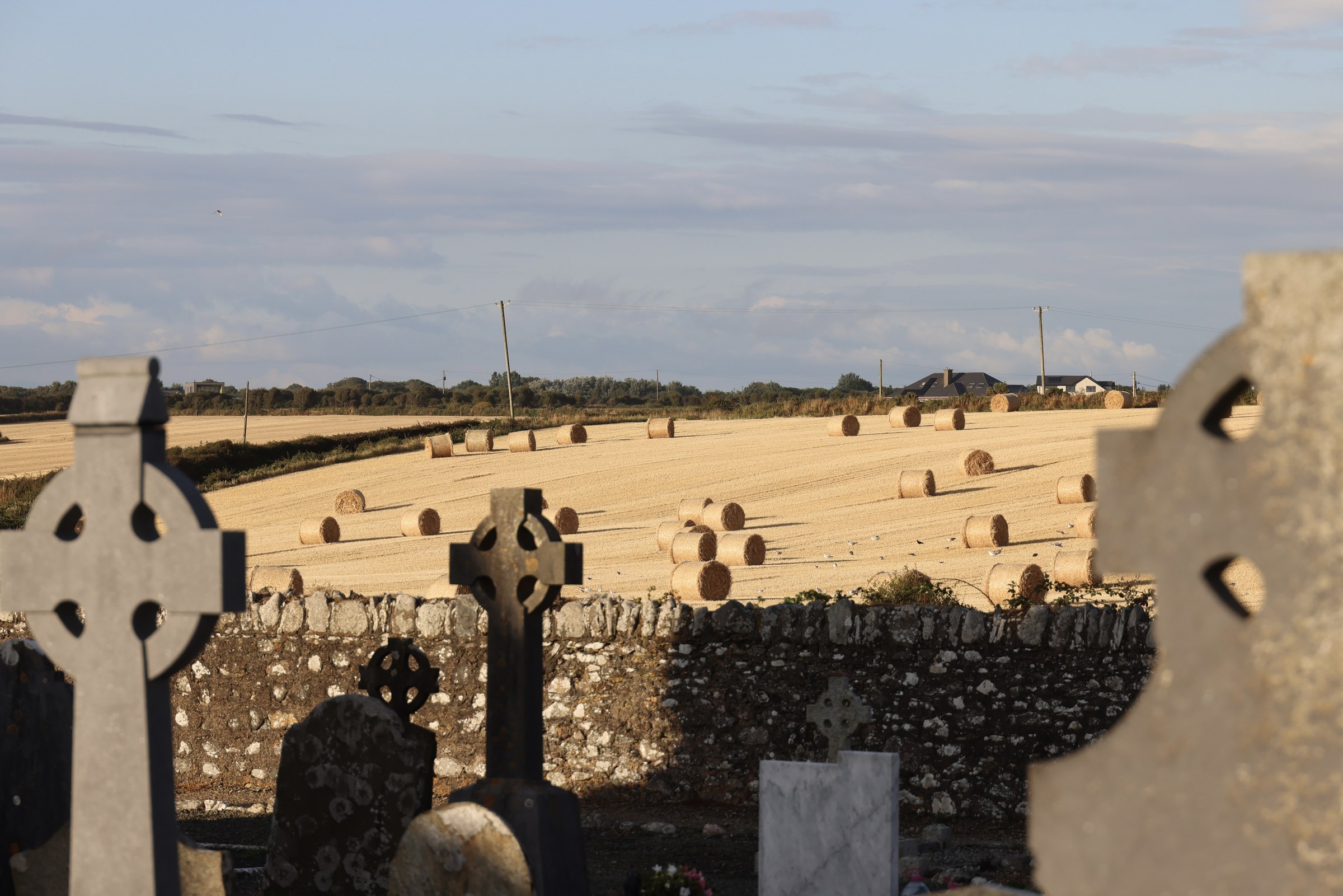
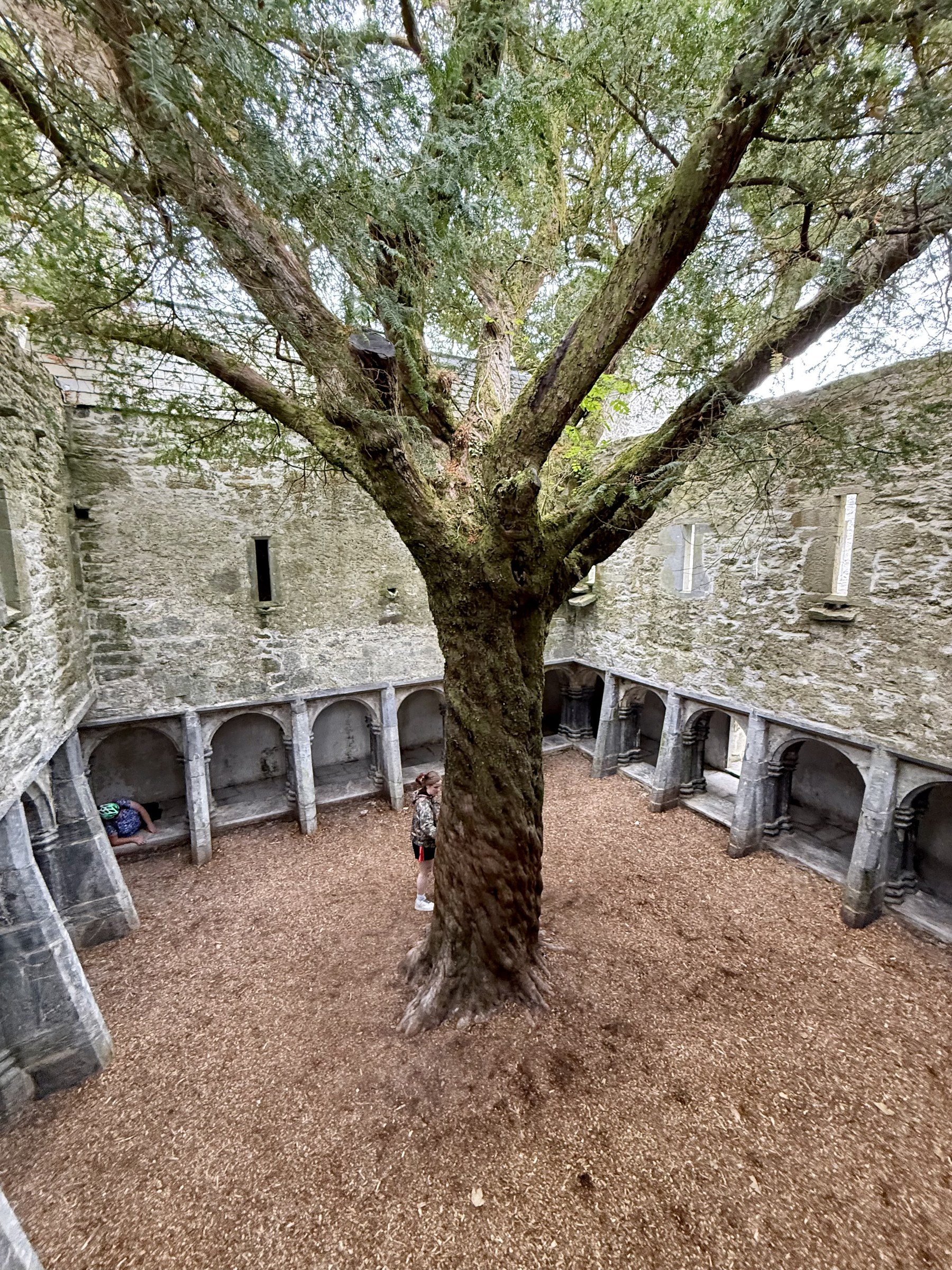
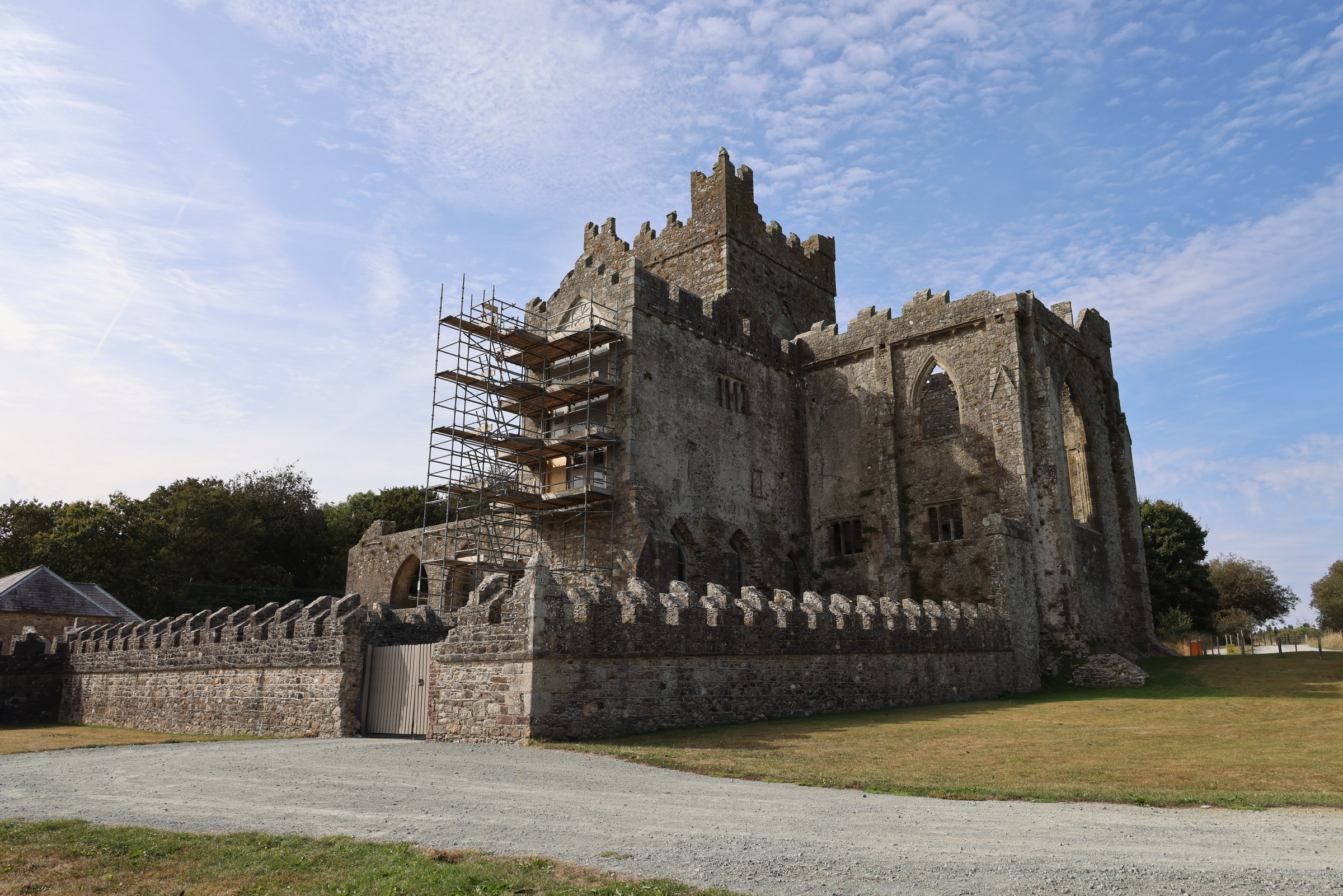
The history is everywhere. We visited Viking and Norman sites, forts, castles, famine memorials and enough ruined religious buildings to get my derelict-church count to 16. Sometimes the history felt well interpreted and sometimes it felt as though a museum was itself something from the past. But it was difficult to go anywhere without finding layers of it.
The Best Bits
This is impossible to do without leaving something out, but some things stand out.
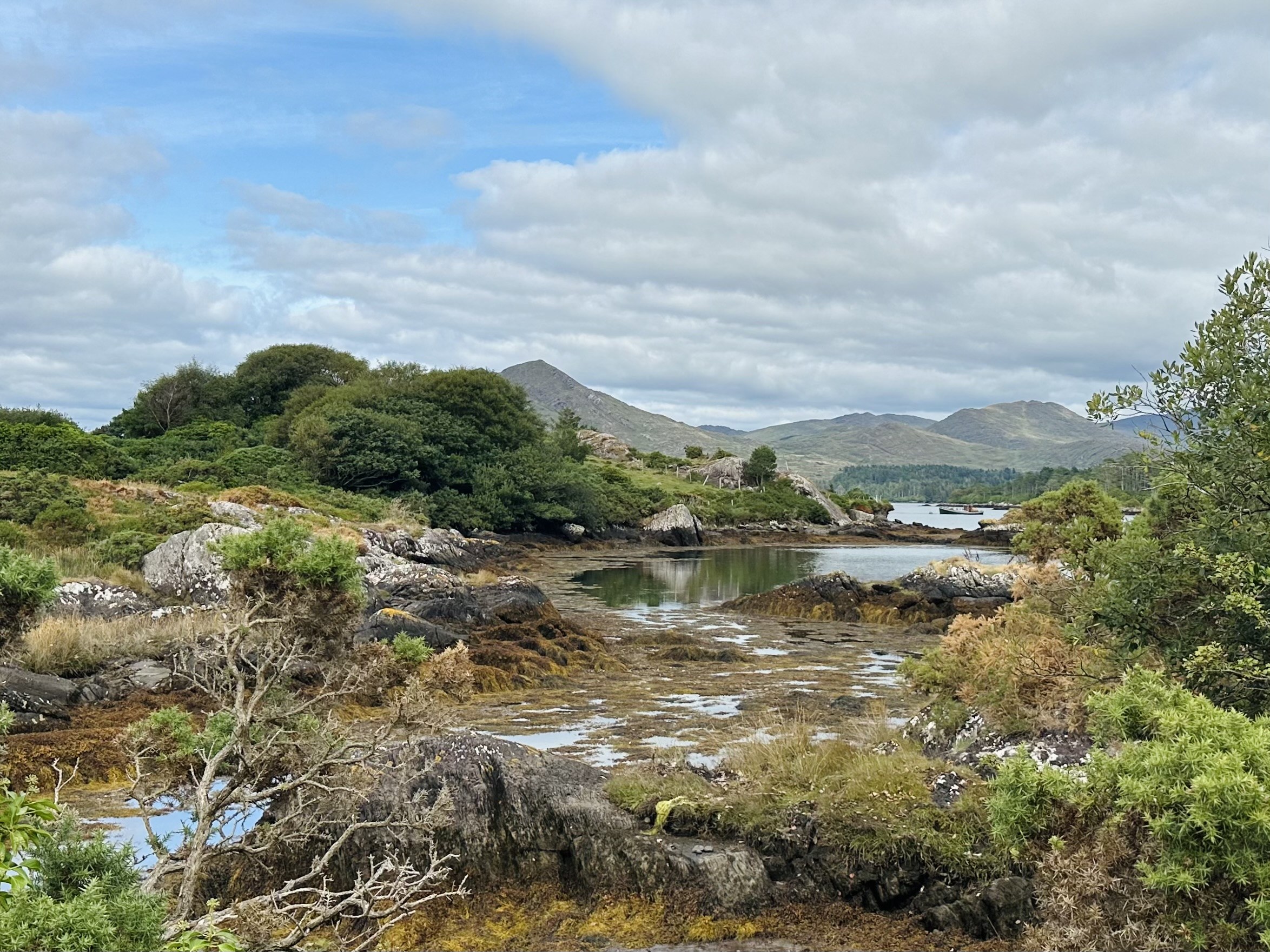
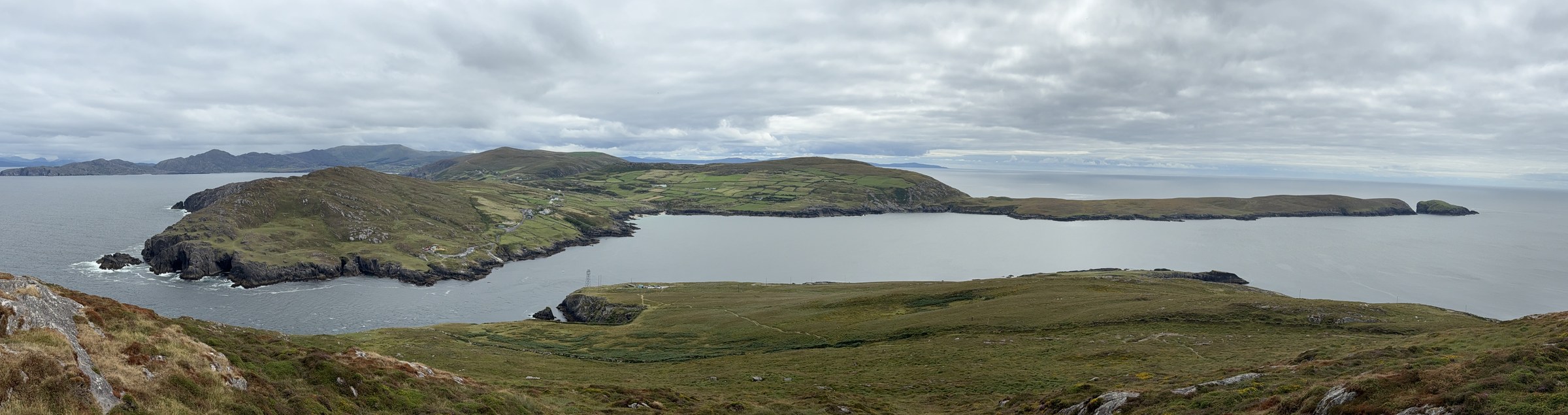
The Beara Peninsula was probably the biggest scenic surprise. It doesn’t get the same billing as the Ring of Kerry, but the roads around Dursey, Allihies and Eyeries were fantastic. Dursey Island itself was a treat and Ireland’s only cable car was worth the trip even without any sheep sharing it with us.
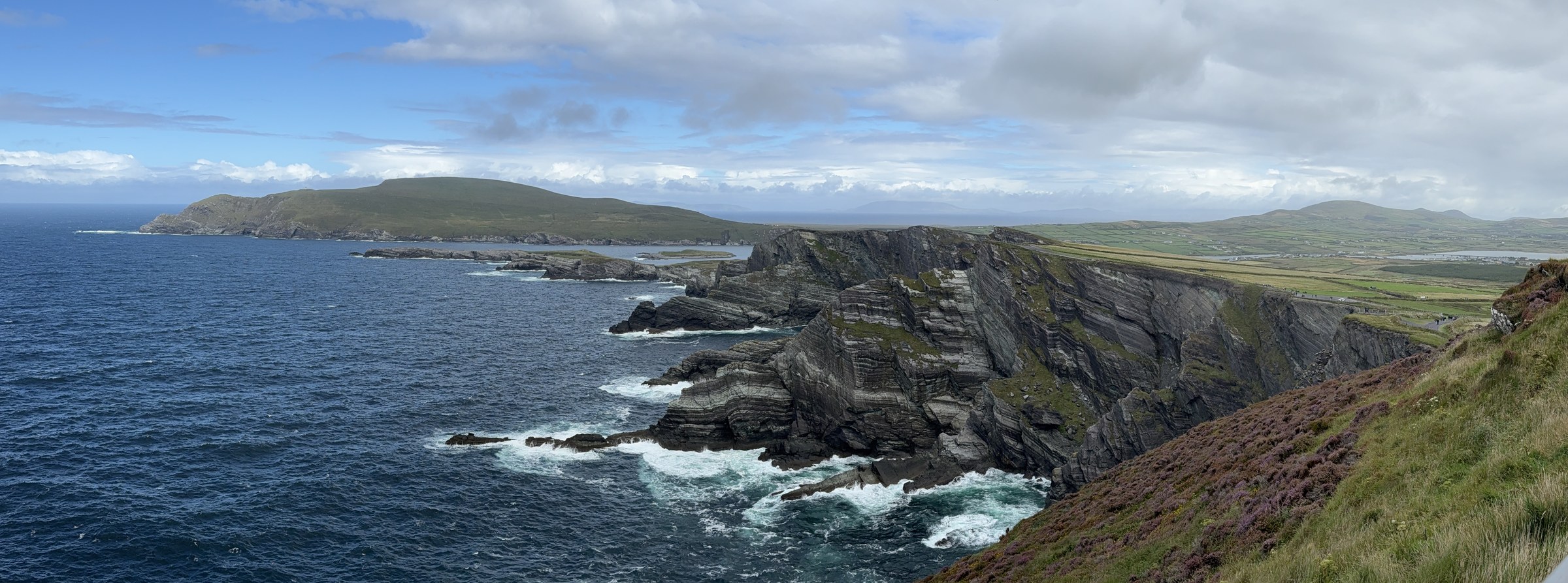
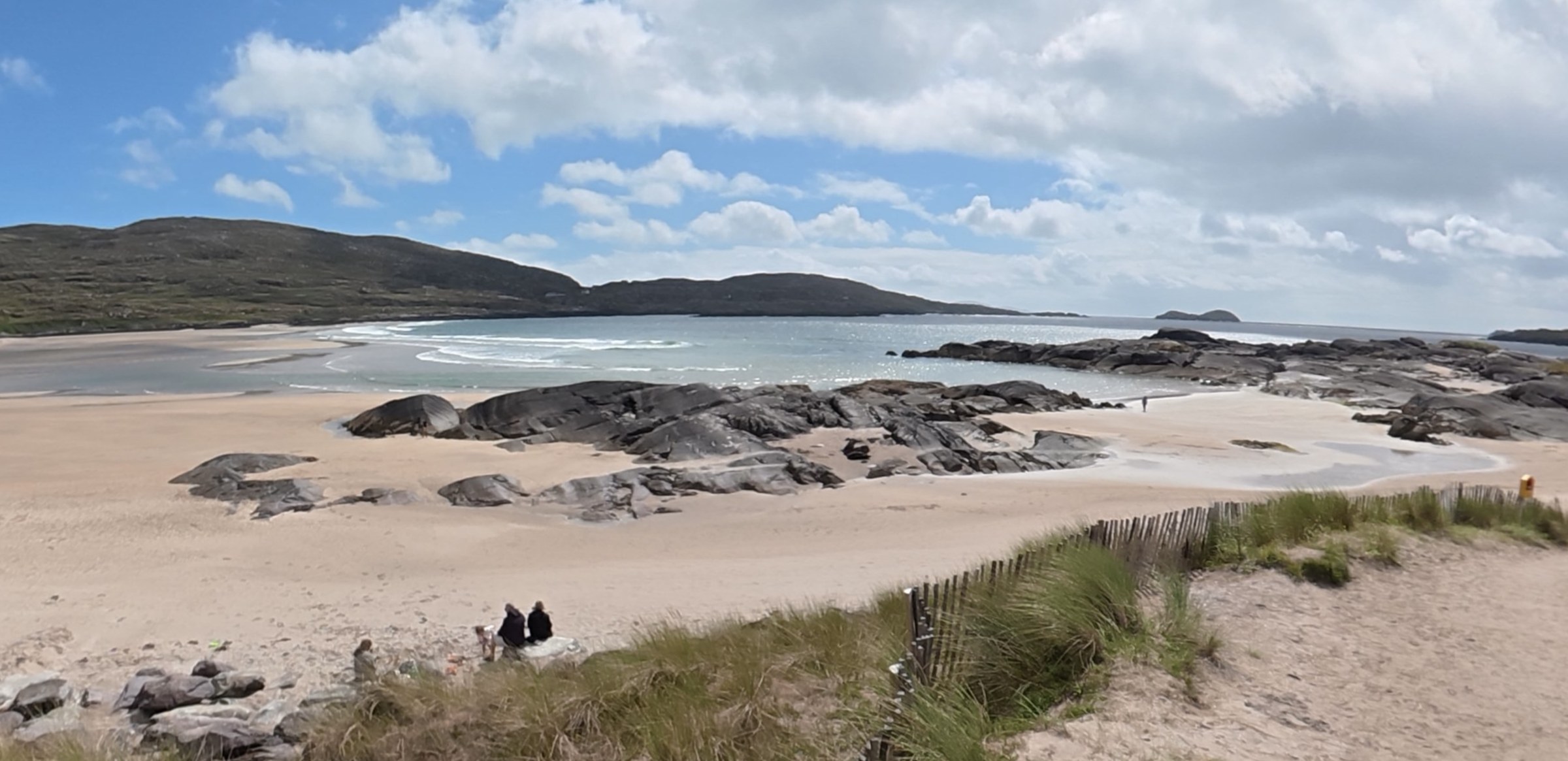
The Ring of Kerry was more mixed than we’d expected (probably an unjustifiable expectation). The Kenmare to Killarney road through Moll’s Gap was spectacular. For us, the northern section from Killorglin towards Cahersiveen didn’t live up to the RoK hype, though the weather didn’t help. But the Skellig Ring and the southern coast more than made up for it: Kerry Cliffs, Ballinskelligs, Waterville and Derrynane were all stunning. Derrynane probably wins our best-beach prize, narrowly beating Barleycove.
The Dingle coast was another highlight. The scenery was great, but seeing seals, whales and dolphins from the RIB and then watching whales from Dunmore Head pushed it up another level.
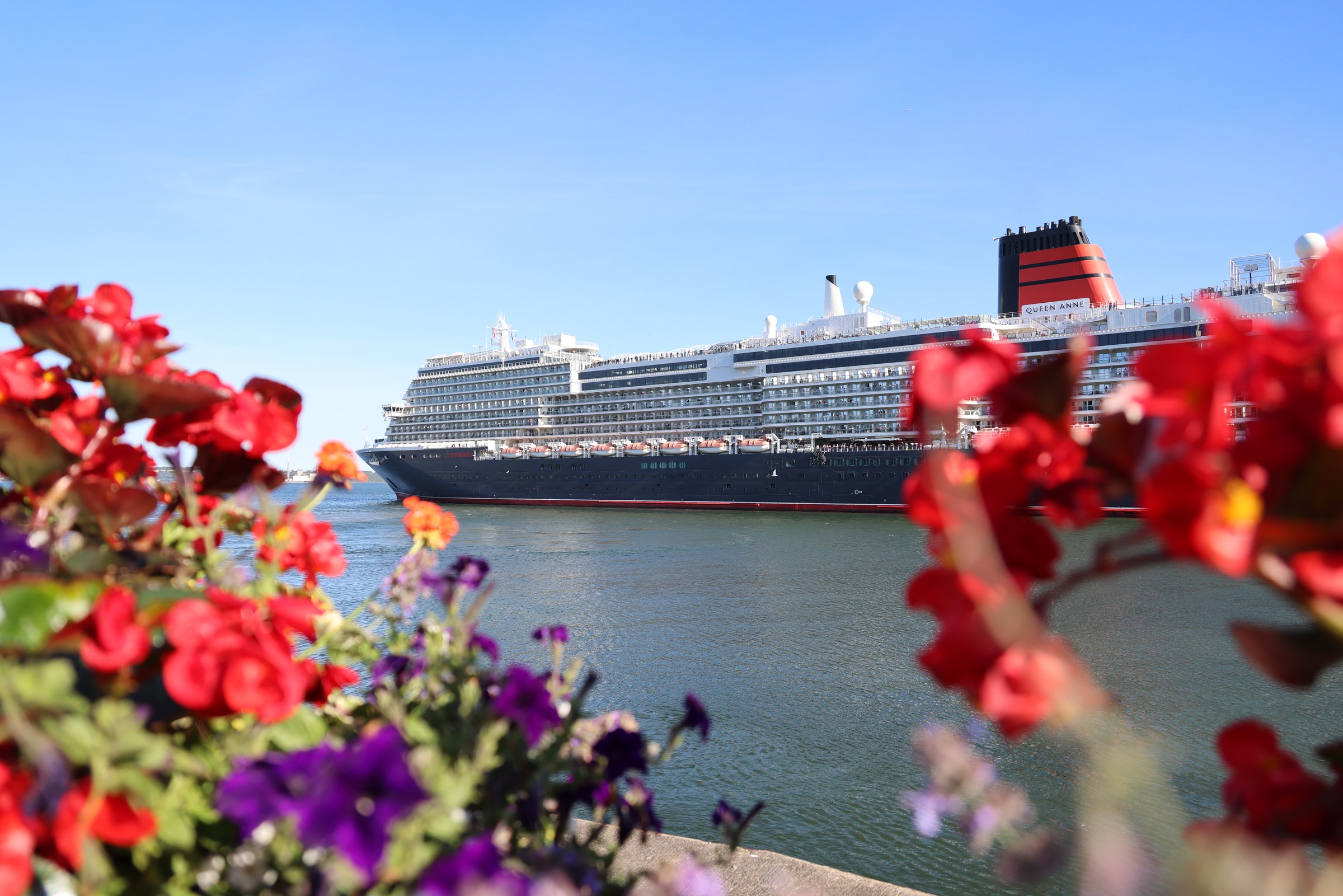
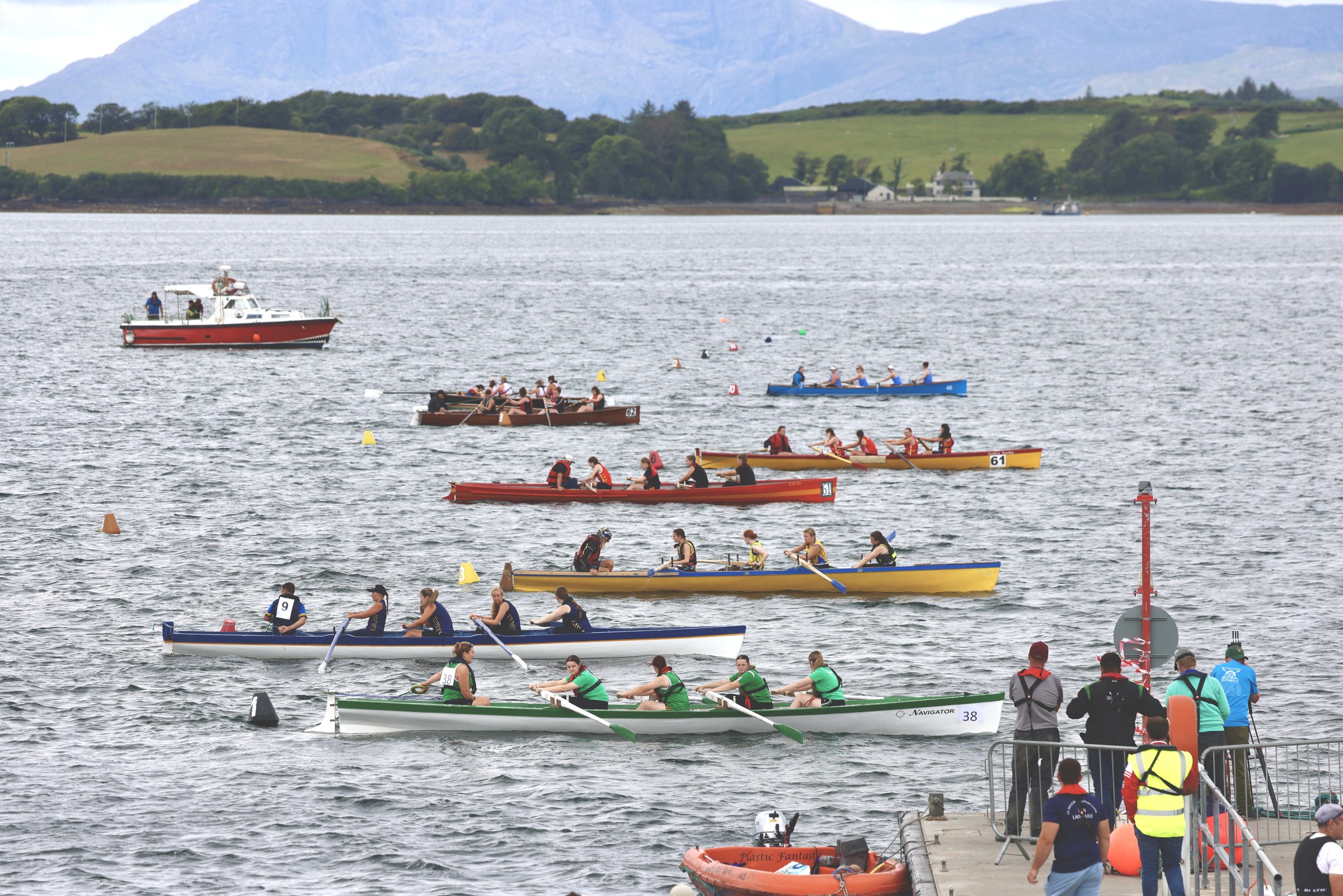
Some of the best experiences weren’t things we’d planned at all. Cunard’s Queen Anne leaving Cobh, stumbling into the All-Ireland Coastal Rowing Championships at Bantry, meeting Roy and his fish, and all the people who stopped to tell us where we ought to go next. Those chance encounters were a big part of the trip.
Other things we noticed:
- Fewer tattoos
- Fewer dogs
- Telegraph poles, everywhere
- Fibre to the home, everywhere
- Less rubbish around
- Doughnuts – and not the pastry ones. Burnout marks all over the roads (what do Irish people think of this, it would be “a thing” for the press in the UK)
- And the toilets!
Campervanning in Ireland
We found campervanning in Ireland to be quite different, to England and Wales, and certainly to mainland Europe (can’t comment on Scotland ‘cos we’ve not camped in the van there).
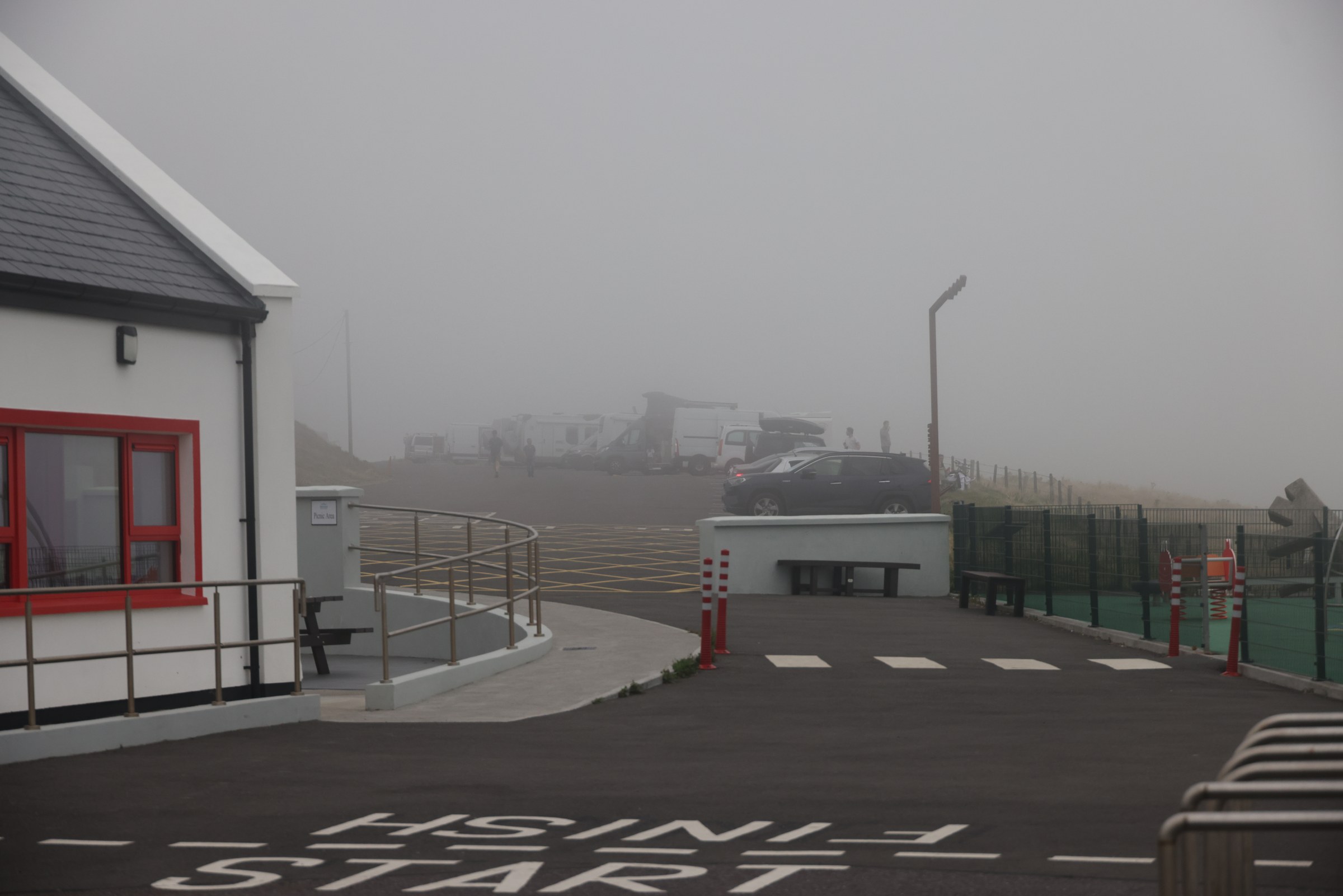
We used a much wider range of overnight stops than we expected. As well as conventional campsites, we stayed on municipal aires, at a golf club, in a hotel camper area, behind a pub, in someone’s front garden and in the Mizen Head visitor centre car park. Most had some combination of drinking water and grey- and black-water disposal. Electric hook-up was less consistent, but we deliberately alternated off-grid nights with places where we could plug in.
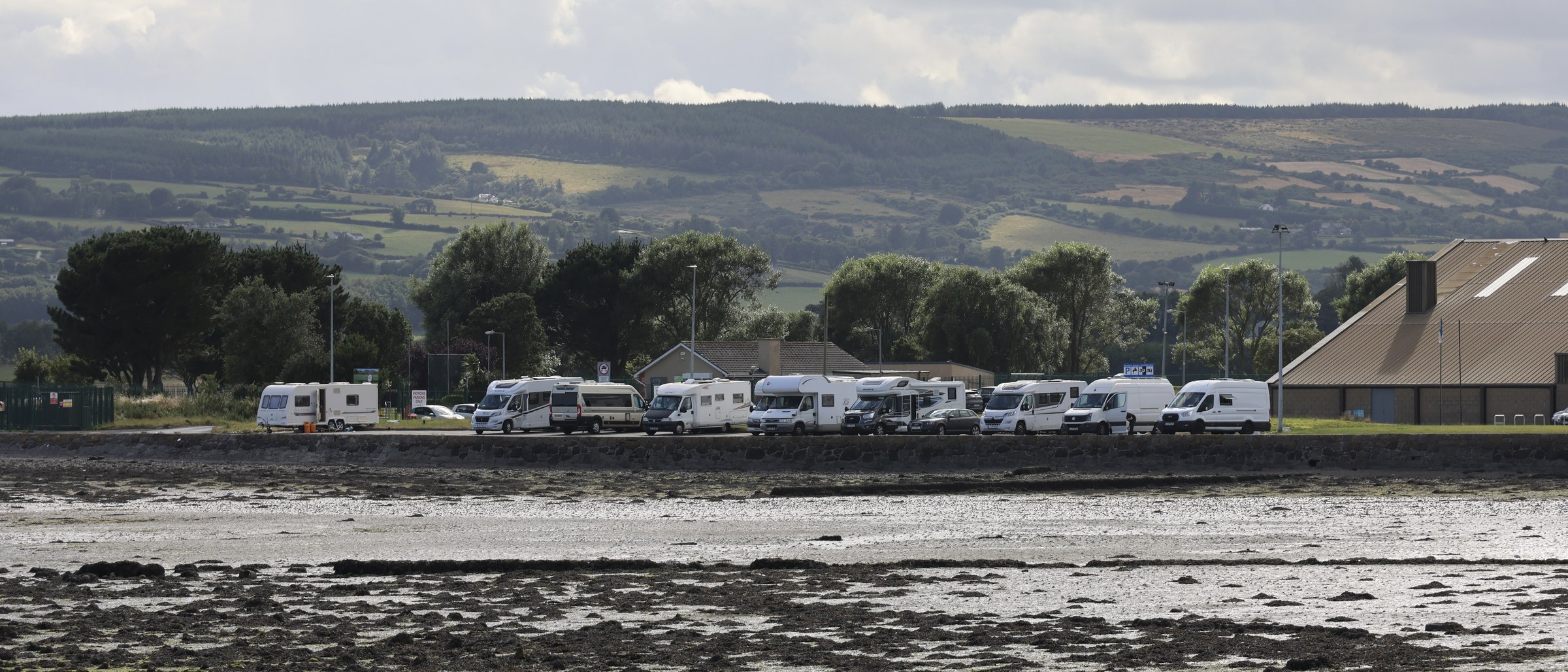
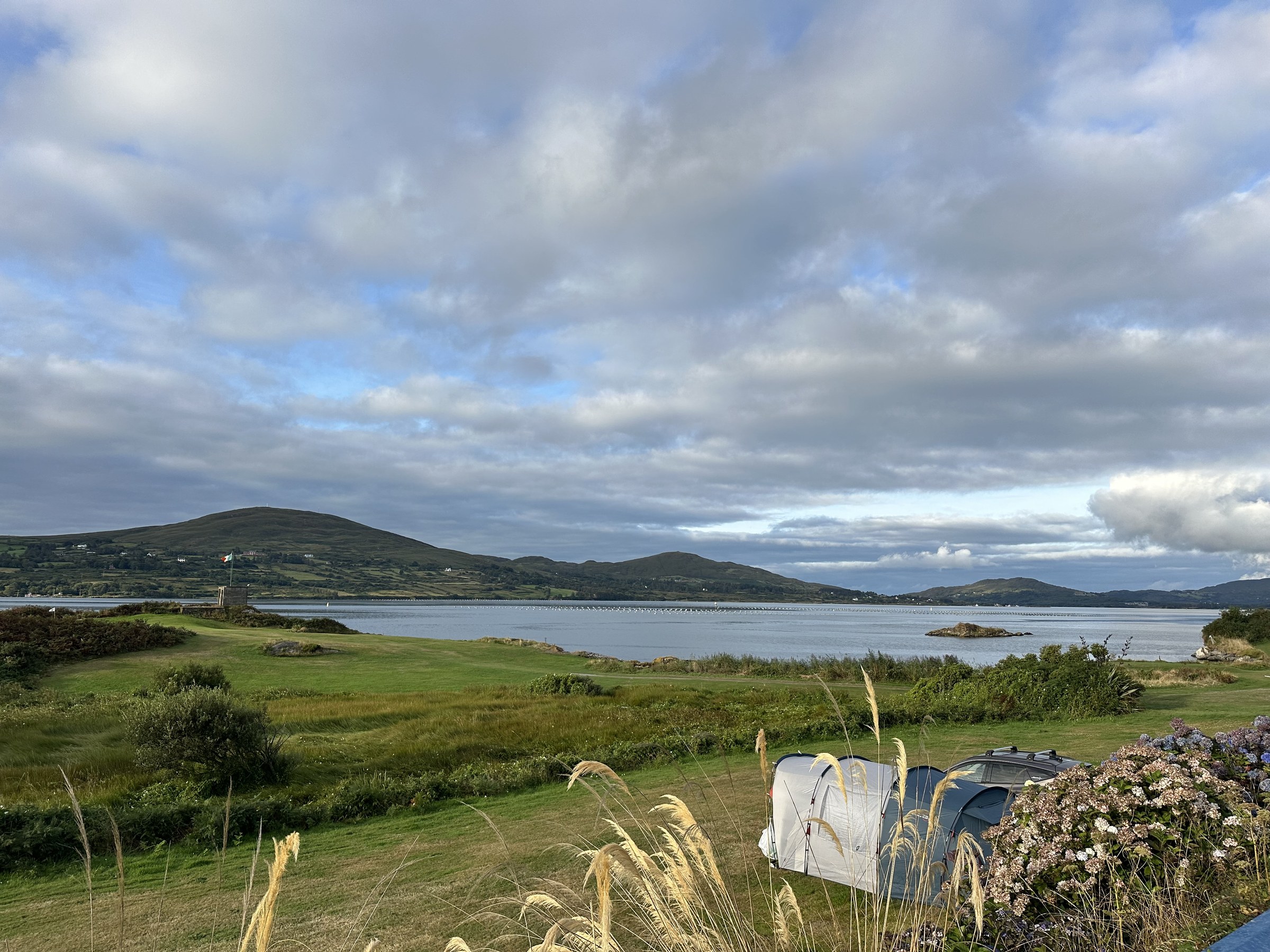
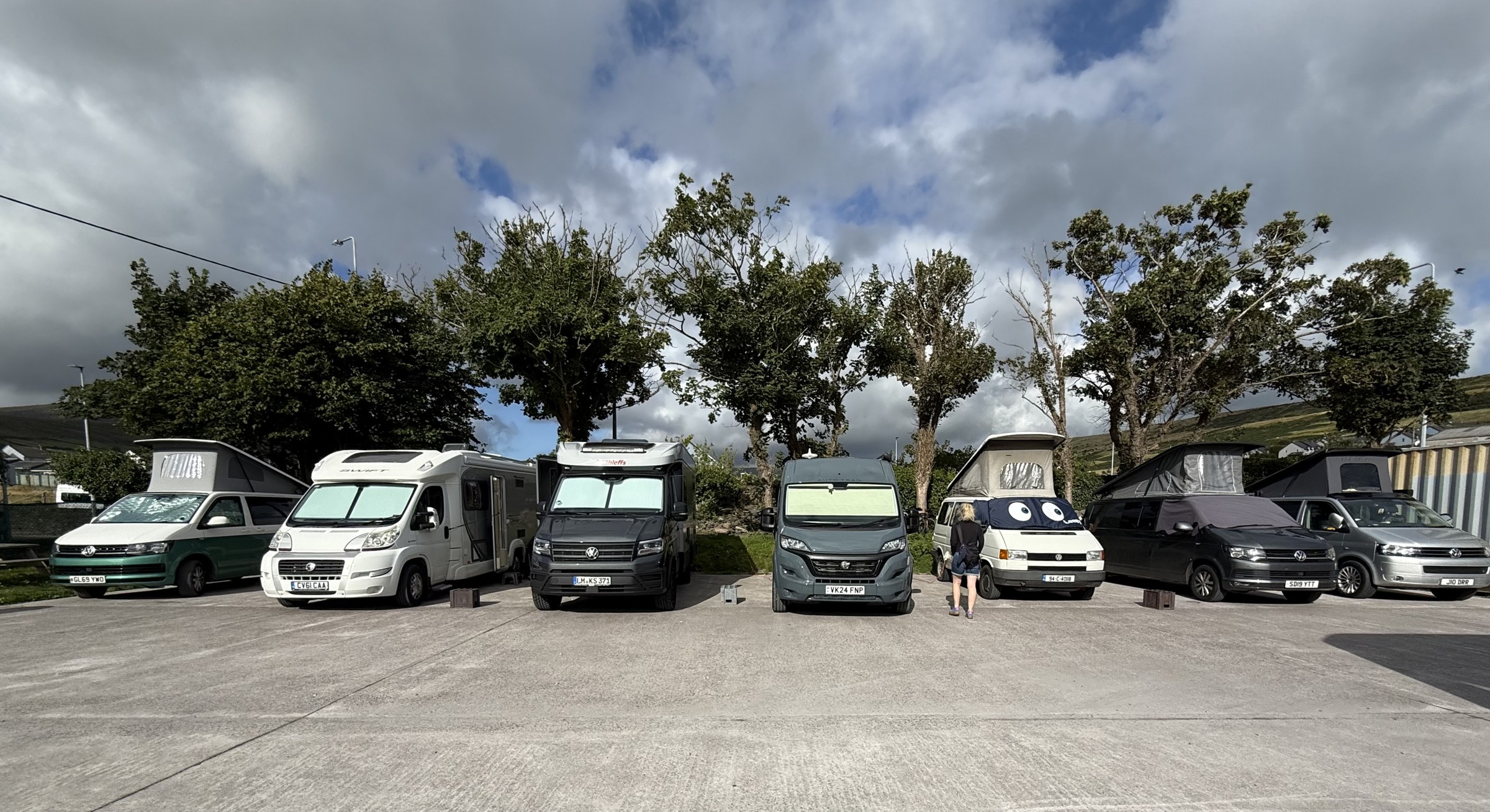
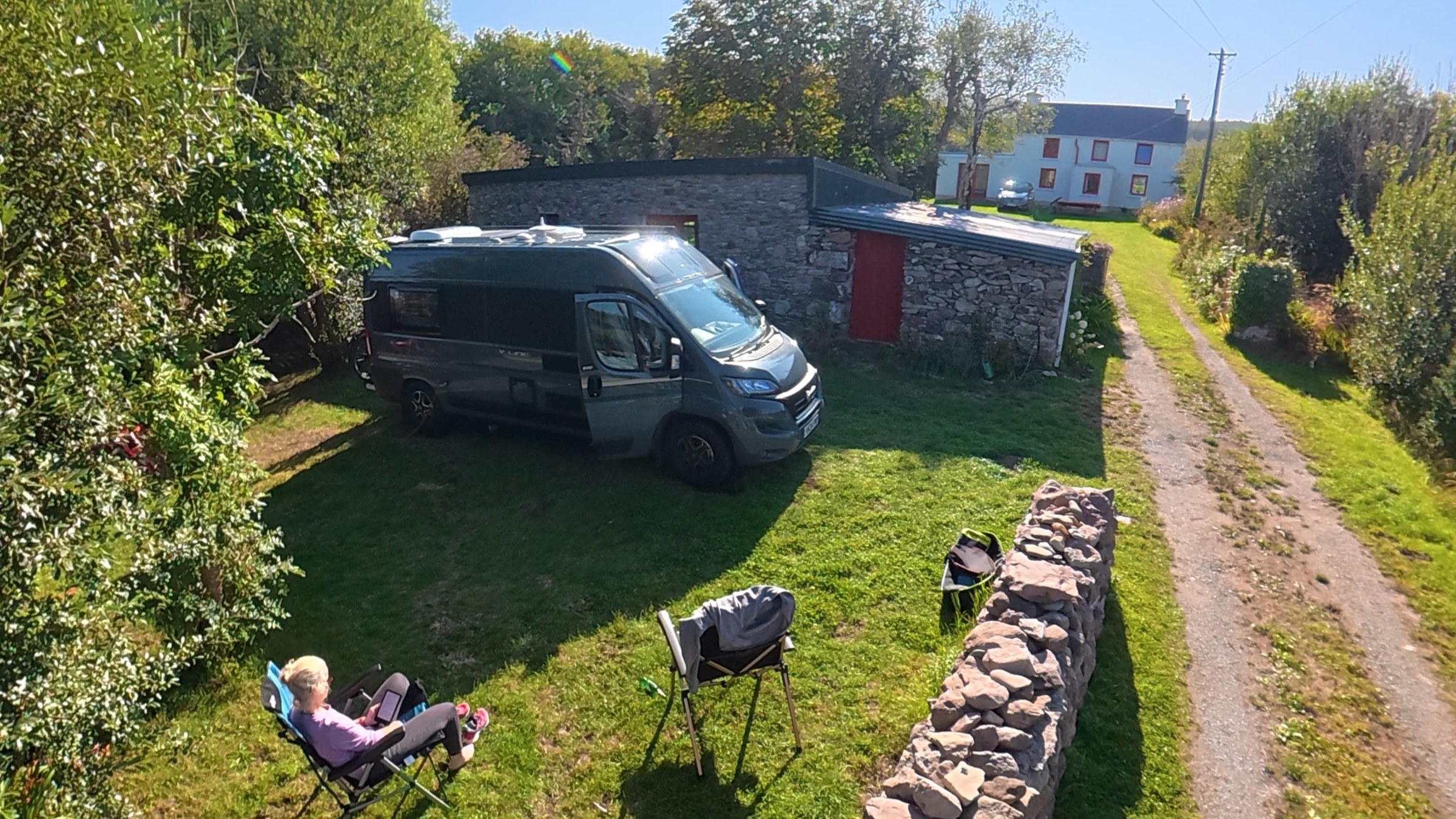
The best stops weren’t necessarily those with the best facilities. Cobh put us beside the railway into Cork. Dungarvan put us at the start of the Waterford Greenway. Dingle let us walk into town. Creveen Lodge‘s facilities needed more than a bit of love, but the view was magnificent. Location often mattered more than the number of stars attached to the shower block.
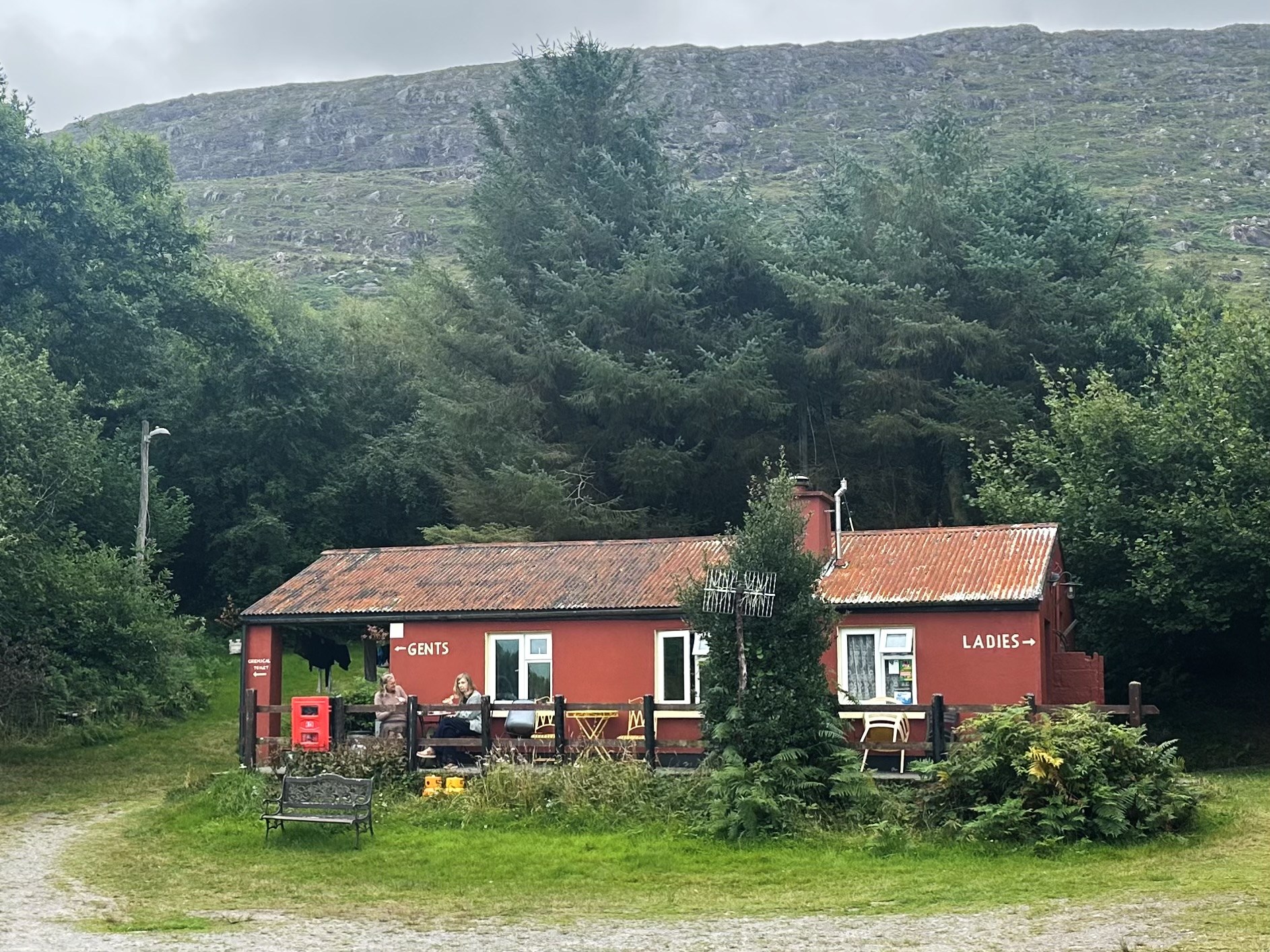
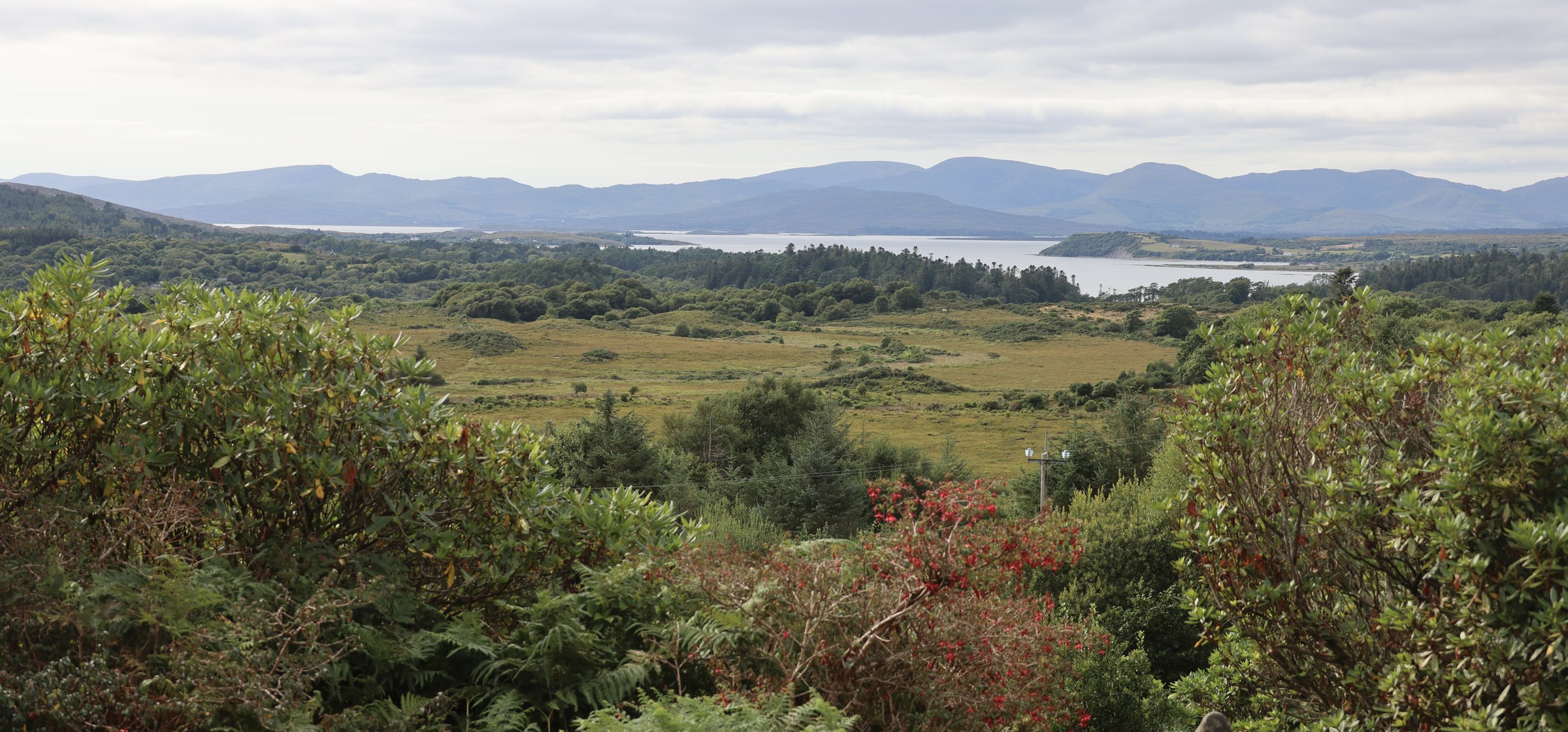
We worried a lot about finding spaces, and it rarely became a real problem. Getting to Cobh early mattered, and Dingle did genuinely fill up, but most places had space or some sort of overflow. And so I’m not sure we’d book further ahead next time. Booking gave us certainty, but it also made us push on when stopping earlier might have been the better plan.
Daytime parking was usually free and many of the formal overnight stops were inexpensive. Dungarvan was €10 with fresh water and waste disposal; the private aires and garden stops were generally around €20. Proper campsites could be nearer €40 and sometimes still charged extra for showers or washing machines. We didn’t keep a detailed cost spreadsheet, so this isn’t going to become one of those useful posts with a price per night and a graph. Sorry.
What struck us was:
- It did seem mostly ok to stay overnight, just about anywhere. We didn’t really do this. We stayed in formal aires or campsites. But we’d often come across a layby or car park where people clearly had been parked up. I’m not sure how the locals feel about this. To my urbanite inclinations, I’d be miffed. We’ve had all sorts of problems with people doing this in Bristol and perhaps I’m jaundiced by it. But it seems to be ok in the touristy bits of Ireland (the only bits we really saw).
- Everyone was really friendly – did I say that already
- Not only were people friendly, but they wanted to talk, and probably more importantly, wanted to listen. For instance, the teenagers we met were happy to stop, talk and tell us about things like the rowing competition.
- Trivial one: the shops were the same. You see lots of shops that also appear in the UK. But they also felt the same. The same shops thing was probably also more pronounced in the larger towns and cities.
- We really liked SuperValu (Super-val-YOU as we came to call it).
- Gluten-free food was much easier to find than we’d expected – not sure why we expected problems, it’s probably our experience travelling around Europe where some countries are good and some not, it certainly wasn’t any preconception we had about Ireland, just ignorance. Cafes, restaurants, supermarkets and even Aldi usually had something. The Blasket Centre was one of the few places that struggled, and even there the chef made something specially.
- The road quality was mixed (generous): Some roads are billiard table smooth – and you can find small stretches of this on even small roads (though in the quieter areas often only in a town). But you can soon turn from smooth to very very rough in a matter of metres. And from a generous two-lane (wide enough to be a dual carriageway) into a single-track pothole-ridden mess within a few hundred metres.
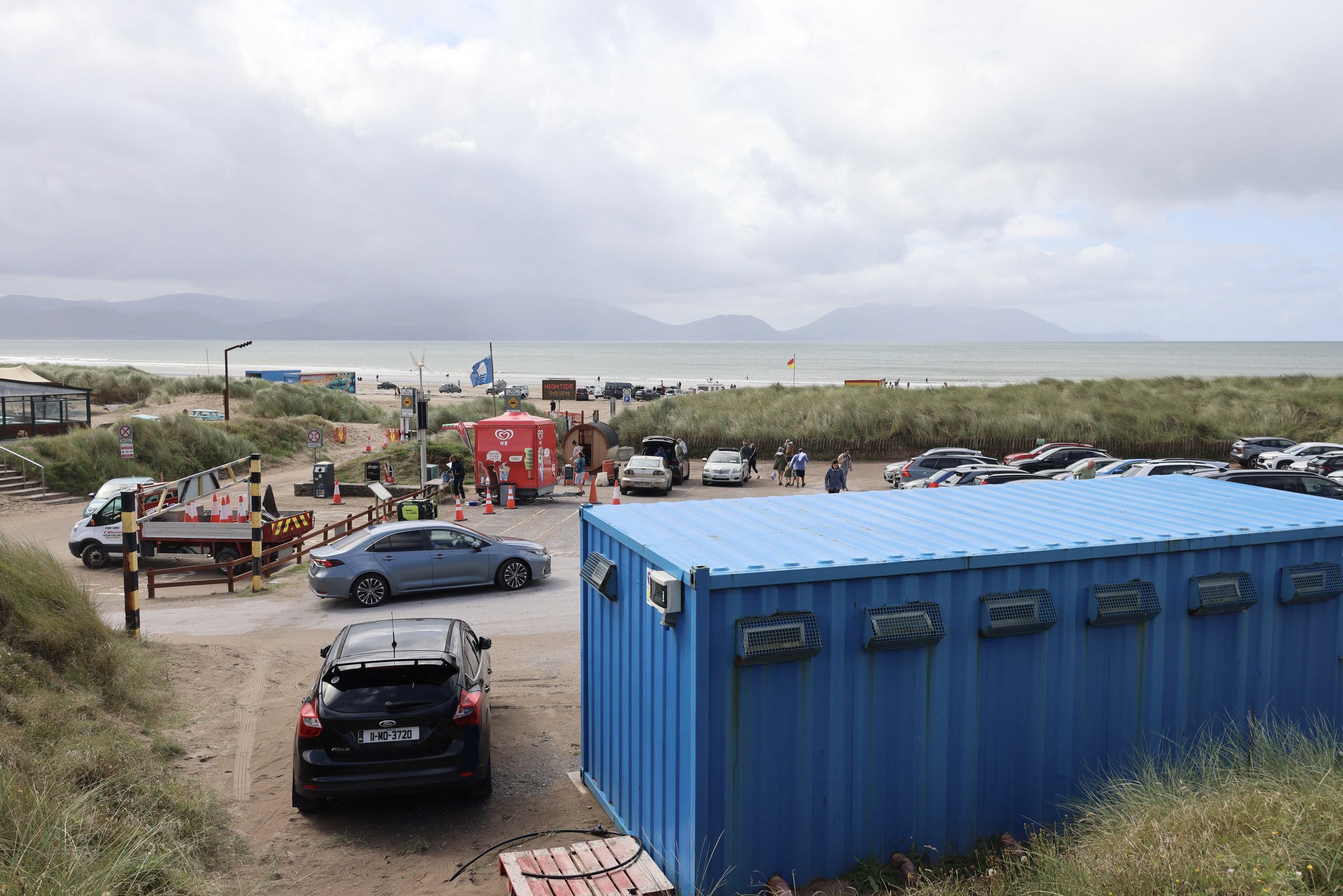
- Daytime parking was more of a problem than overnight parking. Height barriers at Youghal, Schull, Barleycove, Rossbeigh and Inch Beach excluded us from car parks that often had plenty of empty spaces. Sometimes there was a designated campervan area nearby; sometimes we simply couldn’t stop. The annoying bit was not being prevented from camping overnight. It was being prevented from parking for an hour, spending some money and moving on.
- To my mind, the almost-but-not-quite dual carriageways are weird. They’re typically marked out as two single lanes (one each way) and then yellow dashed lines marking the edges of the single lanes. But the border, outside the dashed yellows, is often as wide as the main carriageway. We soon realised (and did some research) that the yellow dashed areas are informally for slower vehicles to pull over and let others overtake. But there were a couple of problems with that: we weren’t sure what constituted “slow”. We were keeping up with the traffic so didn’t think we counted as slow. Secondly, the yellow dashed areas could have artics stopped in them. So if you’re driving along and pull into the “yellow dashes” to let someone by, then you could quickly come up against a stationary artic. That didn’t enthuse us to pull over and let other people past.
- It’s clean. Ireland is refreshingly clean. Cleaner than the UK, and certainly cleaner than some other countries we’ve visited. The volunteer litter picker in Sue was impressed by how little litter there was in public spaces. And we often saw people in hi-viz vests out with litter grabbers and bags, picking up litter. But that doesn’t get to the point really, we think people were genuinely tidier. The plastic bottle recycling scheme was also brilliant to see – and worked.
- Litter bins. Having said that about cleanliness, we were struck by how few general-waste bins there were. We saw recycling bins everywhere from small villages up. But… there was rarely a general waste bin anywhere to be seen. We guess that the idea is you take your general litter home and it gets collected by the council. Whereas recycling is done centrally in the corners of car parks. But when you’re in a van and you don’t have a council collection to give your general waste to, it becomes difficult to know what to do with it. When we were on campsites, there was of course somewhere to put it. But when we were more free-camping it became a problem.
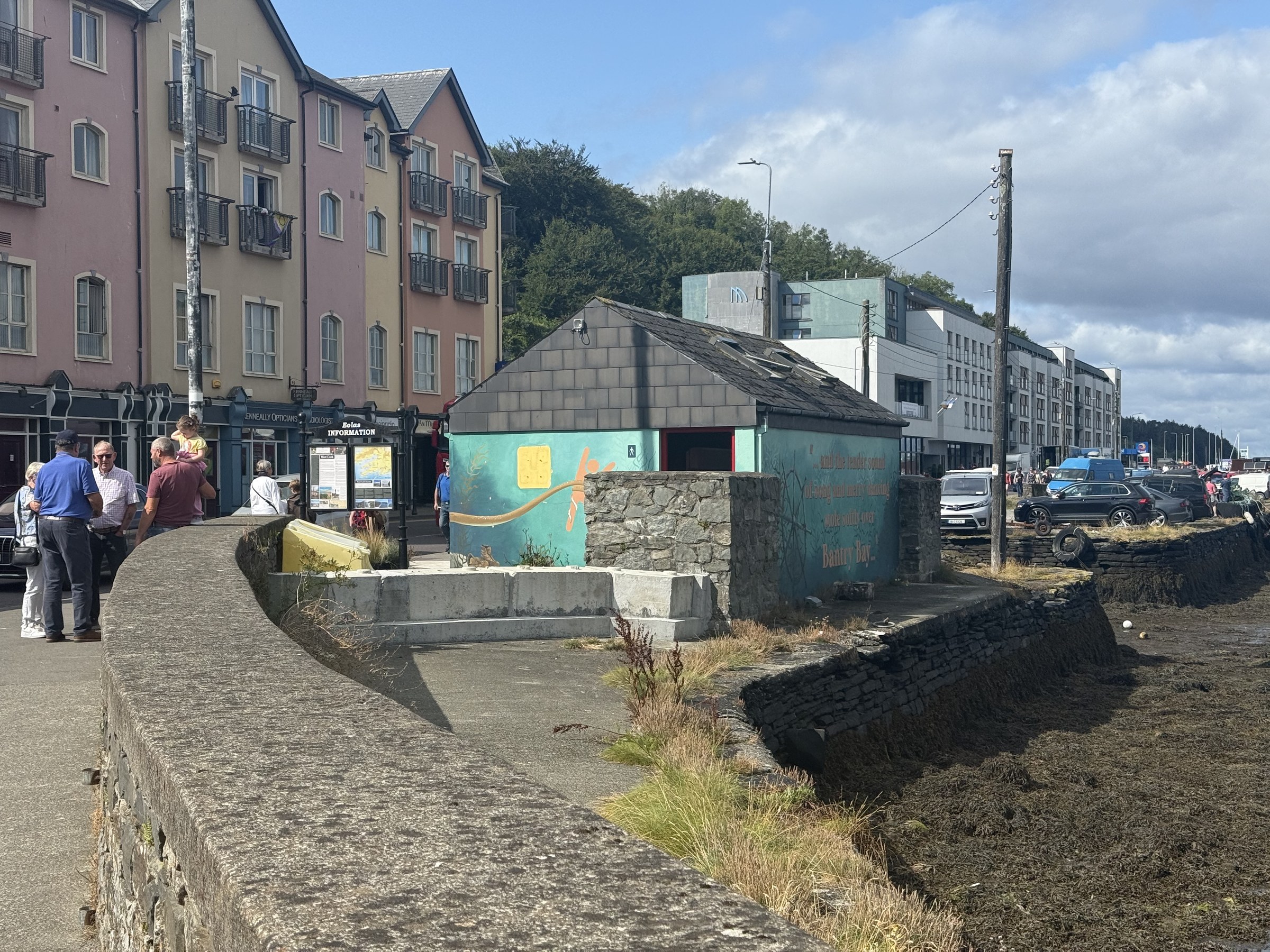
- Toilets in general. We were genuinely surprised at how usable all the toilets were we found. That’s not to say we were expecting them to be bad, we were just surprised they were a pleasure to use, rather than what we’ve seen in other places we’ve visited. Cafes, restaurants, campsites and even public toilets. I don’t think we saw a bad one in all the time we were travelling. Even accepting that you have to have a reduced sensitivity to what’s acceptable when you’re camping.
- Public Toilets. Coming from the UK, just the fact that there were public toilets at all was a revelation. And like the other toilets in cafes etc, public loos were usable. Again, you have to have a lowered sense of what’s acceptable when you’re camping, but at least you didn’t want to be sick when you went into a cubicle. I can’t say that about loos in the UK – some are great of course, but if you can find one, then the smell and state of them is often an embarrassment – that was absolutely not the case in our experience in Ireland.
Finding Our Way Around
The guidebooks and maps were a mixed bag. Take the Slow Road: Ireland was the most useful campervan-specific book we carried. And for this trip, the Lonely Planet road-trip book was more useful than the regular Lonely Planet Ireland guide. The ring-bound road atlas was also easier to use in the cab than the enormous folding map we’d started with.
GPSmyCity worked well for our walking days in Cork and Waterford, though you see more and probably learn less than you would with a good human guide.
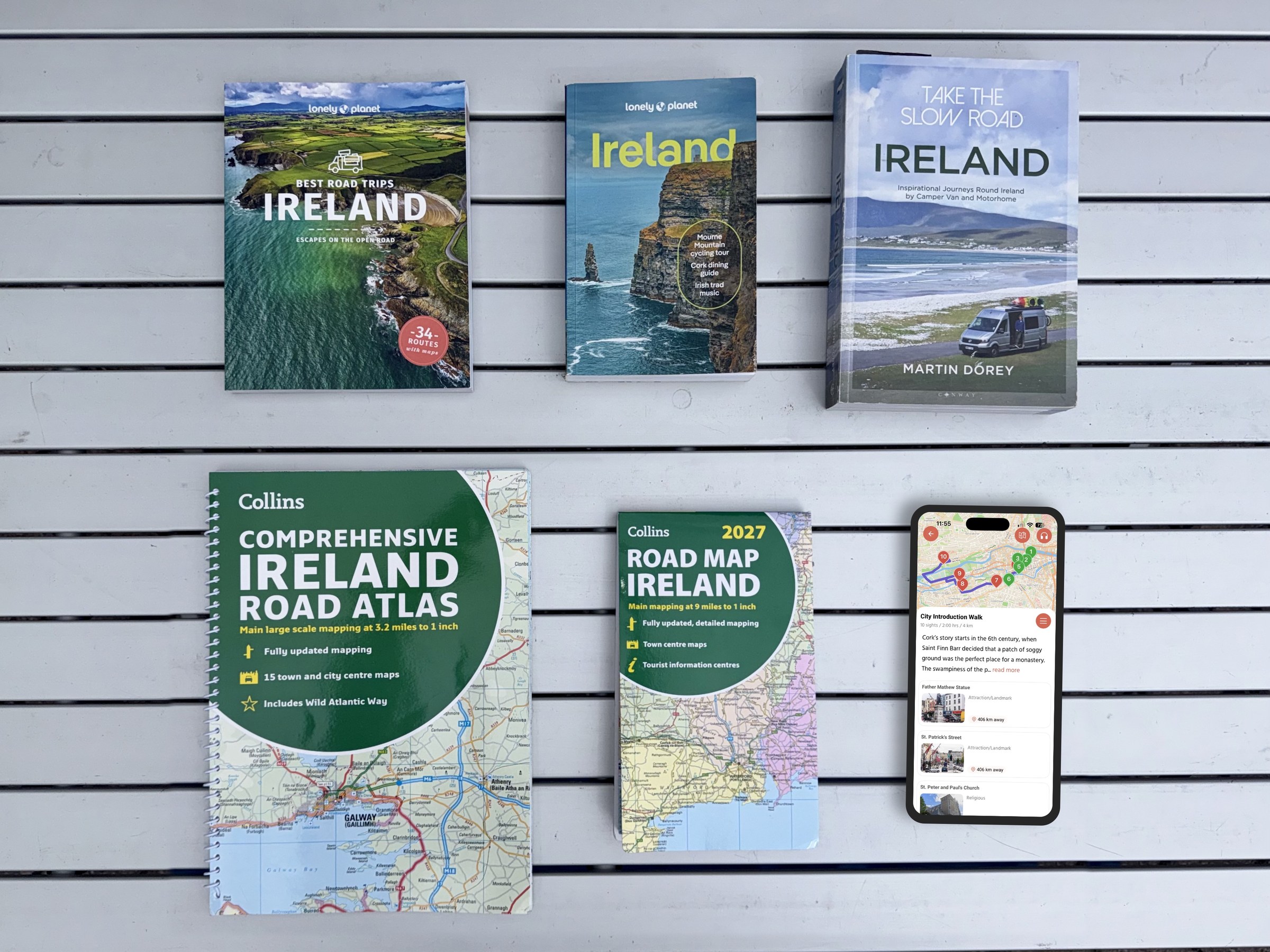
Local recommendations often beat all of them. People were constantly suggesting roads, beaches, cafes and places to stay. The bloke we met at Mizen Head even gave us a pile of maps and tourist bumf, while warning us that half of it was rubbish.
Satnavs still need supervision. On the way from Cobh to Kinsale ours decided that “coastal route” meant “fastest route across country”. We also managed to miss most of the Copper Coast because we hadn’t put enough guiding points into the route (in our defense that was early on). Next time any road that matters gets explicit waypoints rather than a vague instruction to Apple Maps.
We also learned not to decide that a road is suitable because another large vehicle has used it. We saw buses, motorhomes and an 8m Hymer using the Conor Pass. Only afterwards did we discover that the northern section is restricted to vehicles below two tonnes and 1.8m wide. Ollie exceeds both. So however straightforward the drive seemed at the time, we shouldn’t have been there. Check the restrictions, not what the bloke in the bigger van has done.
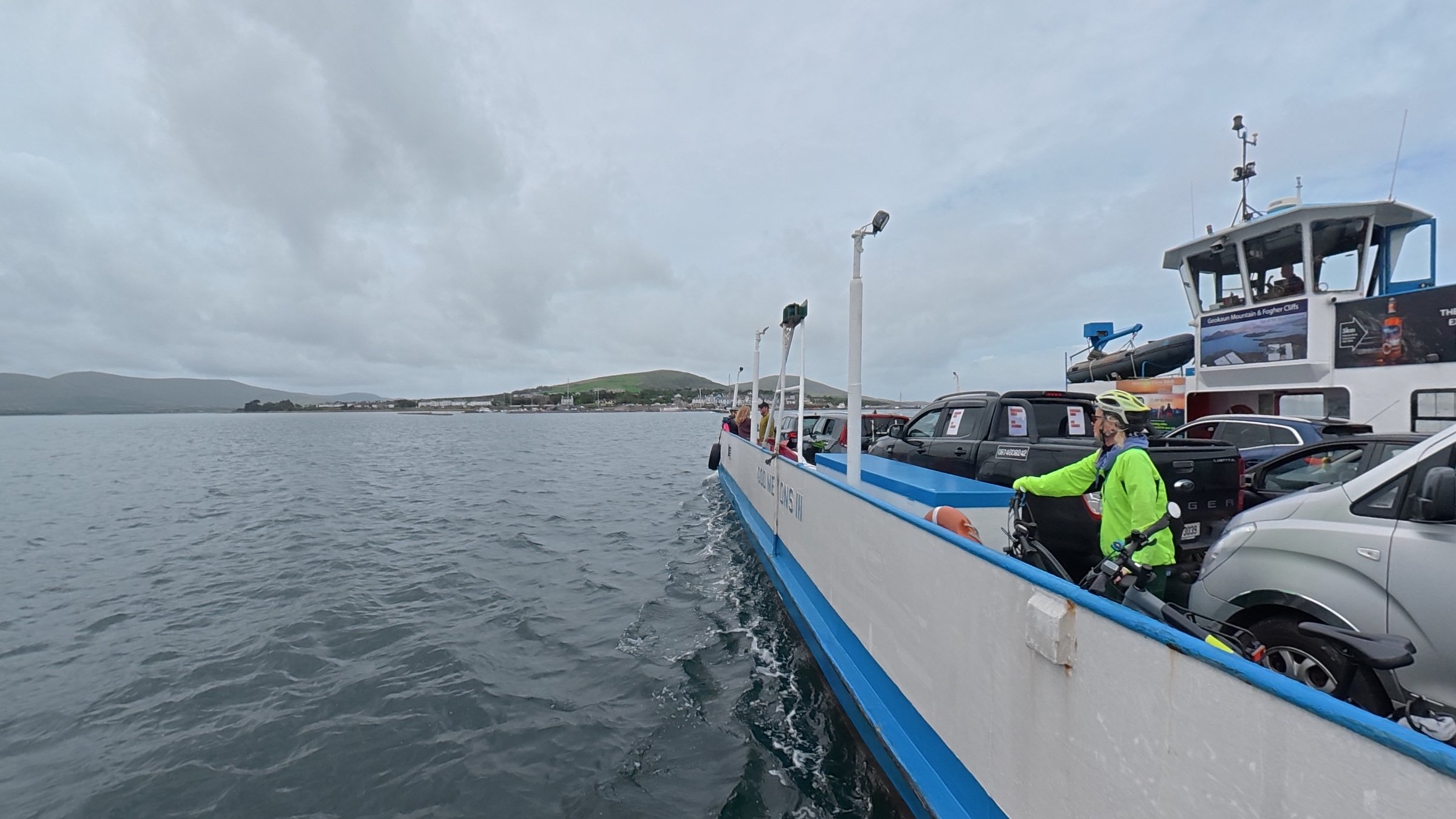
The ferries were all easy. Fishguard to Rosslare was painless, and the little vehicle ferries at Passage East and Cobh saved long drives around the estuaries. Taking the bikes on the Valentia ferry was just as simple. Cobh also demonstrated how useful public transport can be: parking beside the railway and taking the train into Cork worked perfectly.
Summary Summary
So would we go back. Absolutely.
We’d probably return to the southwest, even though we’ve now driven quite a lot of it. We’d happily do the best parts of the Ring of Kerry again, then continue north from Dingle and cover the large chunk of the original plan we didn’t reach. But we’d do it more slowly.
The New Van Summary
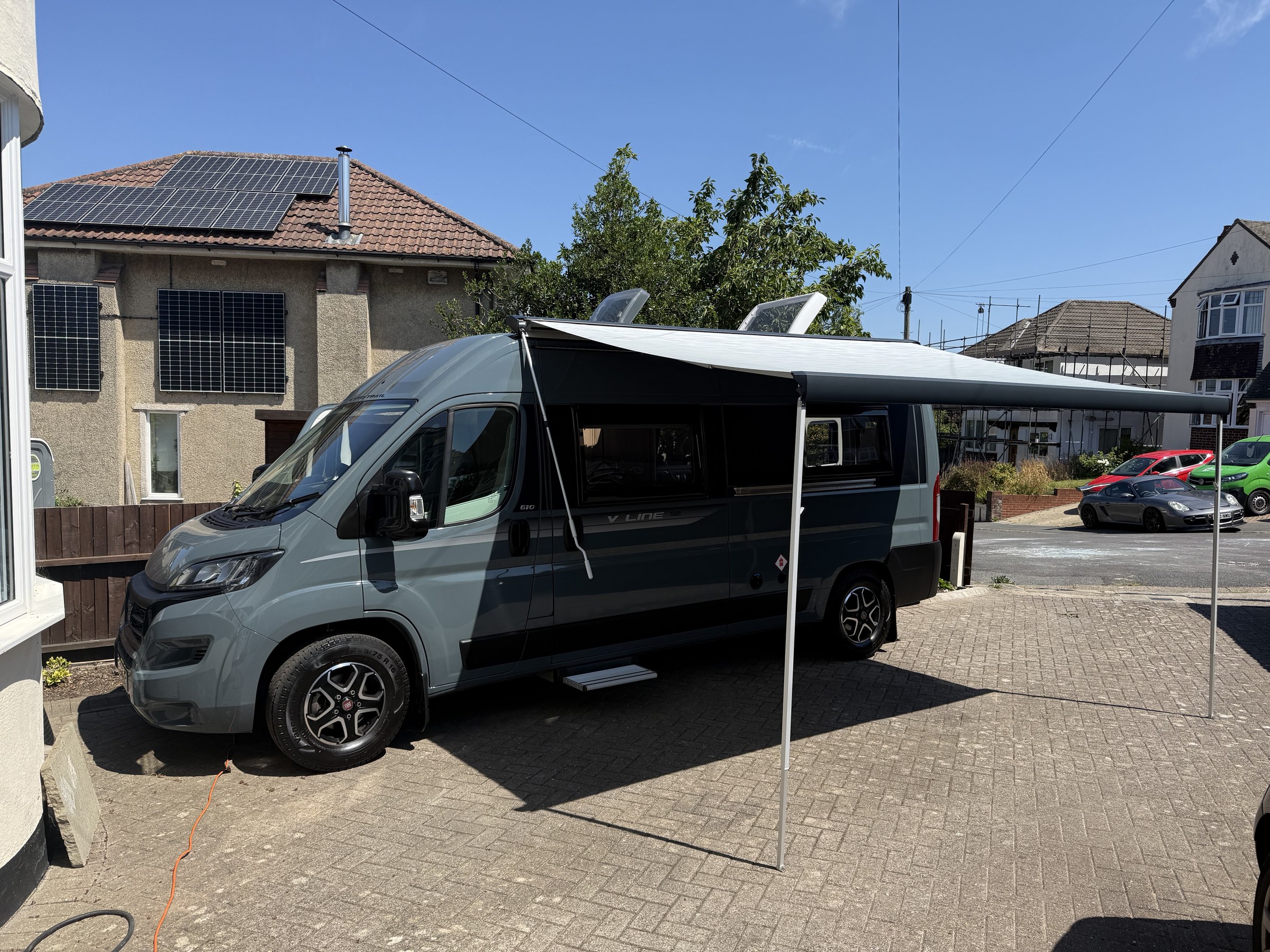
It’s working well and probably better than the Cali did for us. But, we don’t love it quite the way we did the Cali. Perhaps that will change, but for the moment it doesn’t quite feel like us. We would often feel conscious of our size in the Cali, but that’s magnified threefold for this van.
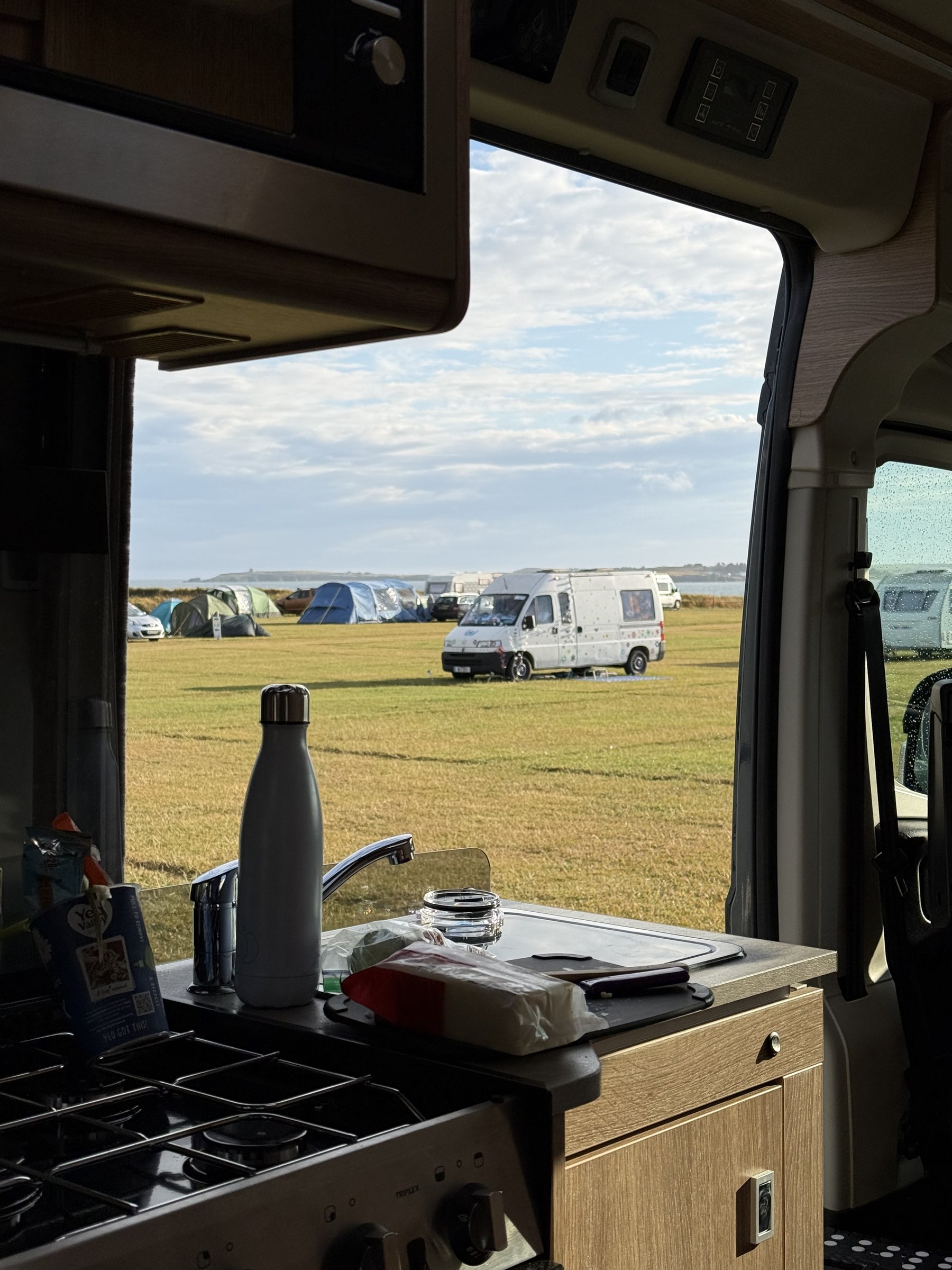
We’re also not quite in the groove with the new van. The way we did storage in the Cali is not the way to do storage in the new van. A box stuffed full of bits and pieces was the most efficient way of doing it in Ollie-I. But we have so much space now that we can be a bit smarter than that, and we’re still figuring that out. I think we can probably install some more sliding drawers and we definitely need new boxes that fit the available cubbies better.
The new van is also easier to drive. We always struggled with Ollie-I. It had the 200bhp engine and the 7-speed auto box. And there was something not tuned right with that combination. It wouldn’t allow the van to start moving on part throttle, and more throttle wouldn’t make much difference. So you gunned it a bit more and it would then spin the front wheels. My suspicion was always that the throttle mapping was set up for a much lighter van, and the extra Cali weight wasn’t accounted for in the vehicle dynamics. Hill starts were therefore a bit of a gamble and usually needed the handbrake to be used so we could wind up the gearbox before trying to pull away.
Ollie-II is much easier to drive in that respect, even with the auto-box. It pulls away on a light throttle with ease. It will hold easily on a hill with no handbrake and the turning circle is great. All traits that make the Ducato an accomplished delivery van and also a good starting point for a campervan.
It’s also much lower powered than the old van. 140bhp vs 200bhp. And a lot heavier. 3.0T vs 2.6T (not as different as you’d think). That means you need to give it some beans on a big incline, but we never ran out of power. With the 1-in-3s it was a case of trundling up them. But the powertrain never felt as though it needed more power.
On a size thing… it’s a lot more hassle to find parking in the new van. And towns and villages that we just cruised through before, now have to be navigated. We also feel quite conscious of causing jams for locals. We never really caused a jam, forethought is everything, but you’re more often having to stop and let people through where the Cali would often have been able to pass another car at the same time.
While talking about size, we should also mention height. Obviously lots of car parks are out of bounds. But you also have to worry about low branches and overhanging cliffs. We scraped the roof a few times on tree branches and had to take it slowly once or twice so we didn’t rip anything off the roof (TV aerial or Starlink).
On the whole the new van is a big improvement on what we can now do, and how long we can be off-grid for.
What worked well in the Van
Beds
We set the beds up every night as two singles, running length-ways in the van. That lets each of us get up and wander around, go to the loo, without disturbing the other.
Each single bed can be extended using rails and the backrest bolster to create a much larger double bed. We did try extending just my (John’s) side on a couple of nights, but the extending rails need support bars running from side to side, and they would be a trip hazard with only one side set up. So we went back to two smaller singles.
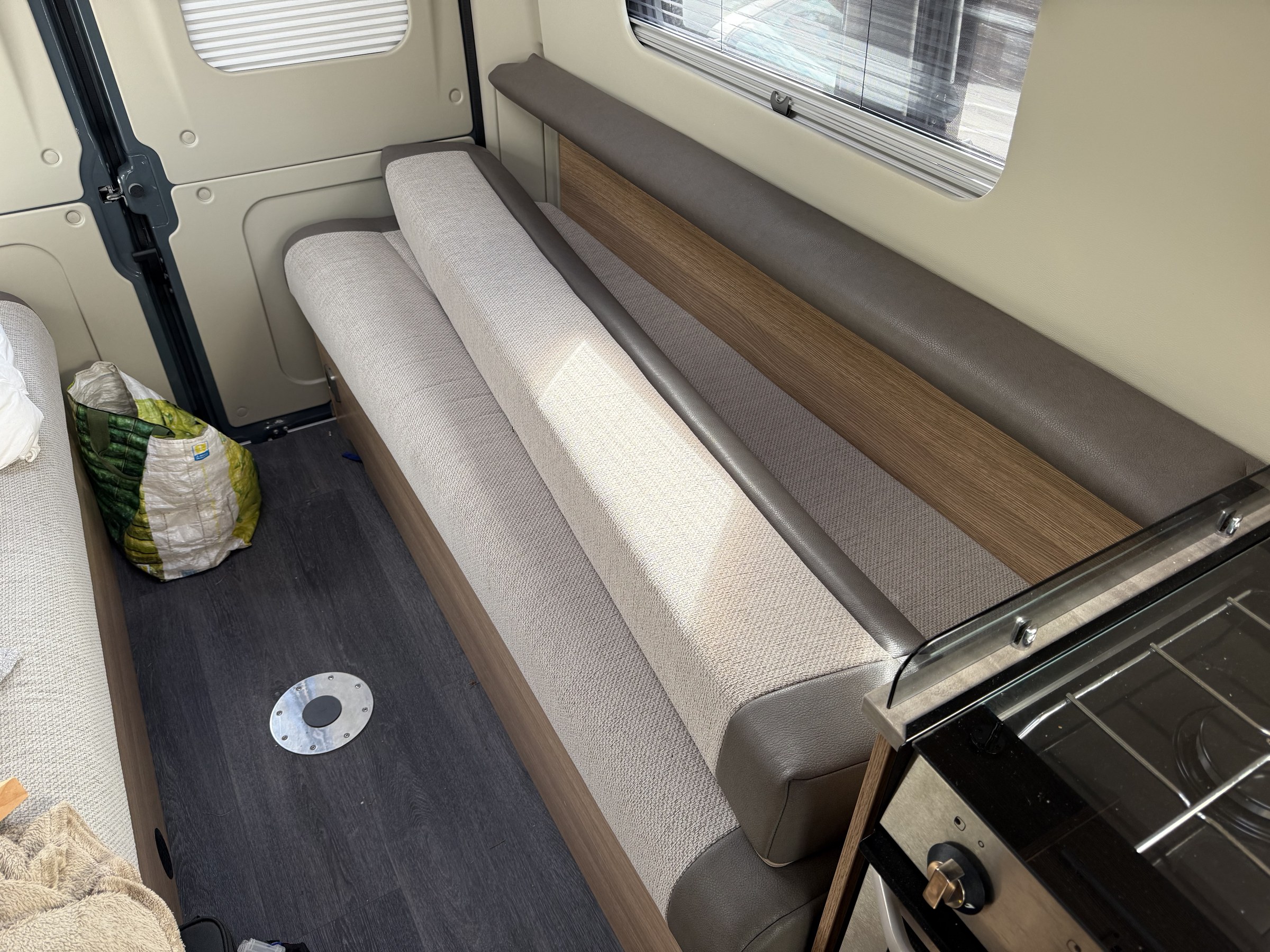
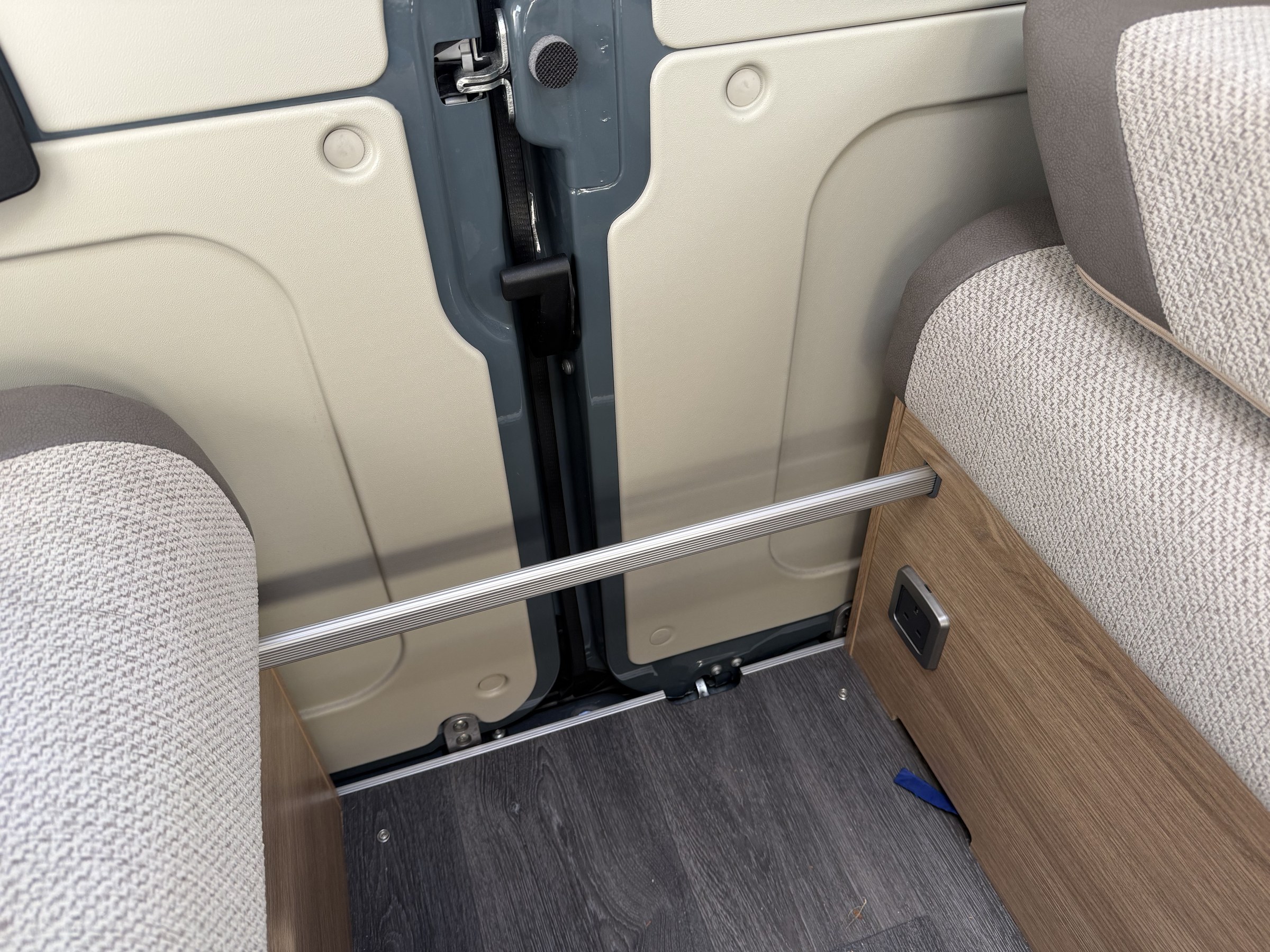
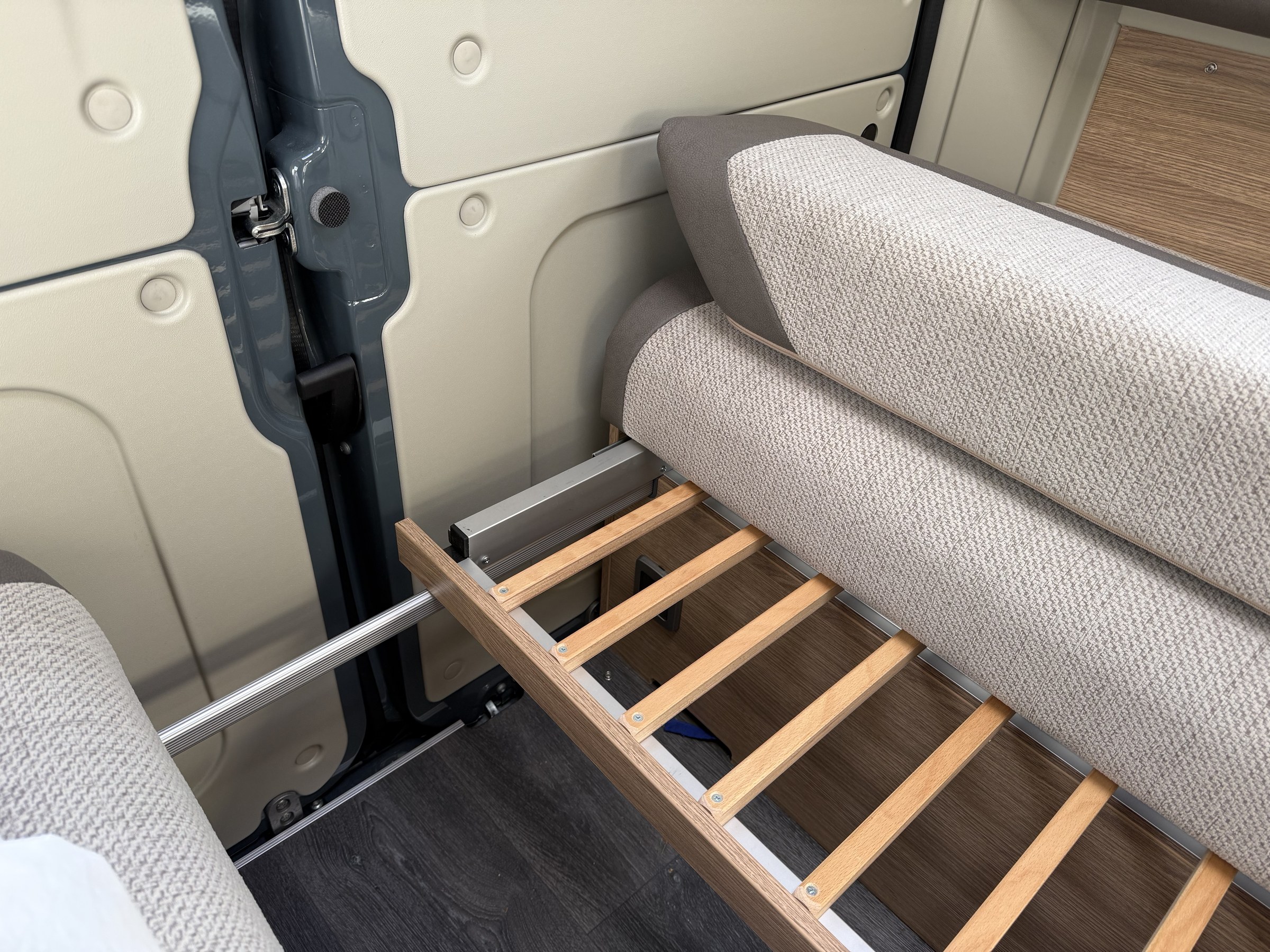
At night, with those two singles, the backrest bolsters became a storage problem. So we tucked them in the gangway between the two beds. That was ok for this warm weather trip but the space heating has a vent under the driver side single bed and the bolsters would block it. I’m thinking of having some way of storing the bolsters up in the top of the bed area, at roof level.
The single beds took a bit of getting used to. They’re not very wide and only just about long enough. But eventually you get used to it.
To start with we packed the bedding away every night but then we figured out that we could roll up the sheet and duvet together and leave them at the back of the bench-seat/bed. They were out of the way and easier to unroll each evening. The bolsters were a bigger pain than the bedding. Sue’s keen not to take the bolsters on future trips but we’ll have to try some different ways of managing them.
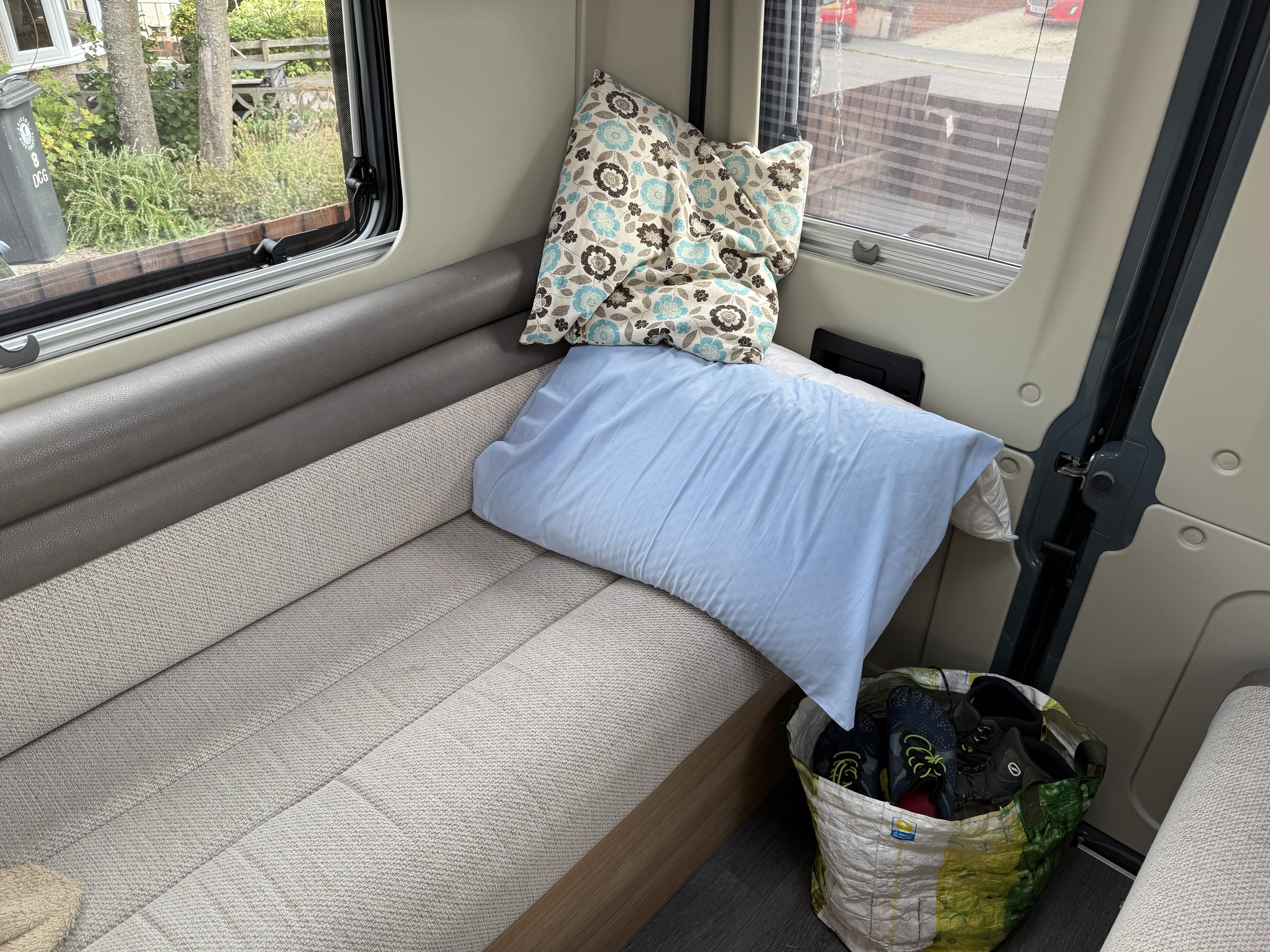
The beds themselves were actually very comfortable.
Extra space
Brilliant!
To be honest, probably more than we need!
Toilet
Also brilliant!
But too tall. We need some sort of wooden decking on the floor to raise the floor level a bit.
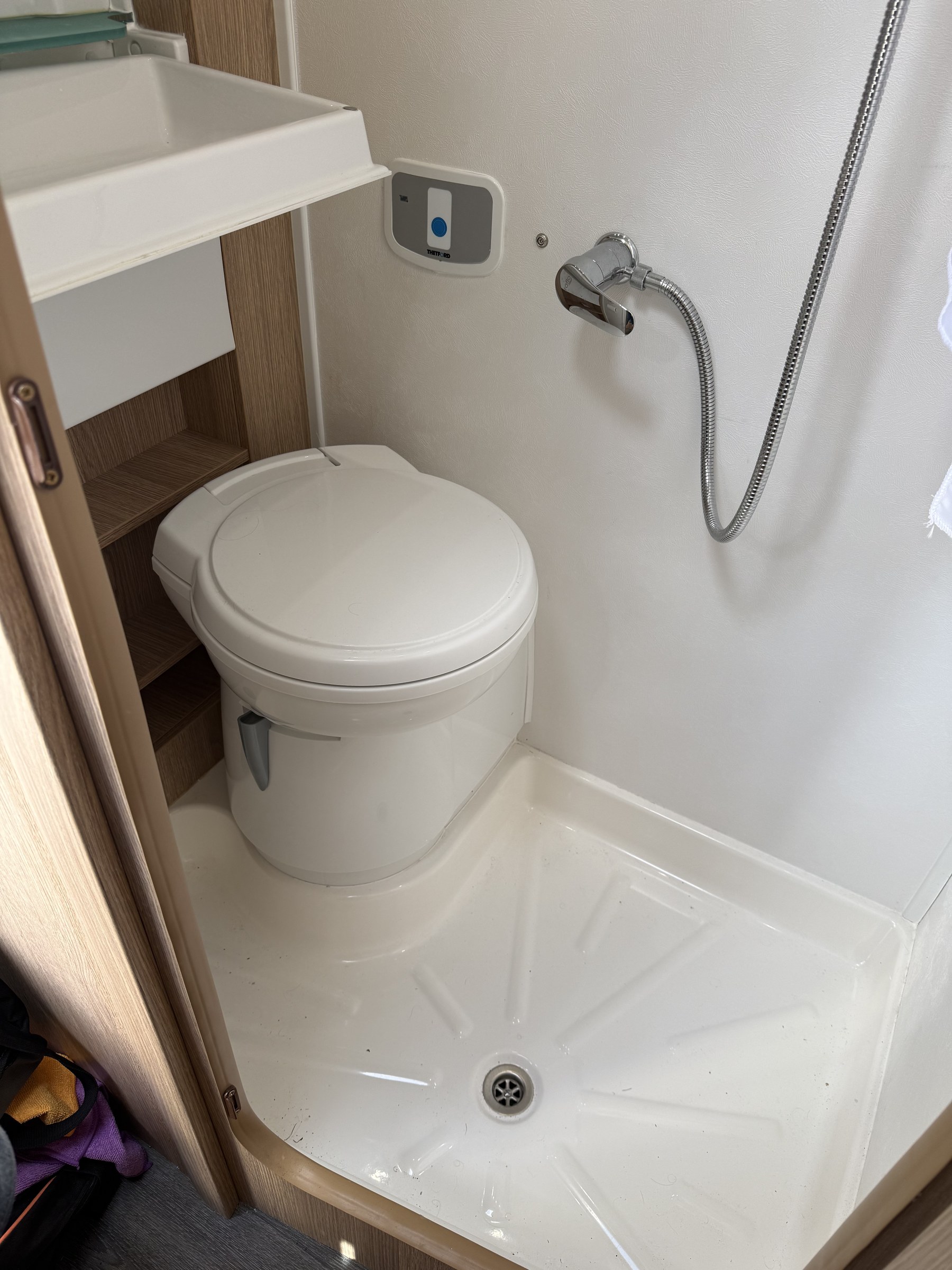
Still no number twos though.
Cooking facilities
On the whole, really good.
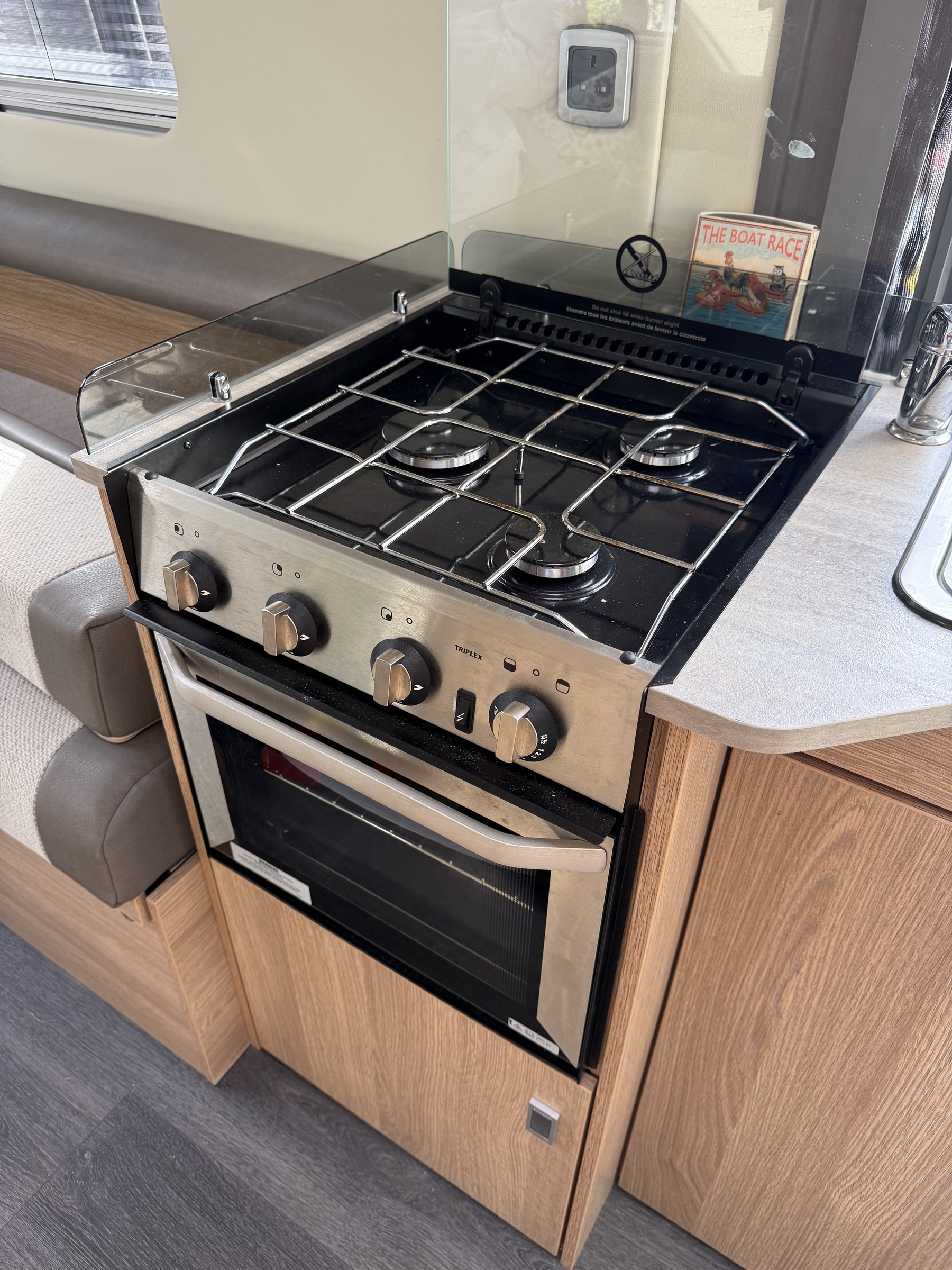
The larger of the three hob burners didn’t stay lit though, so we only had two burners for the trip (not really a problem). We’ll need to get that looked at. It’s probably just the thermocouple, but taking it all apart, when we got back, and cleaning didn’t fix it. It’ll need a service.
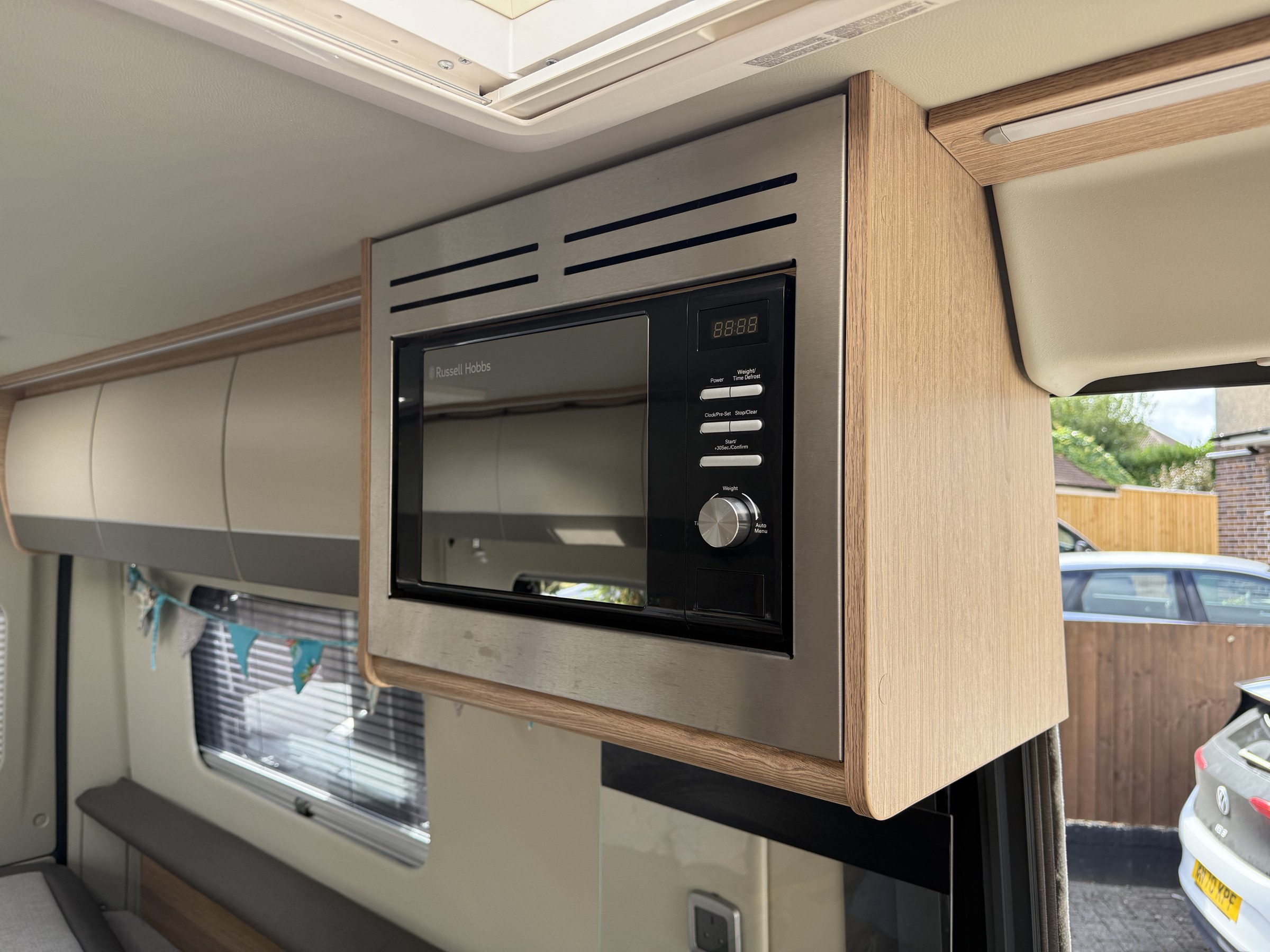
The microwave got used a couple of times to start baked potatoes off, and then finished in the oven. But other than that, we didn’t use it. This is a strong candidate for getting removed and providing some more storage. Or perhaps a small air-fryer to replace it.
The oven was good but not really essential. If we were static for a bit more, then perhaps having more refined cooking facilities would have mattered. But we moved around a lot (16 places in 21 nights) and so we often just did simple meals on the hob. But we wouldn’t want to get rid of both the microwave and the oven – the oven’s a bigger deal to get rid of anyway, it’s integrated with the hob.
Indoor table
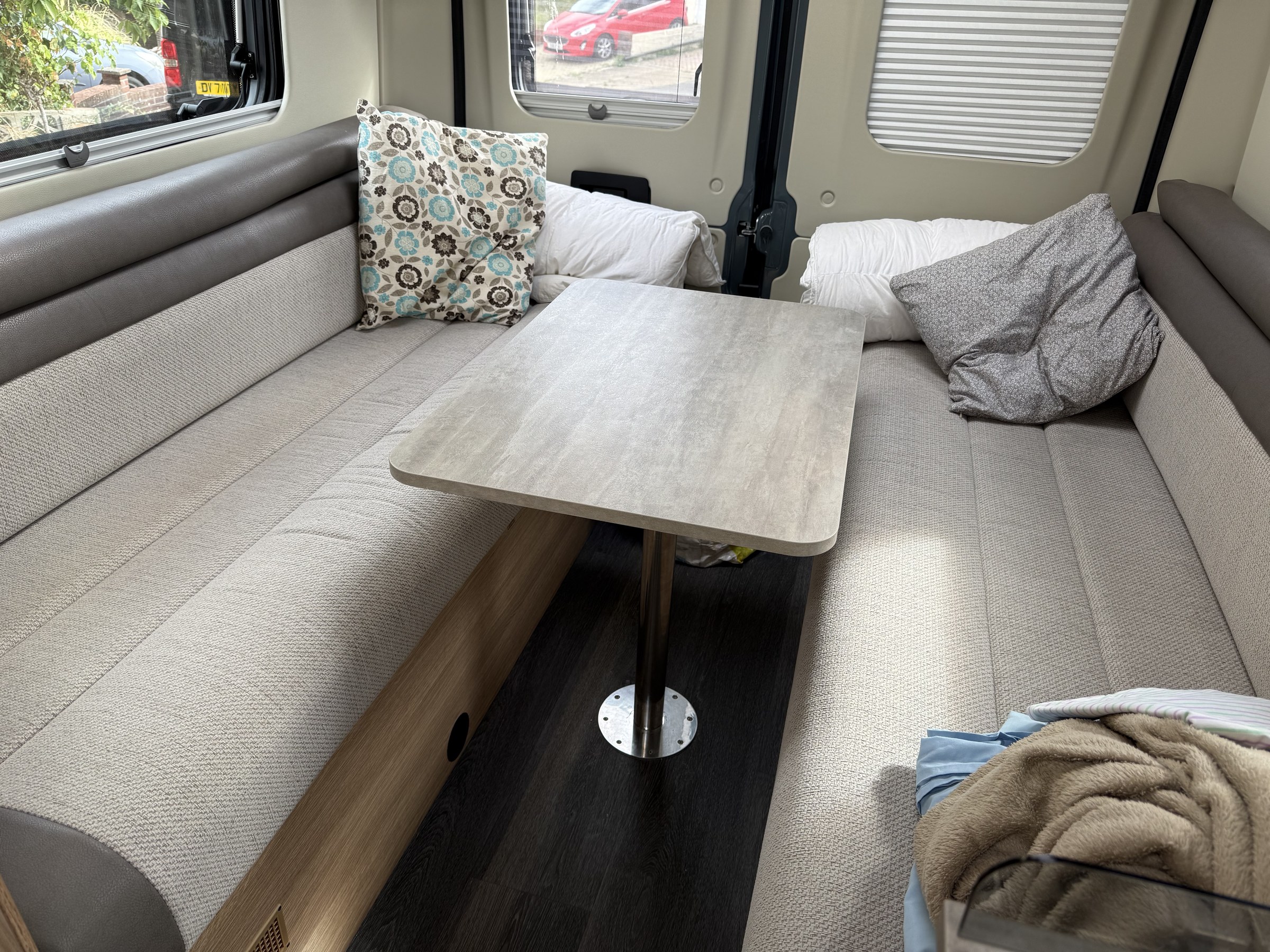
The van has a hole in the floor, in the space between the two rear bench seats. You take a stainless steel tube out of the front cupboard above the fridge and the table top from behind the driver’s seat. The tube goes in the hole and the top goes on the tube.
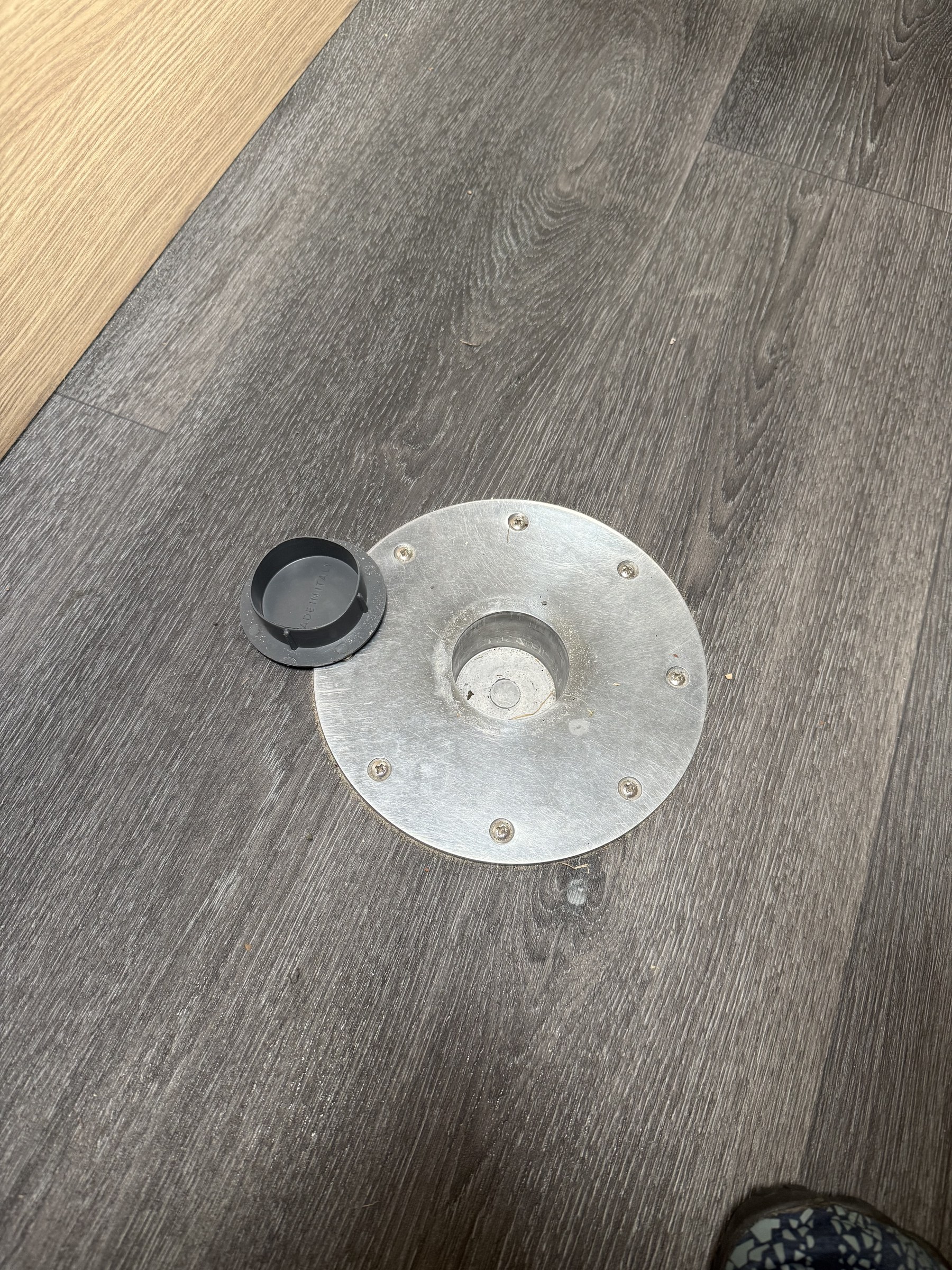
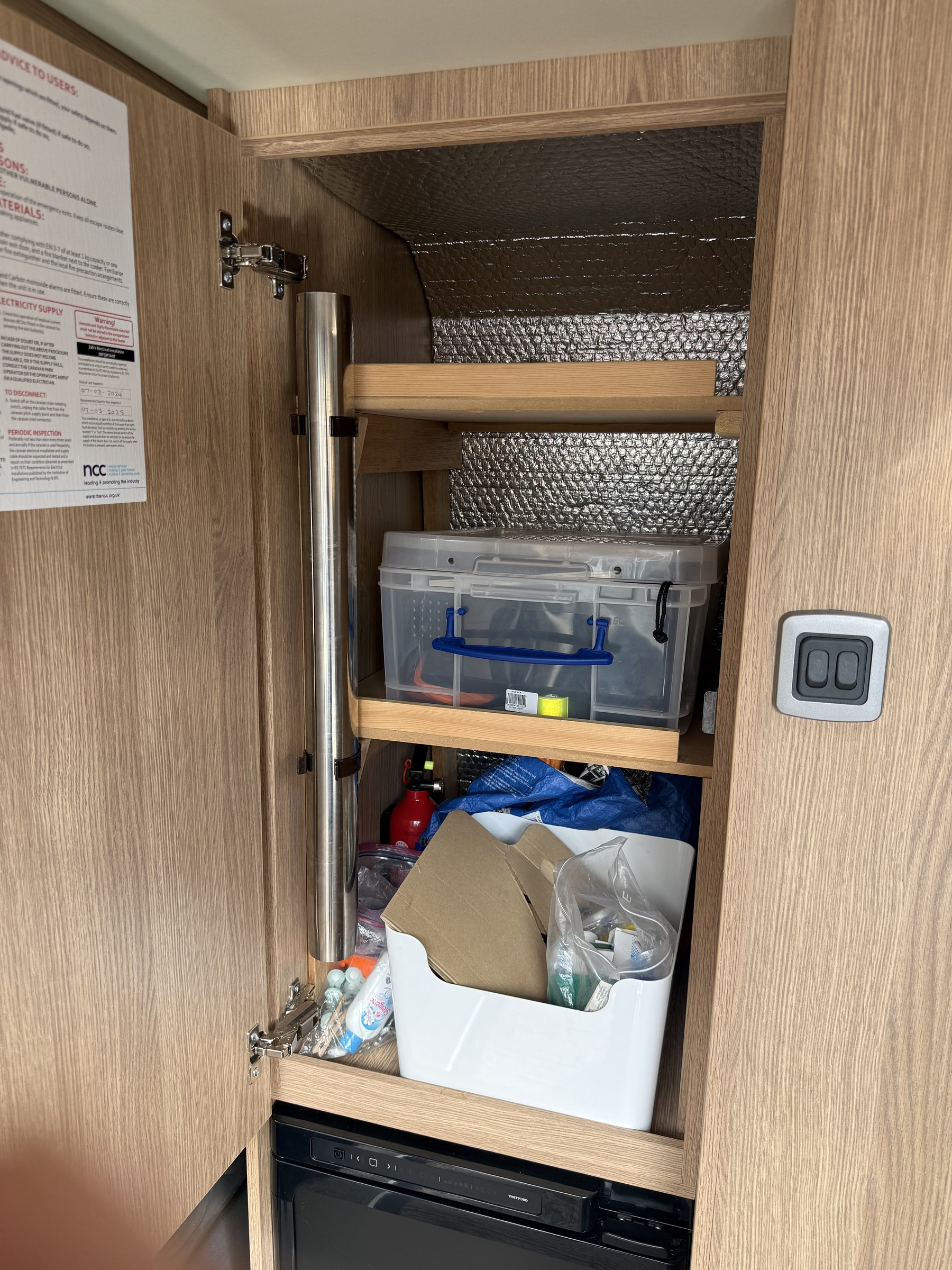
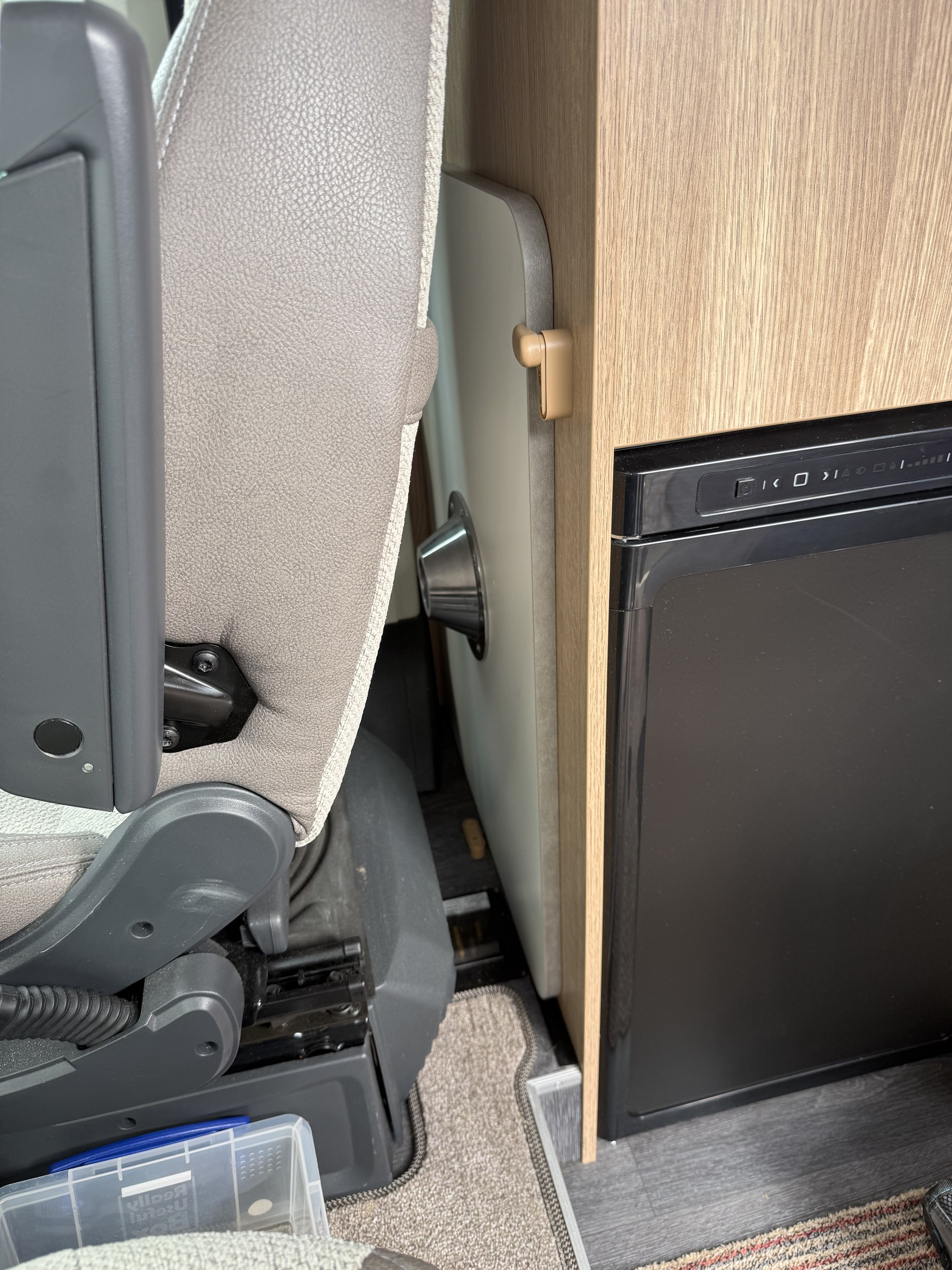
It worked a lot better than I thought it would. Both ends of the tube are tapered and the whole thing is reasonably stable. You couldn’t stand on it, but fine for meals and laptop working etc.
The outdoor table fared less well, so that’s in the what didn’t work well section.
Stools
We’ve used these folding stools for a couple of years in the Cali (and around the house now). They’re brilliant. We have a short one and a taller one.
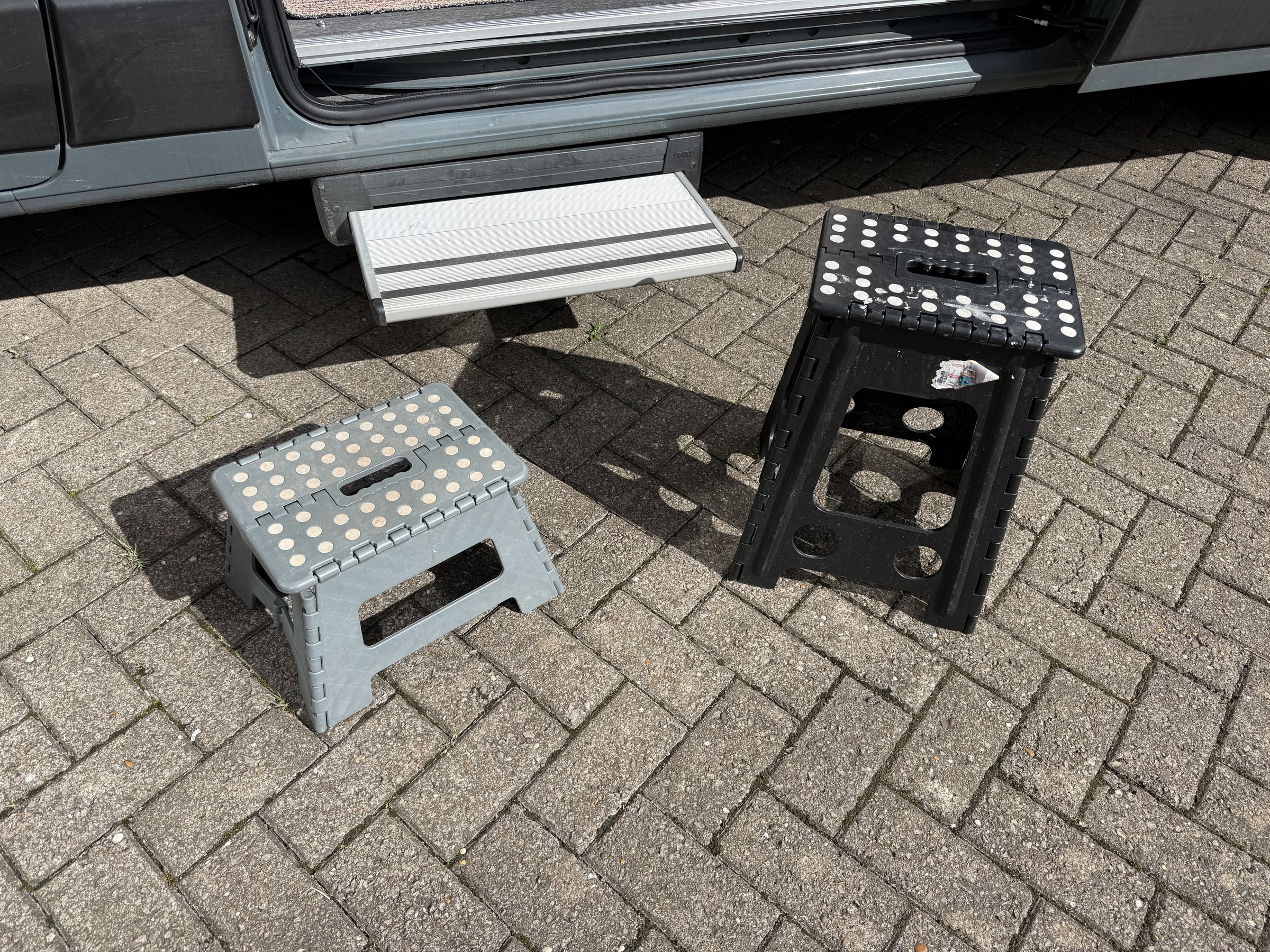
We use them all the time:
- Outside to stand books, wine and plates on while we’re eating or drinking outside
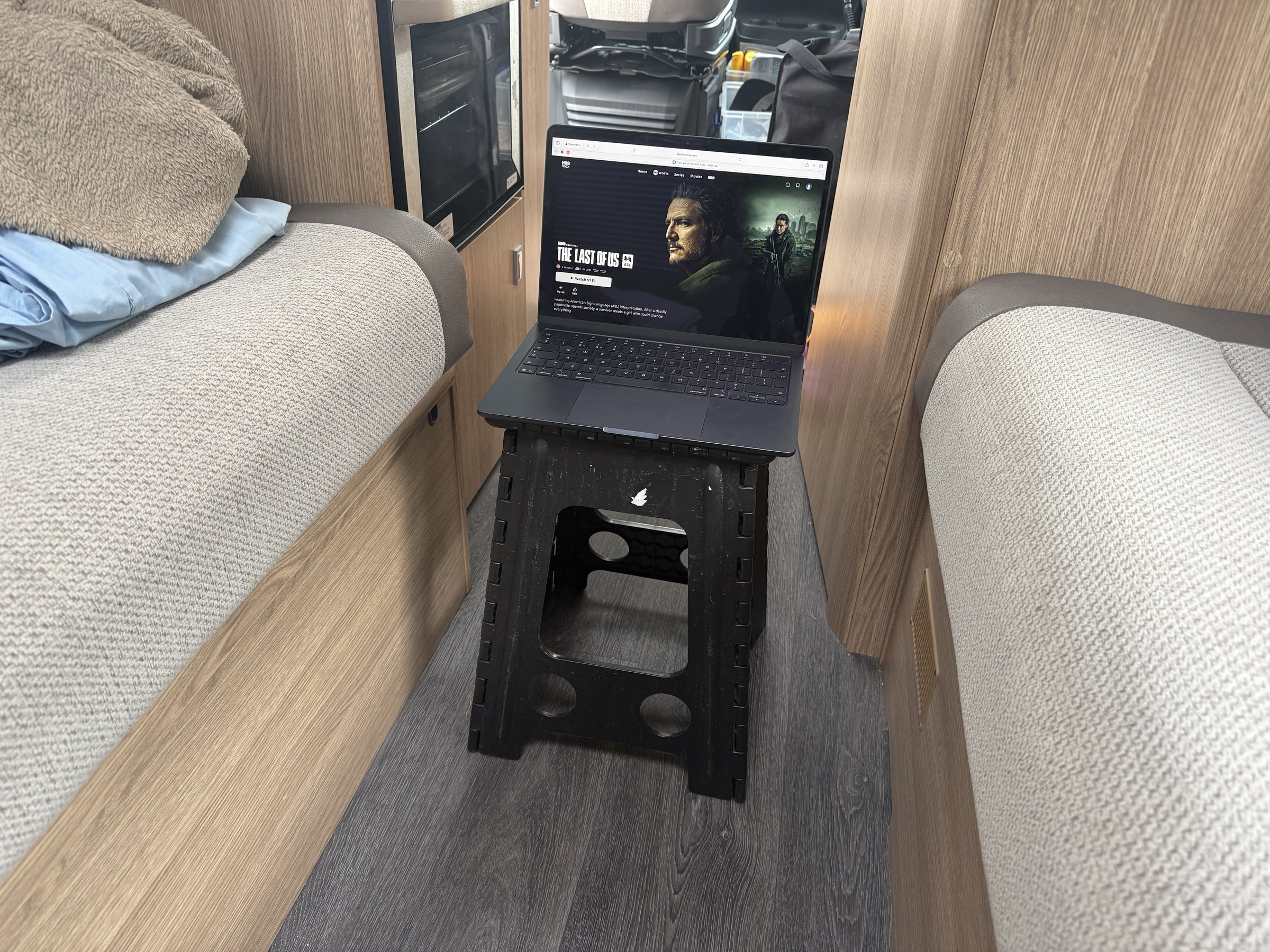
- Putting a laptop on them as we watch shows in the evening (Ted Lasso 4 and The Last of Us 1)
- Cleaning windscreens and awnings
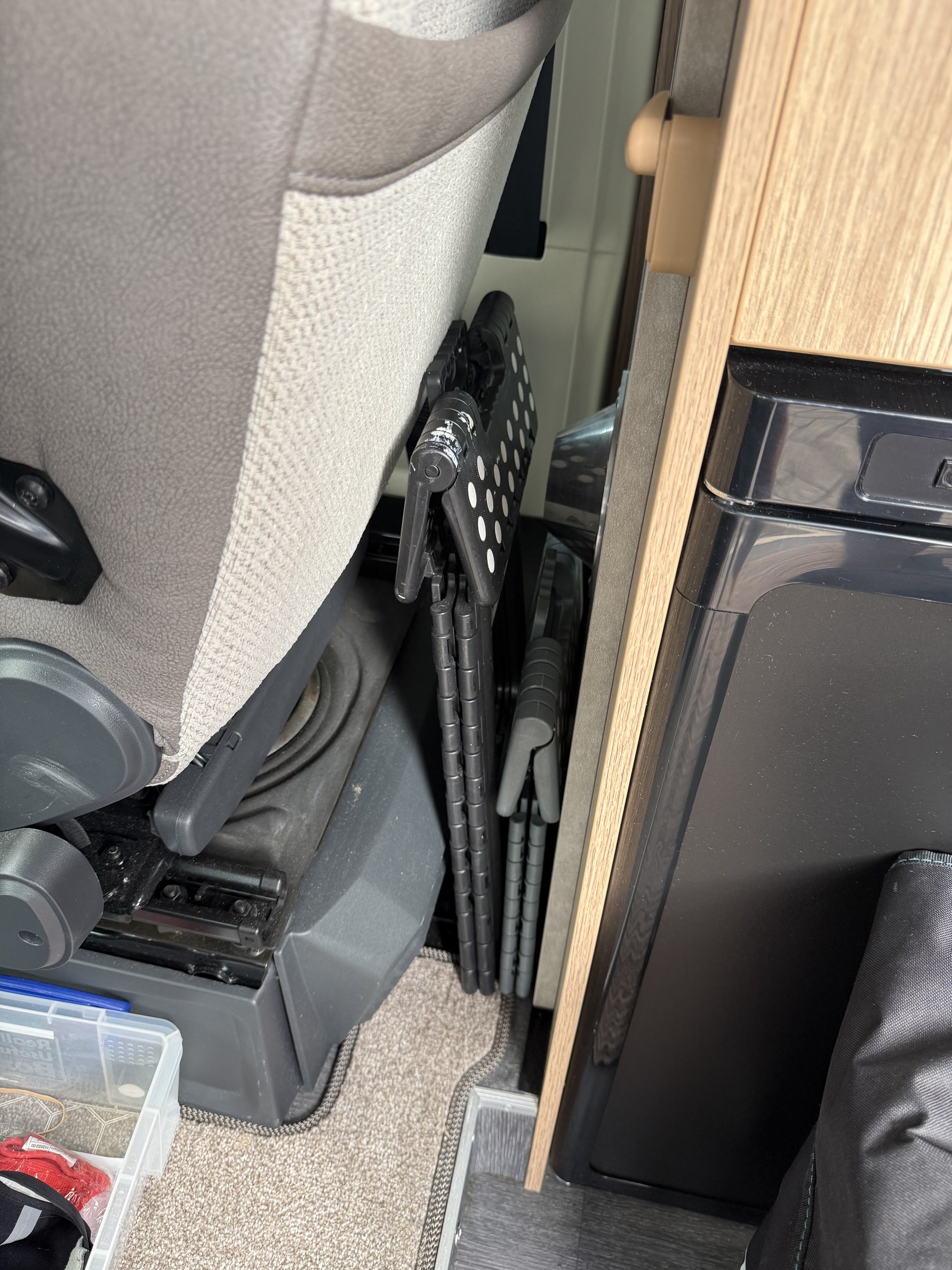
The stools pack away in front of the inside table top, behind the driver’s seat.
Bikes
Taking the electric bikes was definitely the right decision. The Waterford Greenway was one of the best days of the trip, and the bikes made it possible to explore Valentia without moving the van. They were also useful for nipping into Bantry and getting around the Muckross estate.
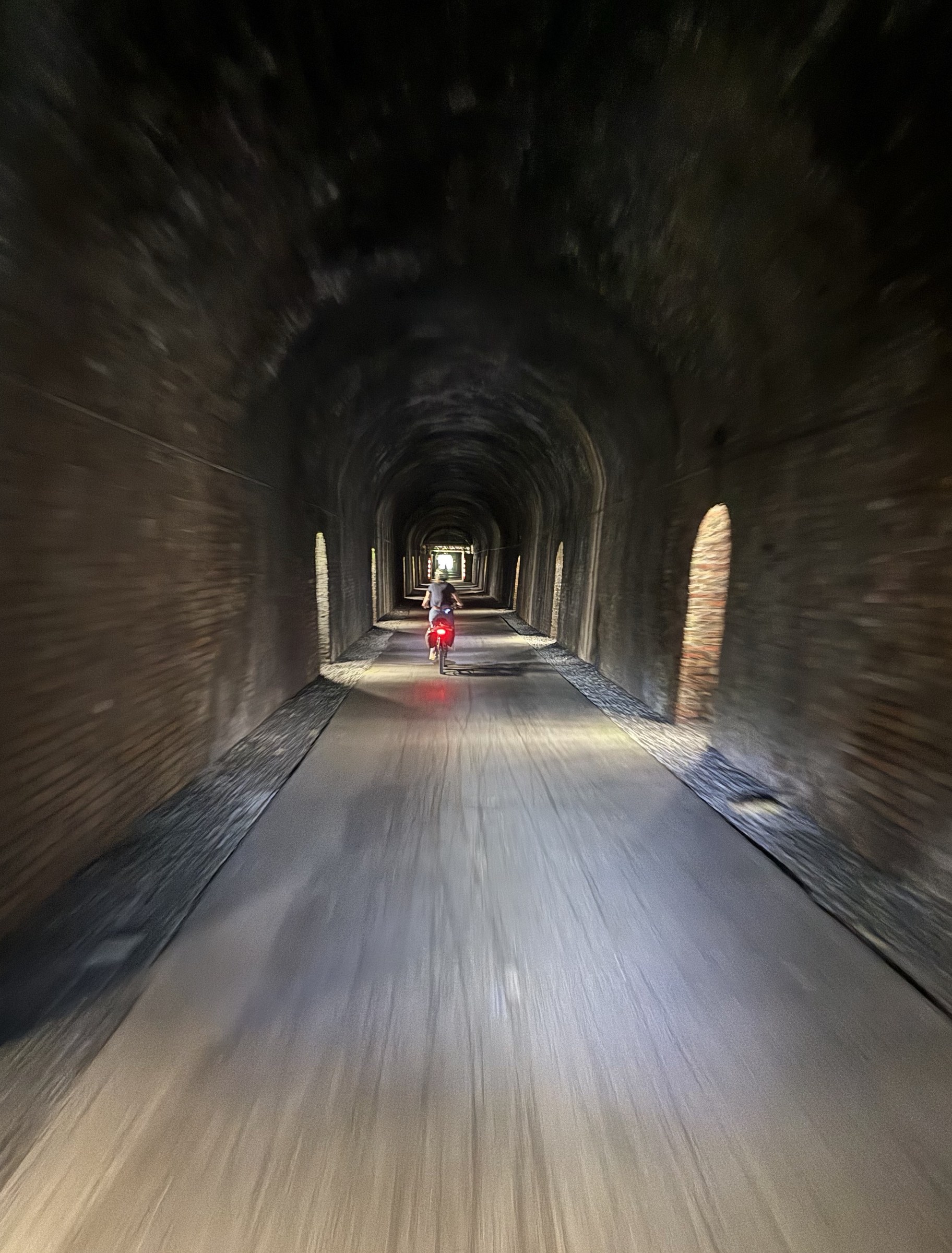
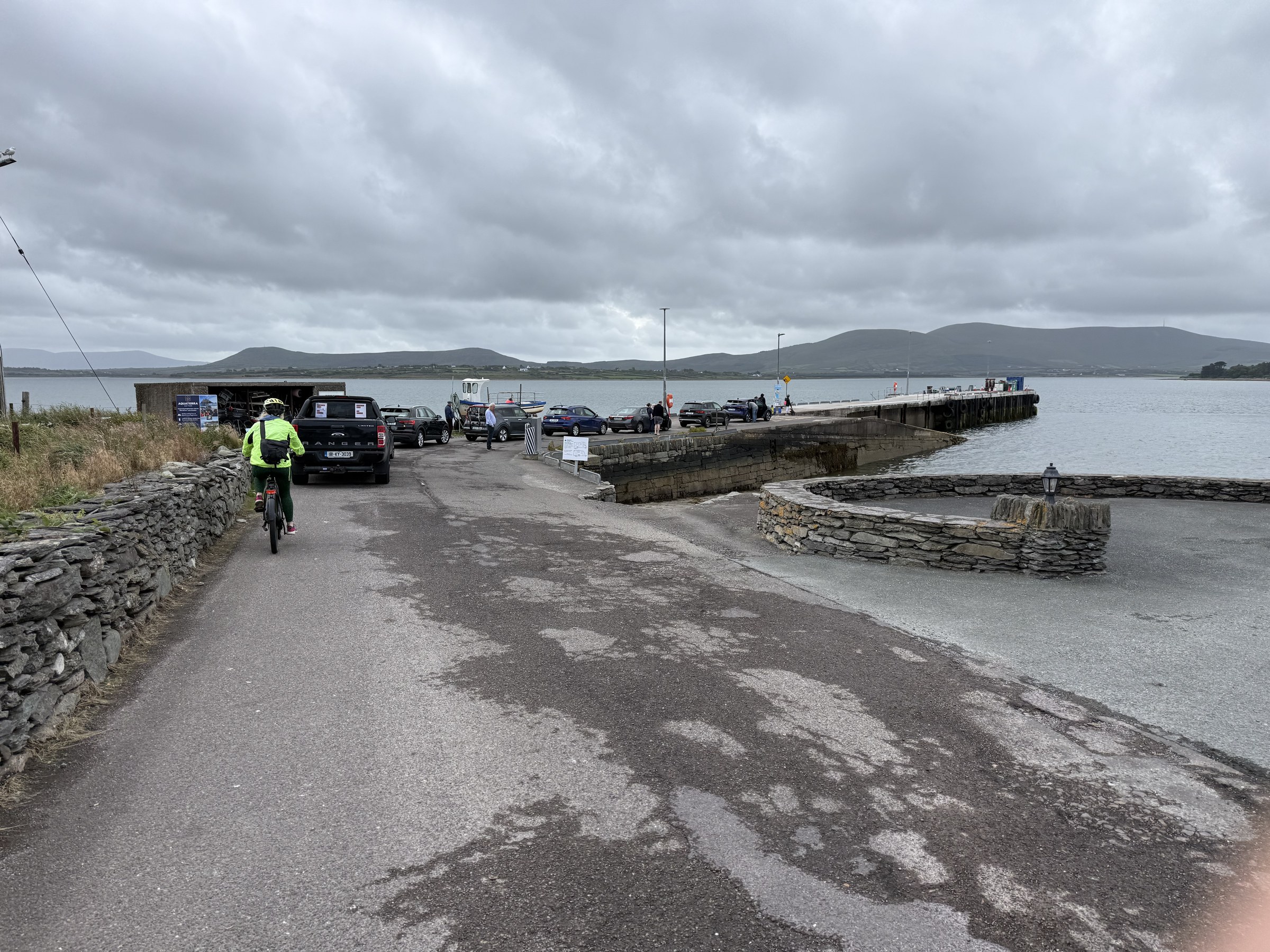
The electric bit mattered. Valentia had some brutal hills, including the climb back from the tetrapod trackway. We could have cycled the island without motors, in the same way that we could have walked it carrying the bikes on our backs, but neither would have been much fun.
The bikes worked. The arrangement for carrying them needs more work — see below.
Shower
The shower was surprisingly effective. We christened it while we were off-grid at Dungarvan and it was perfectly usable.
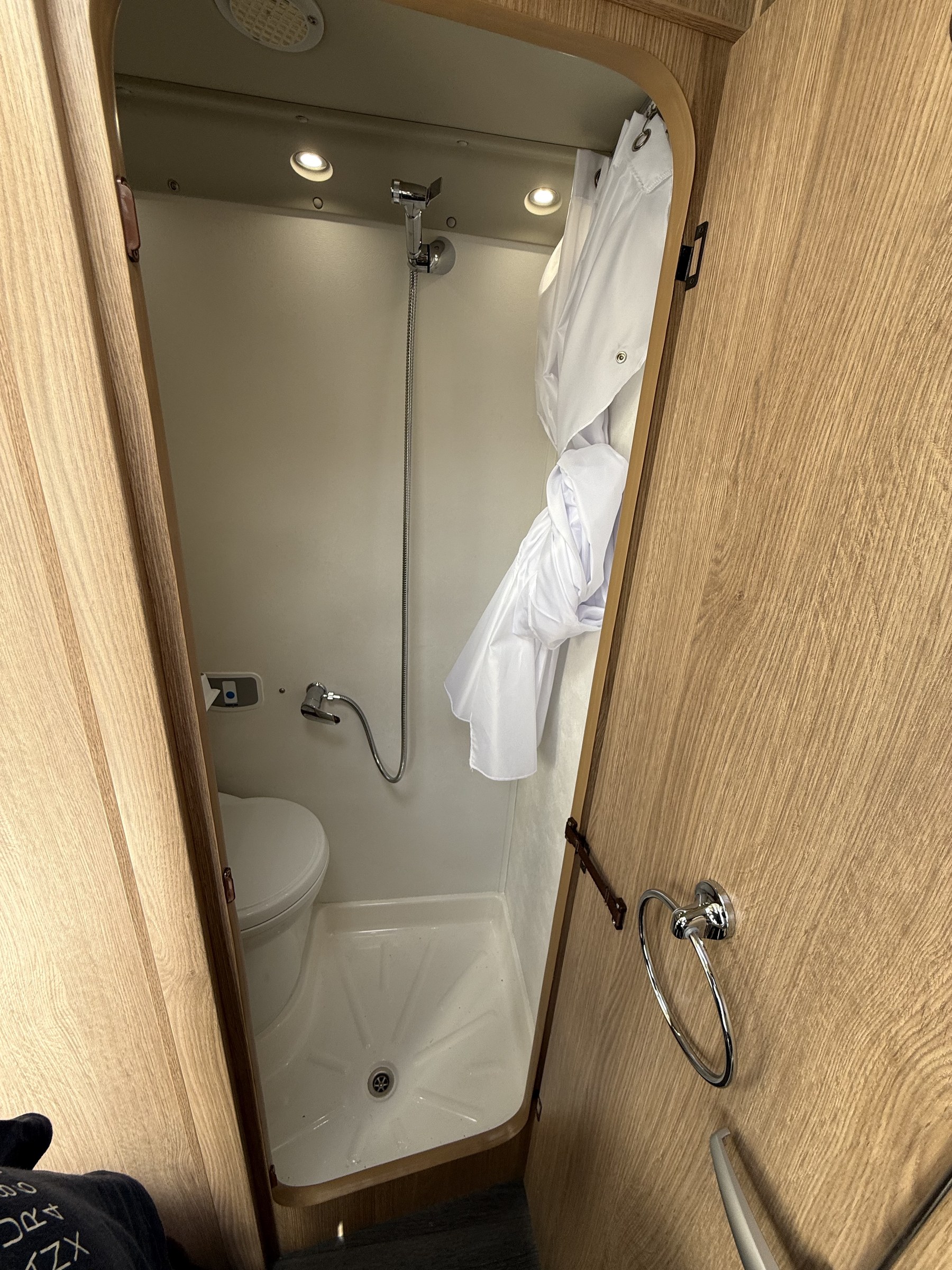
But we hadn’t levelled the van carefully enough, so the water collected at the wrong end of the shower tray and we had to bail it out. The shower therefore works, but only if we pay more attention to the chocks when we park. Levelling isn’t just about stopping things rolling off the table.
Starlink
A bit of a luxury.
Don’t get me wrong, there were a couple of nights where we had no Wi-Fi and almost no cellular data. So we could probably have got by without – well of course we could.
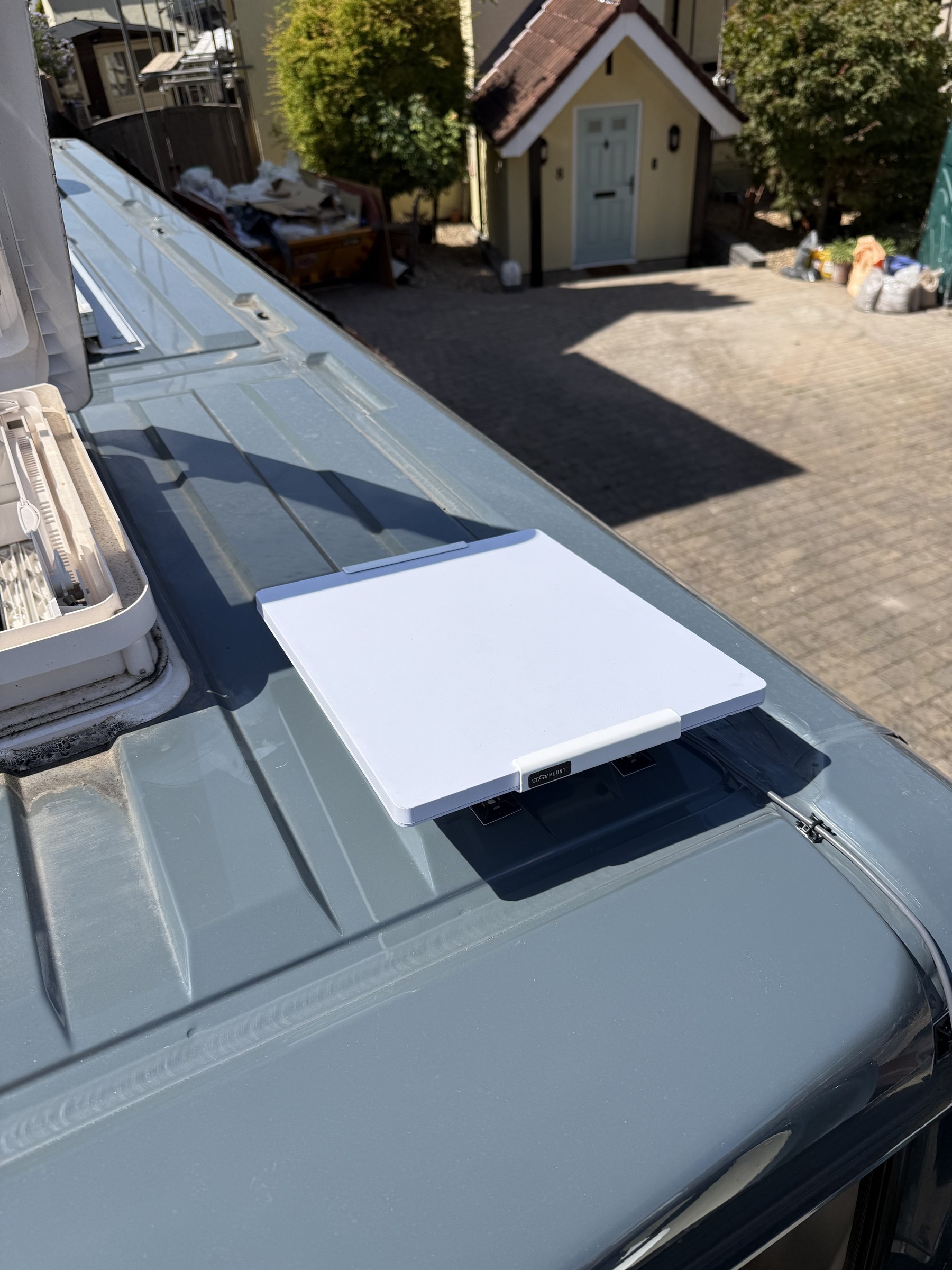
But the Starlink was flawless. Even when parked (nearly completely) under trees. As long as it could see about half of the sky then we got 200Mbps down and about 30Mbps up. More than enough for streaming and blog work. It might have been a challenge to upload big YouTube videos, but that’s only because we’re so used to high internet speeds at home these days.
What we will need to change is the Starlink power. I have it powered off a Starlink 12V to 48V adapter.
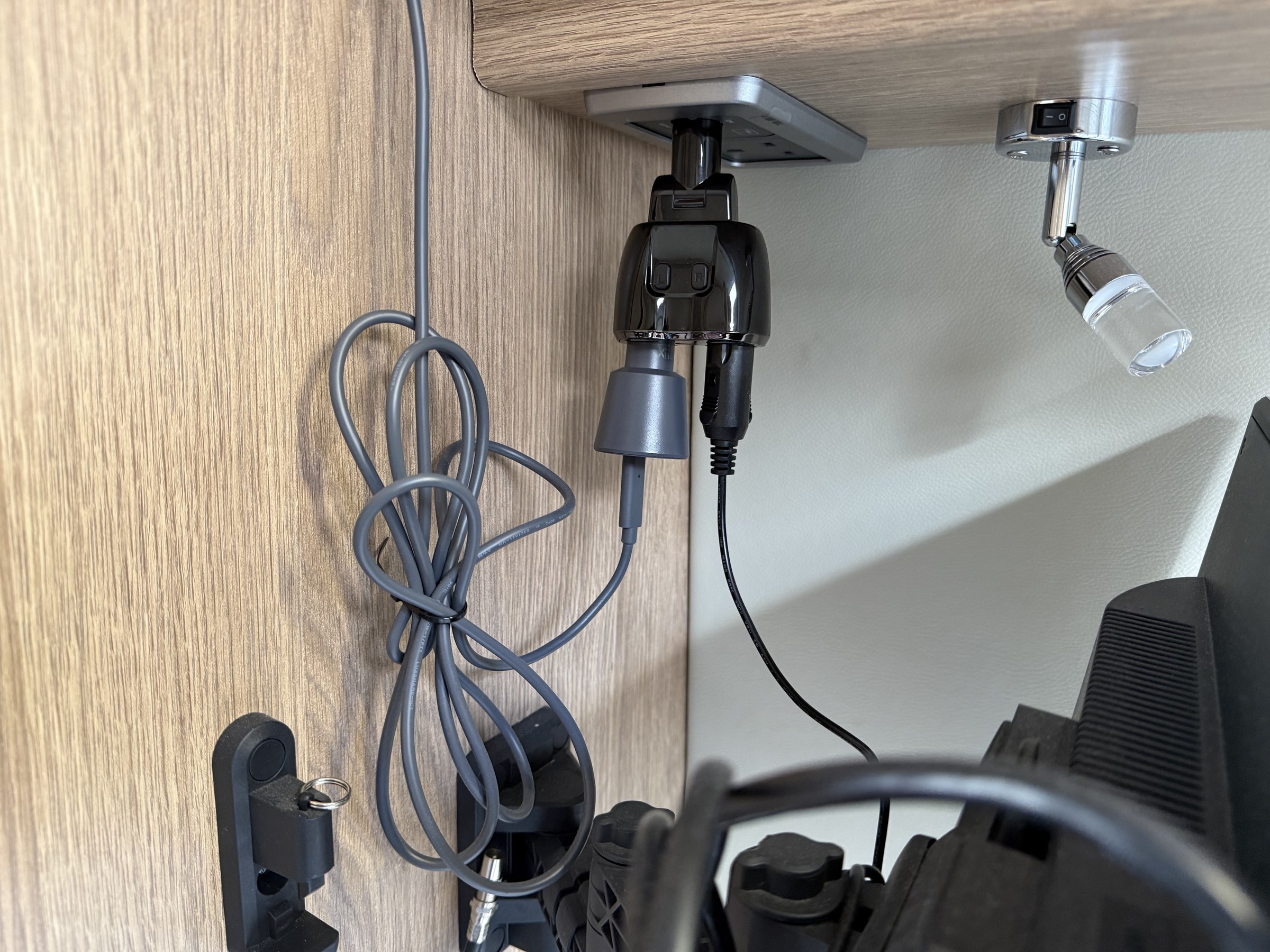
There’s lots of talk about how you shouldn’t run Starlink off 12V on long cable runs. But it’s only 2A and the voltage drop shouldn’t be too bad in our van. Anyway, I took the advice and bought the 48V adapter, it was fine, but we will need to hardwire the power so we don’t use up valuable 12V cigarette lighter sockets that we can use for other things. We also need to find a better way of mounting the Starlink on the roof. I’d gone with a mag-mount option (which didn’t budge a mm on the trip) but it’s really only meant to be temporary and I don’t like the idea of a mag-mount all the time. Ideally we’d remove the TV antenna from the roof and put the Starlink in the same position.
Fridge
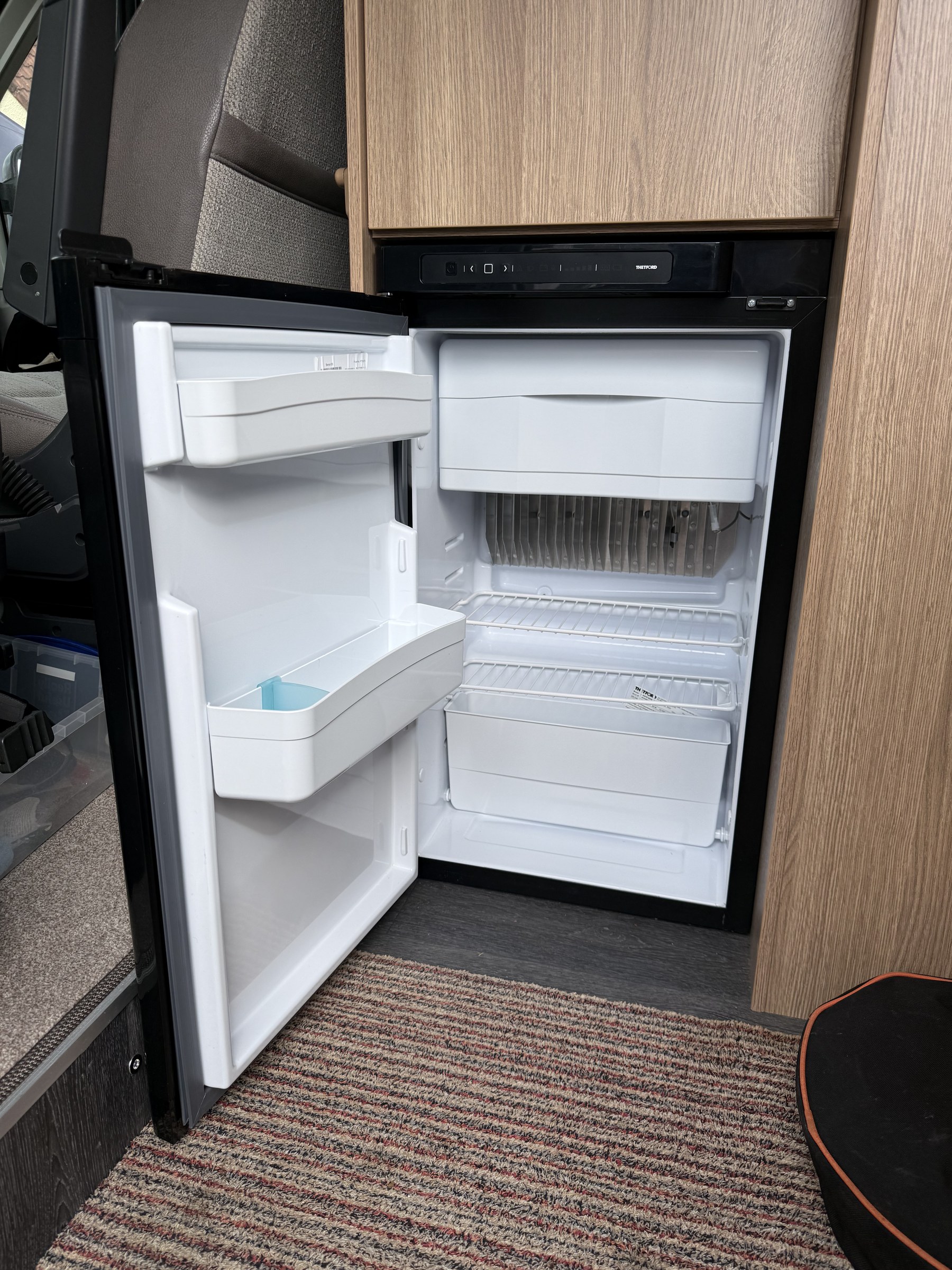
Worked flawlessly. It’s not much bigger in volume than the Cali fridge. But access is much much easier, and the freezer section was useful to quickly cool things. It did freeze a couple of bottles of beer that we forgot about one night, so obviously in mid-20s heat it’s able to freeze things too. (The sales guy that ran us through the van when we bought it said it would struggle in 30+ temps).
On paper the new fridge is substantially bigger than the Cali fridge: 81 litres gross versus 42 litres. But once you account for the freezer (10L), cooling fins and slightly awkward storage layout, it didn’t feel anything like twice the size in use.
The automatic triple-fuel system worked well. It ran on 240V when we were plugged in and switched to gas when we weren’t. For the brief periods when we were on the ferries, and the gas was off, it ran on battery.
The only downside was condensation from the internal aluminium heat-sink. It takes up space in the fridge and causes water to drip onto things below it. Not a big issue though. The lower “flip out” tray was also a faff, but not hugely so.
We had the temp set to three bars out of five and that kept everything nicely chilled and milk kept for days without going off.
Skylights
Skylights are a revelation to us.
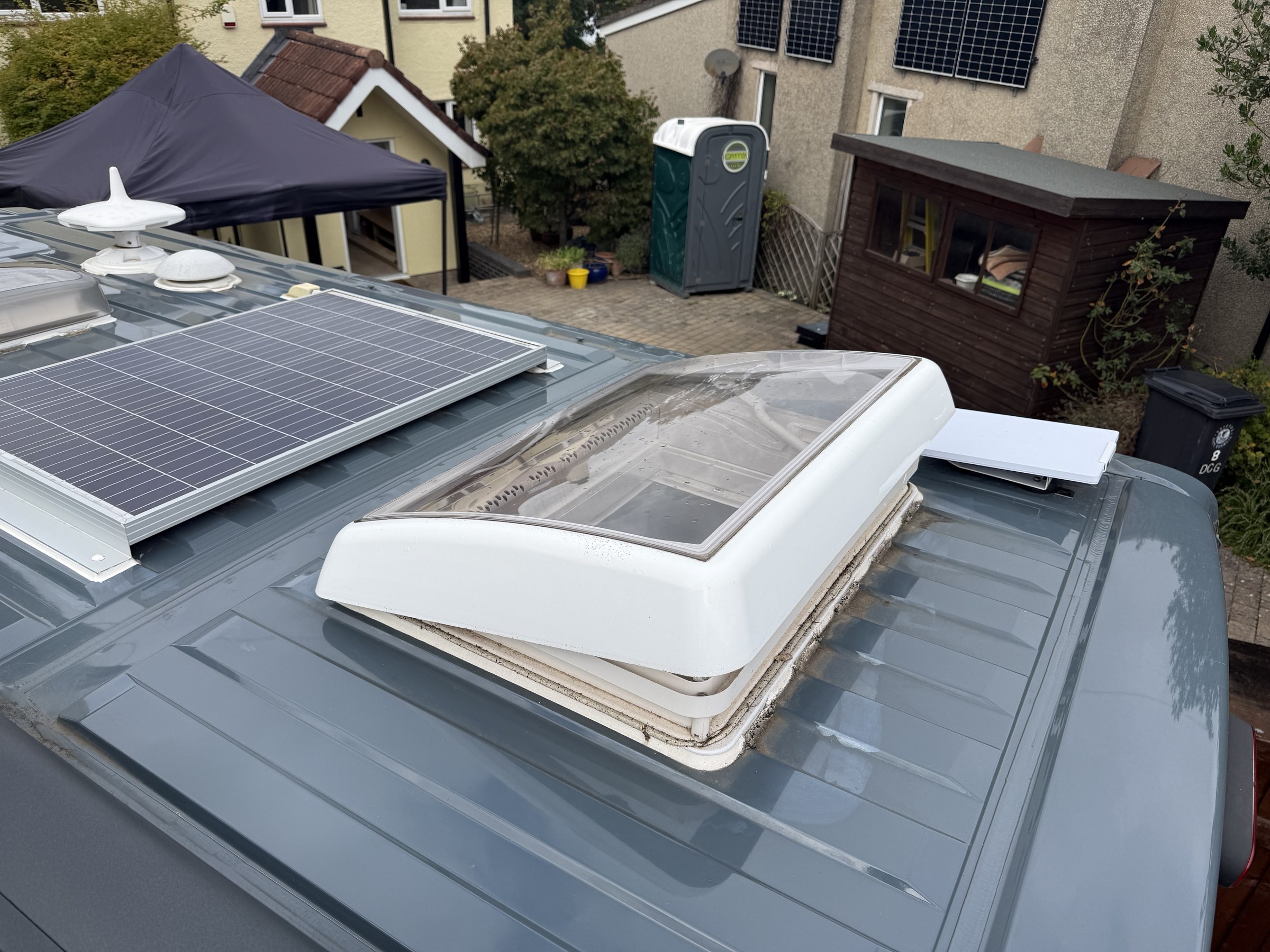
And the two way blackout and fly-screen blinds worked really well.
They provided good lighting in the morning when we were getting up and still had all the blinds closed. And they provided great ventilation when we needed it. Having the sliding door open and a skylight really got air moving through the van.
The handles also provided a place to hang things from.
They were much sturdier than I thought they’d be. I wouldn’t leave them fully extended in high winds but they seemed pretty rock solid otherwise.
Driving experience
See above.
Hose pipe
One of the guide books told us we should take a 10m hose-pipe around Ireland. It wasn’t something we’d considered. We had a short section of pipe in the Cali and never needed it.
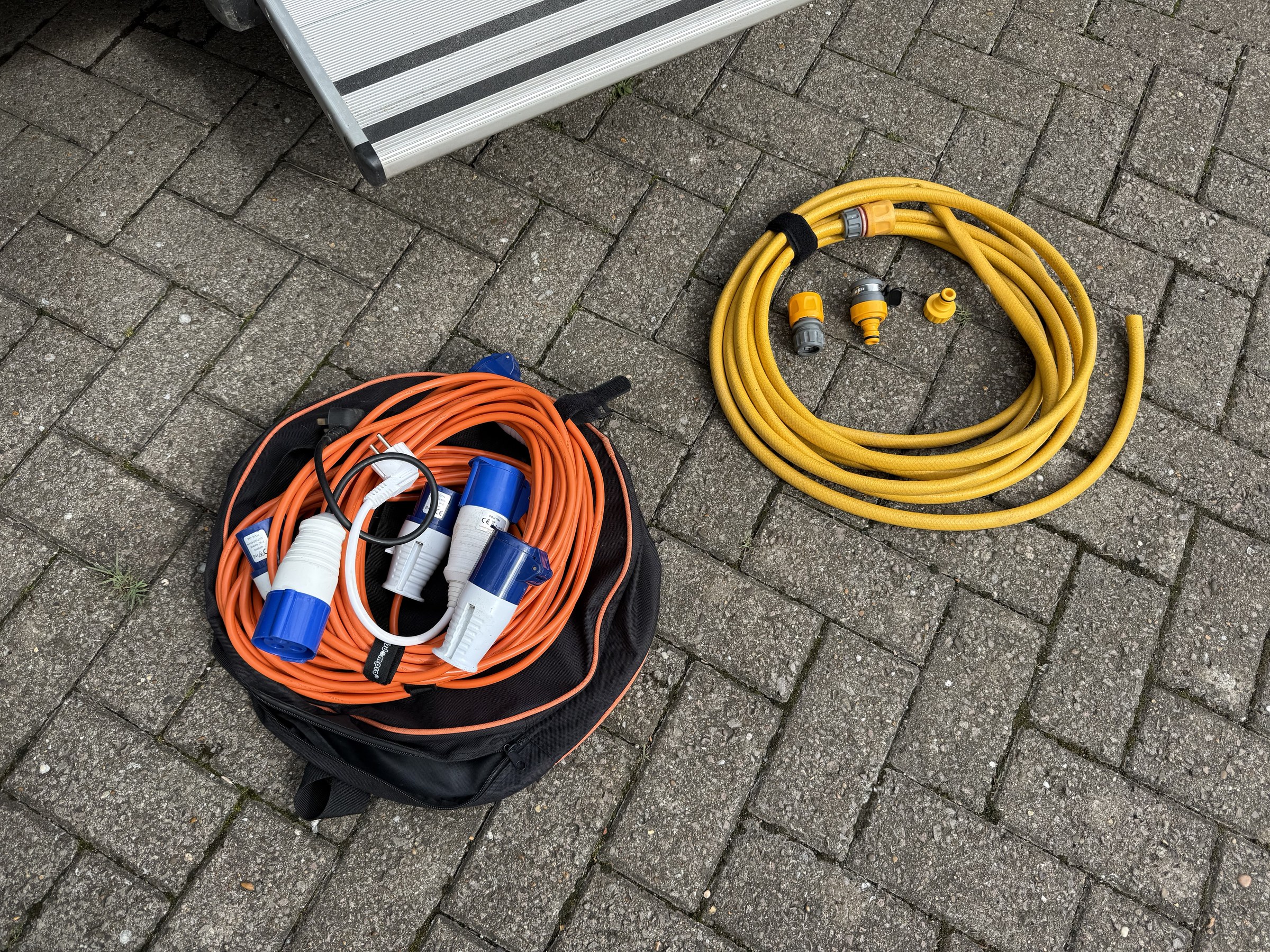
But with all the aires we sometimes found there were taps for fresh water, but no pipe to get it into the van. So we took 8m of pipe, two Hozelock ends and a Hozelock threaded tap adapter. The threaded adapter was used a couple of times and the pipe was used half a dozen times.
Essential around Ireland (at least).
We do need a better way of storing it though. Because we don’t have a “garage” like a lot of vans, we need to store the wet pipe in with a bunch of other stuff. Perhaps a bag, like we have for the electric hook-up cable, or better caps for the ends.
Needs more thought.
Insulation
Hadn’t thought about this one. But these panelvan conversions are stuffed full of insulation between the panels and the camper walls. That means the vans are quiet, cool in the sun and warm in the winter. This worked much better than we thought it would.
Fly Screens
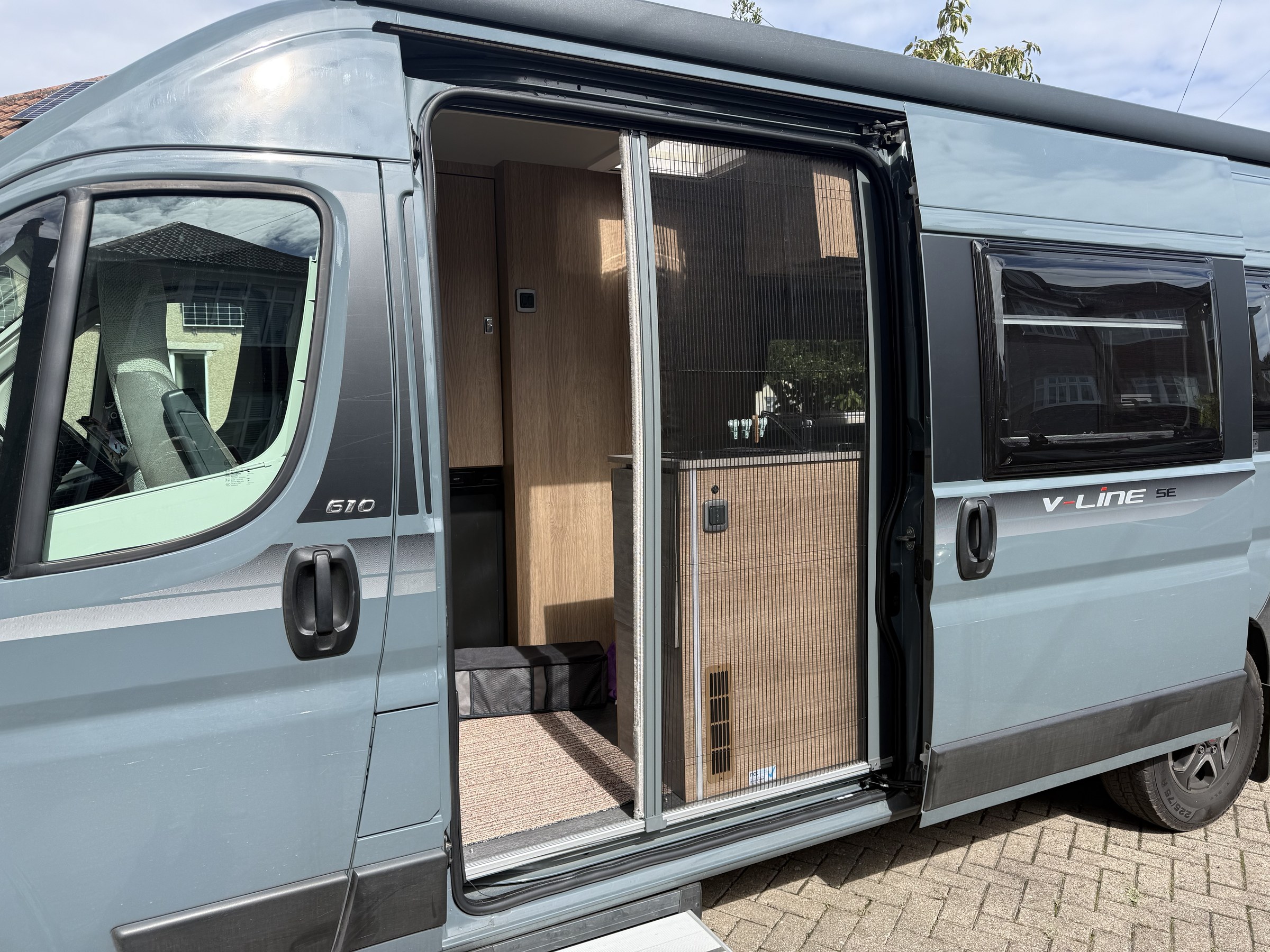
The various fly screens are brilliant. When it was hot we would often have the sliding door and the skylights open, but with the fly screens shut. There weren’t a lot of flies or midges in Ireland (at least for us, this year) but these screens will be fantastic in mainland Europe.
Packing Cubes
We stored most of our clothes in packing cubes and then put them in the overhead storage above the beds. This worked really well, separating undies, socks, t-shirts etc so you weren’t rummaging in a hold-all (like we used to in Ollie-I).
What didn’t work well in the Van
And so what didn’t work so well, in no particular order…
Electrical power
Well, it sort of worked. The van has a 100Ah AGM leisure battery. Fine if you’re a monk (and with all the derelict Abbeys I expect there are considerable numbers of monks looking for accomodation!)
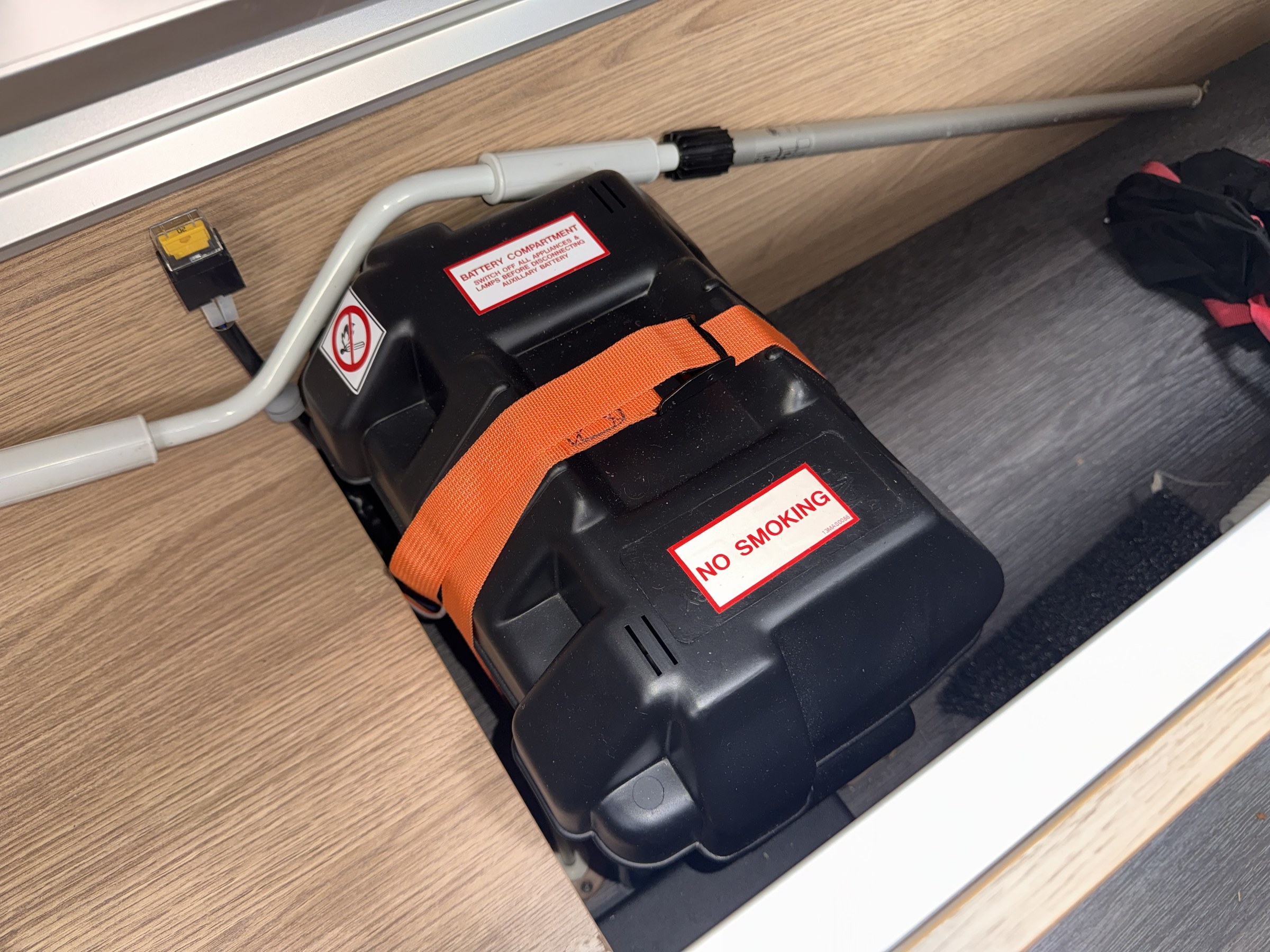
But we’re (I’m) a fairly power-hungry camper, and the effective usable 50Ah was a worry.
For instance, the Starlink uses about 25W average (at least that was my estimate from what the app was telling me). So that’s 2A at 12V. i.e. the Starlink, on its own, would drain the 50Ah battery in about 24 hours. So when we did need the Starlink off-grid then I would turn it on for a couple of hours and then off again. Forgetting to turn it off overnight would seriously drop the battery levels, beware!
We went off-grid for two nights at one point, in Cobh and Dungarvan. And the leisure battery status wasn’t as good as I’d have liked.
Now, I should say at this point that this is conjecture. The battery display on the Sargent vehicle controller was showing the leisure battery to be FAIR towards the end of our off-grids. But the battery voltage was close to about 12V (it’s 13.7 when being charged, and 13.3-ish when fully charged). Unfortunately, there’s no state-of-charge and no current readout, so I was flying a bit blind.
But we were being careful with our power usage (not using the Starlink much, not charging laptops etc) and we were only down to FAIR.
Of course the leisure battery was also being charged by the solar. And for the times we were off-grid, we had lots of sunshine. So even with the 140W (peak) solar we were draining the battery pretty quickly.
We will need to fix this. There are options to fit an additional 100Ah AGM (newer tech than the older flooded lead-acid batteries) but that’s not going to give the peace of mind I’m after. We’ll have to do a Lithium install, and I’m thinking probably 200Ah.
There’s also the question of 230V mains power. When we’re off-grid on the leisure battery we have no 230V, i.e. no inverter. The sockets are only connected to the electric hook-up, so charging laptops and running the microwave are out.
Ollie-I had a small 300W inverter to provide enough for small-ish 230V power. Not enough to run a microwave, but enough to charge a laptop.
Now, you’ll be relieved to hear I’m not going to get more into this. There are downsides with inverters (efficiency etc) but there are also upsides. We’ll probably install an inverter while we’re doing the battery upgrade.
Finally on power. There aren’t enough USB or 12V sockets. We could probably live with the 12V sockets (especially if we get the Starlink hard-wired), but we need more USB for phones, AirPods, watches and Kindles.
And we haven’t even talked about the TV that’s installed as standard in the Auto-Trail.
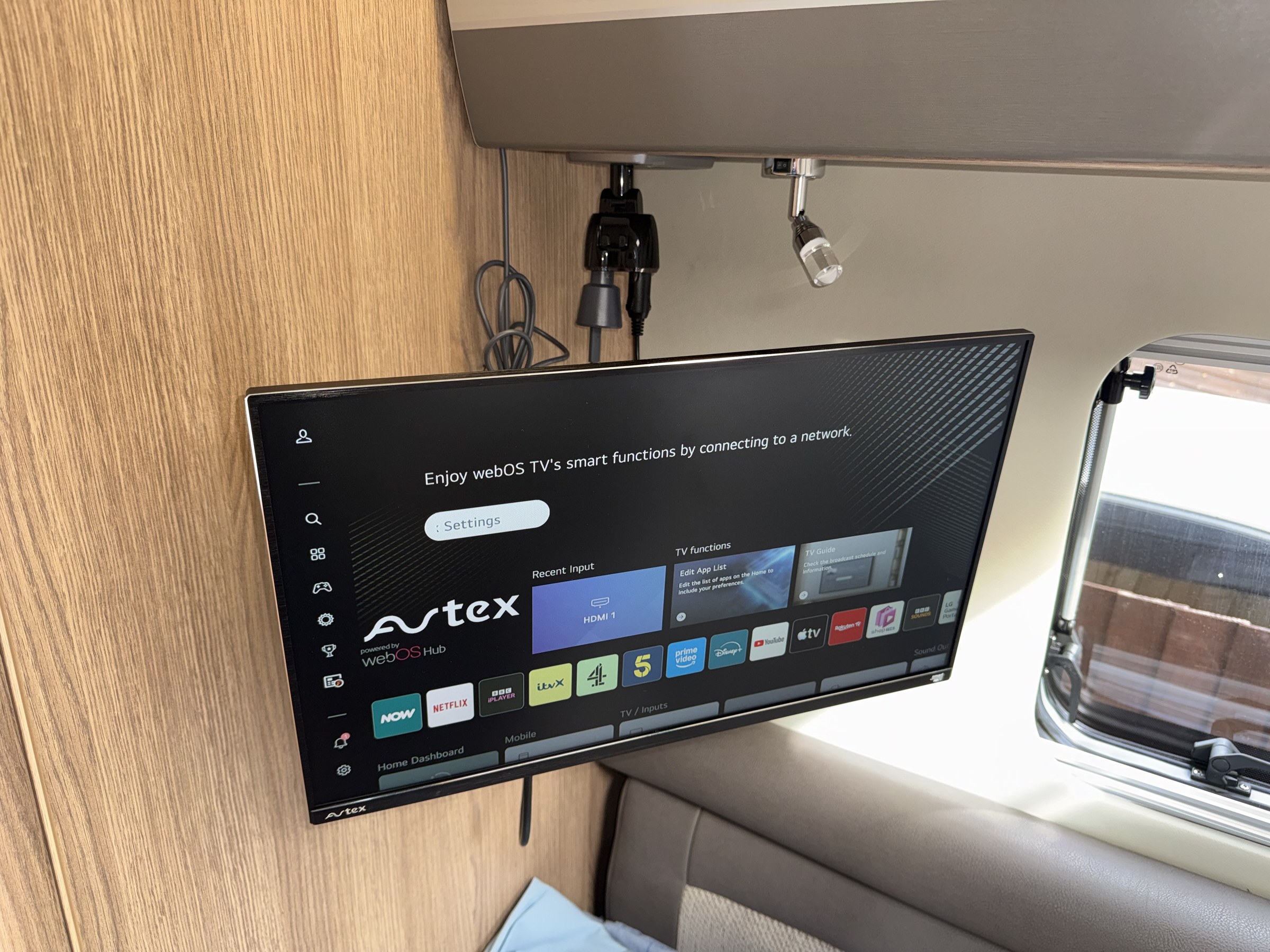
It’s a 12V Android-based thing. And would probably have been a good option for streaming Ted Lasso (Apple TV) and The Last of US (HBO Max) that we watched while away.
In theory we can do all our streaming with it (the TV aerial is useless for us) but the power kept dropping out when I had both the Starlink and TV running on 12V (I needed the Starlink to give the TV good enough internet for the streaming – I could have hotspotted a phone but that means mucking about with more Wi-Fi connections and TBH a laptop on a stool was perfectly ok).
I’m not sure where the problemwas with the drop-outs / brown-outs were but I didn’t have time to pull out a multimeter and test it before we left to go on the trip. So we didn’t use the TV at all on the trip. I would like to get the factory TV working but that will need a better Starlink setup (see the Starlink section above for more about that).
Bathroom Sink
Other than the metal magnetic widgets falling off (they remained synced for the rest of the trip) the sink setup is a bit pants. There’s not much we can do about it but we don’t like the way the sink in the bathroom has no drain and you empty it by tipping the whole basin up.
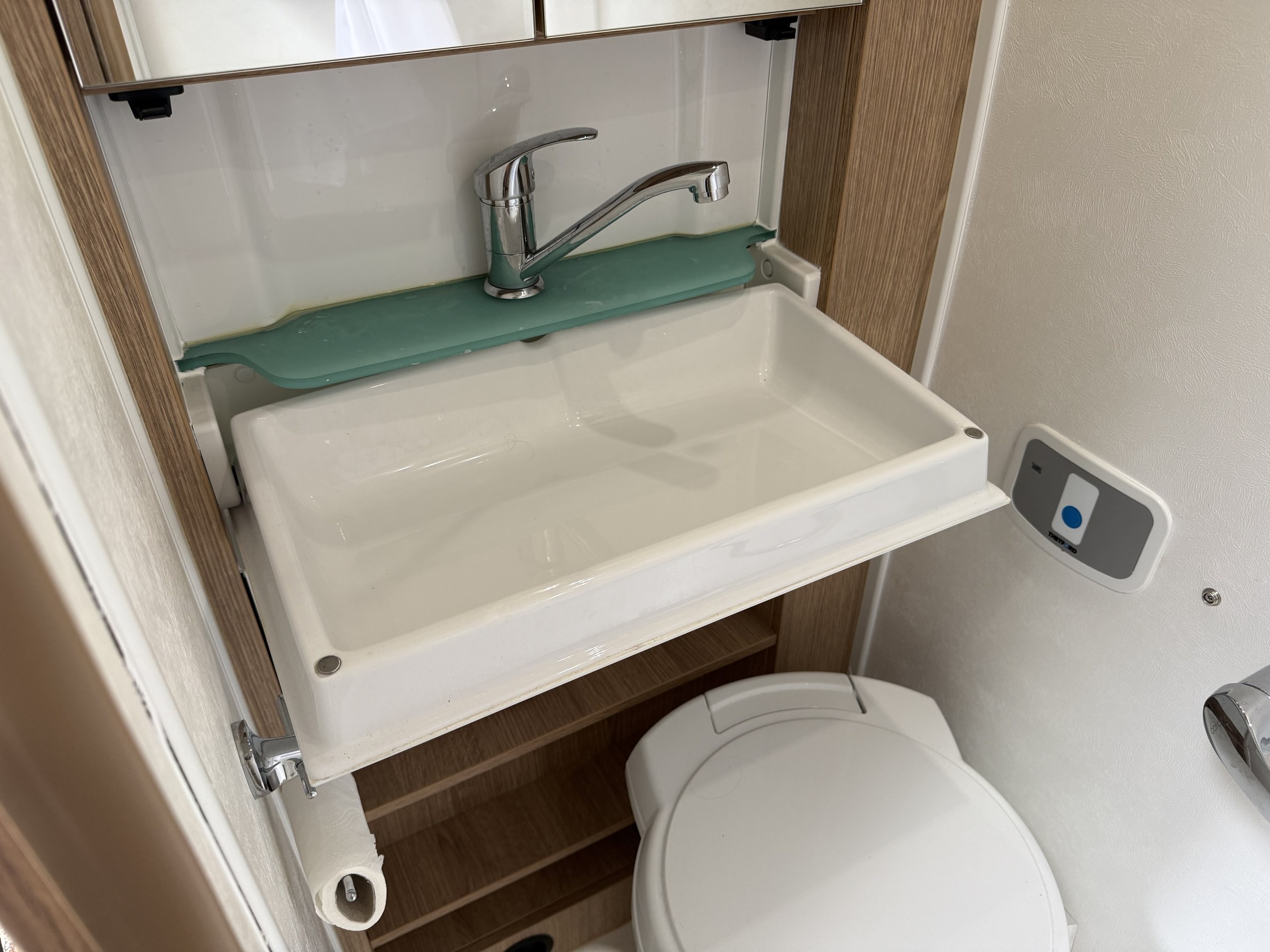
The whole sink arrangement is so poorly done that they also recommend you don’t travel with the sink in its stored position, in case it unlatches suddenly and drops, probably breaking it.
As I say, there’s probably not a lot we can do about it, except add some sort of strap to stop it dropping in transit. But that’s not the real problem, the big issue is the whole no-drain issue.
Chairs
Since we’d sold Ollie-I we had no chairs. Camping chairs are provided as part of the Cali package, and are kept neatly in a pouch in the rear tailgate – perfect solution.
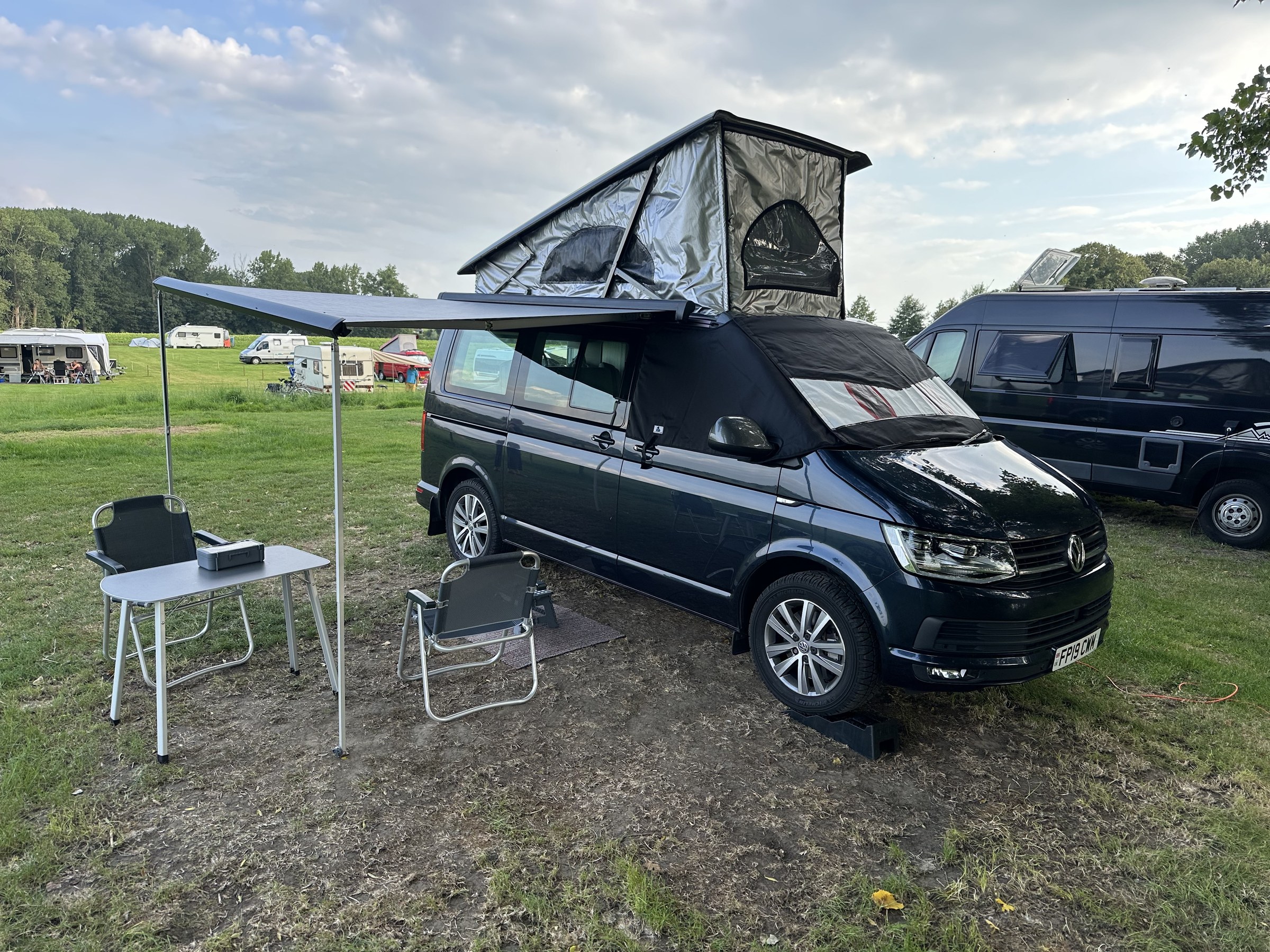
But now we had no Cali and therefore no chairs.
And we’d been eyeing up all sorts of other chairs that we saw people using on our travels. We wanted high-back reclining chairs – or so we thought.
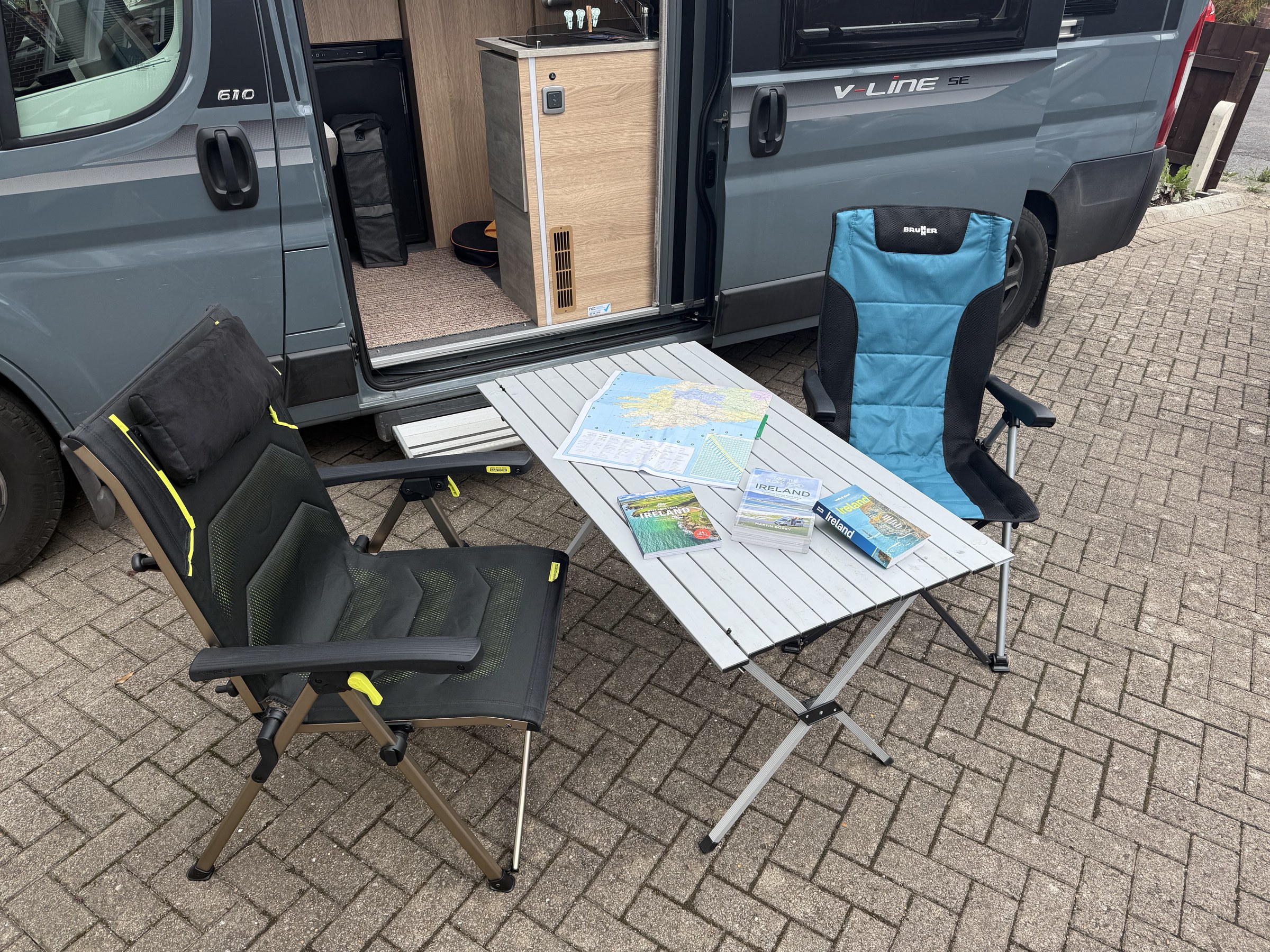
So we bought some flash Zempire Xuno and Brunner Raptor Highback chairs.
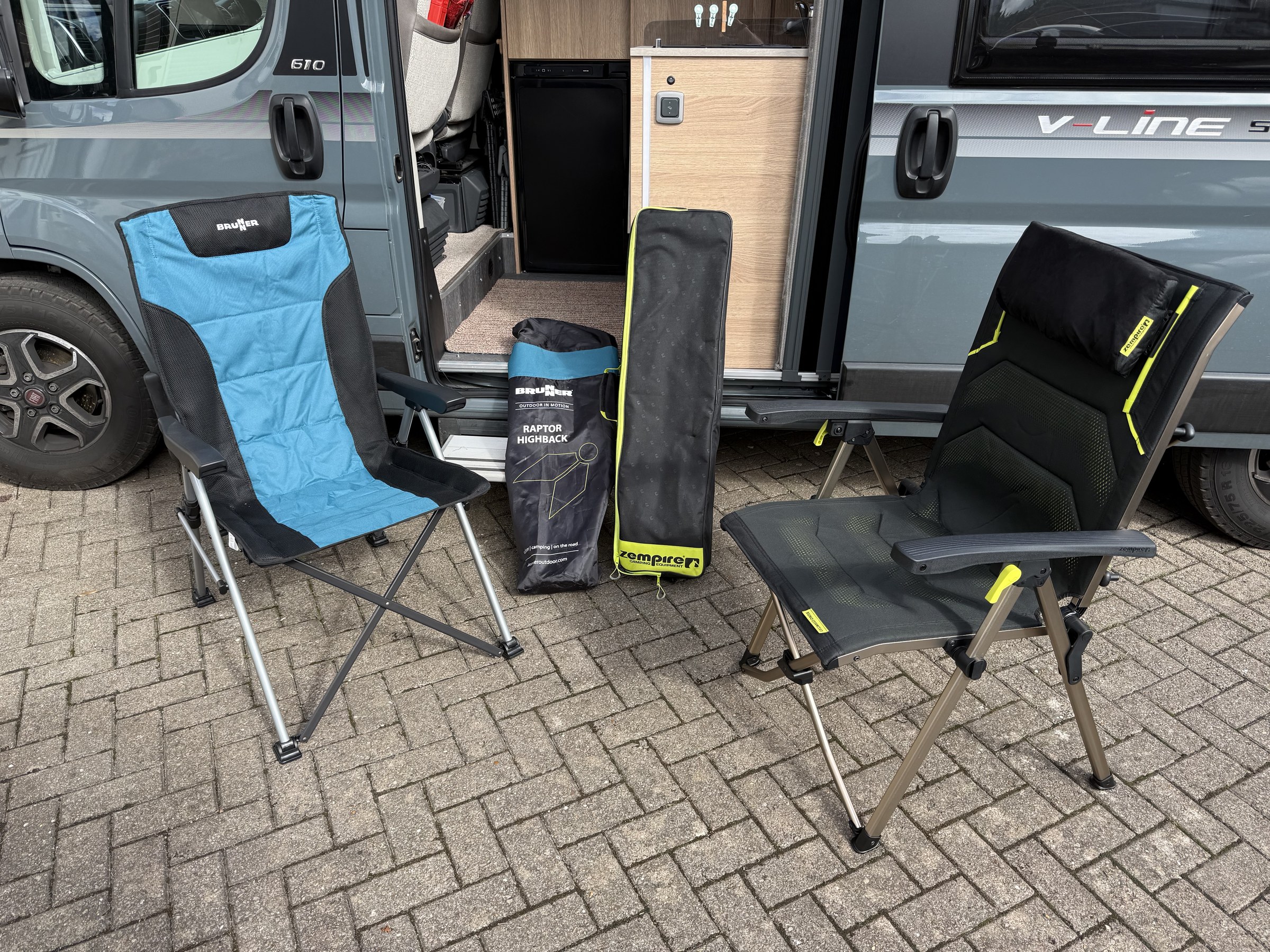
But they were too big. They might work if you’ve got a huge motorhome garage or you’re static for long periods. But for us they didn’t work. They were too big and too difficult to set up.
We stored them in the bathroom. Which meant we had to get them out whenever we parked up for a night. And also had to remove them if we were caught short somewhere during the day and needed the loo.
So on the long run home we had them lying in the gap between the two bench seats. Which wasn’t ideal either when I wanted to get some stuff out of one of the pods.
They were also difficult to set up. The bags were a hassle (why are they always too tight) and the chairs fought us when we wanted to unravel them.
They may both end up on eBay.
Since coming home we’ve found others suggesting Helinox chairs. They’re much more compact (like a Decathlon chair we bought in Italy a couple of years ago) and while they’re not recliners, they are high-backed. More investigation required.
Bike rack
The bikes stayed attached, which is the minimum requirement for a bike rack and not something I was entirely confident about when we set off. You (or at least I) always worry that a new tow-bar will a) hold the weight of the bikes and b) be secure and not twist when going over big bumps.
But the new van’s rear windows stick out farther than the Cali’s tailgate did. That meant the bikes had to sit on rack positions two and three rather than one and three, putting them farther back than I’d like. More importantly, we can’t open the rear doors with the bikes attached.
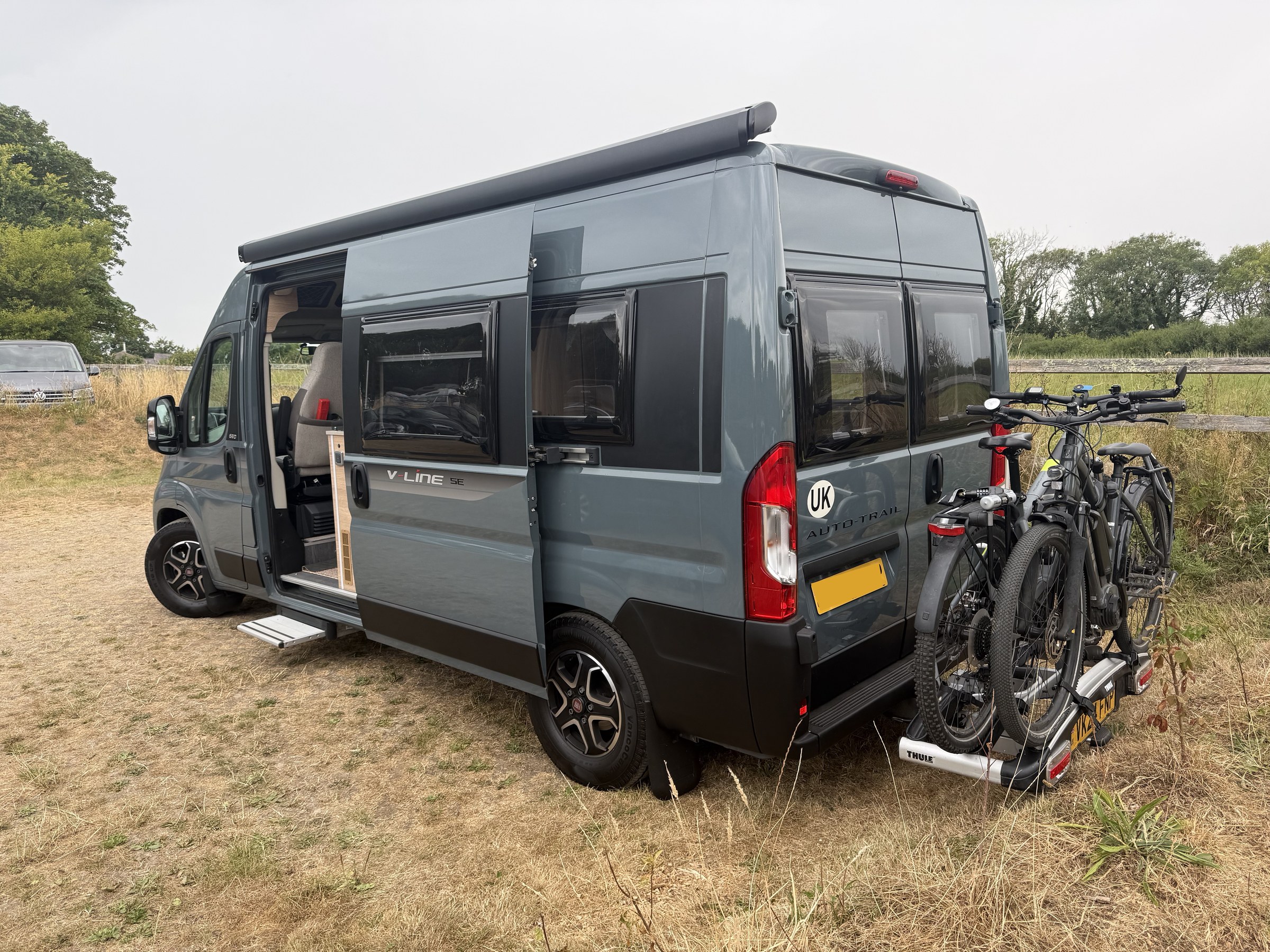
At Mizen Head we saw a VW Camper with a Space Maker swing-away arm between the towbar and bike rack. It wasn’t cheap, but it looked like a much better solution. We need to investigate that before the next long trip.
We also need to think about protecting the bikes. After parking on Inch Beach, fine yellow sand remained in and on everything for days. Sand, oil and mechanical bits are not a combination that makes my inner engineer happy.
Outside table
We took an old aluminium folding / concertina table with us. We’ve had it for probably 30 years for camping, and it’s been great. But it didn’t work for us on this trip.
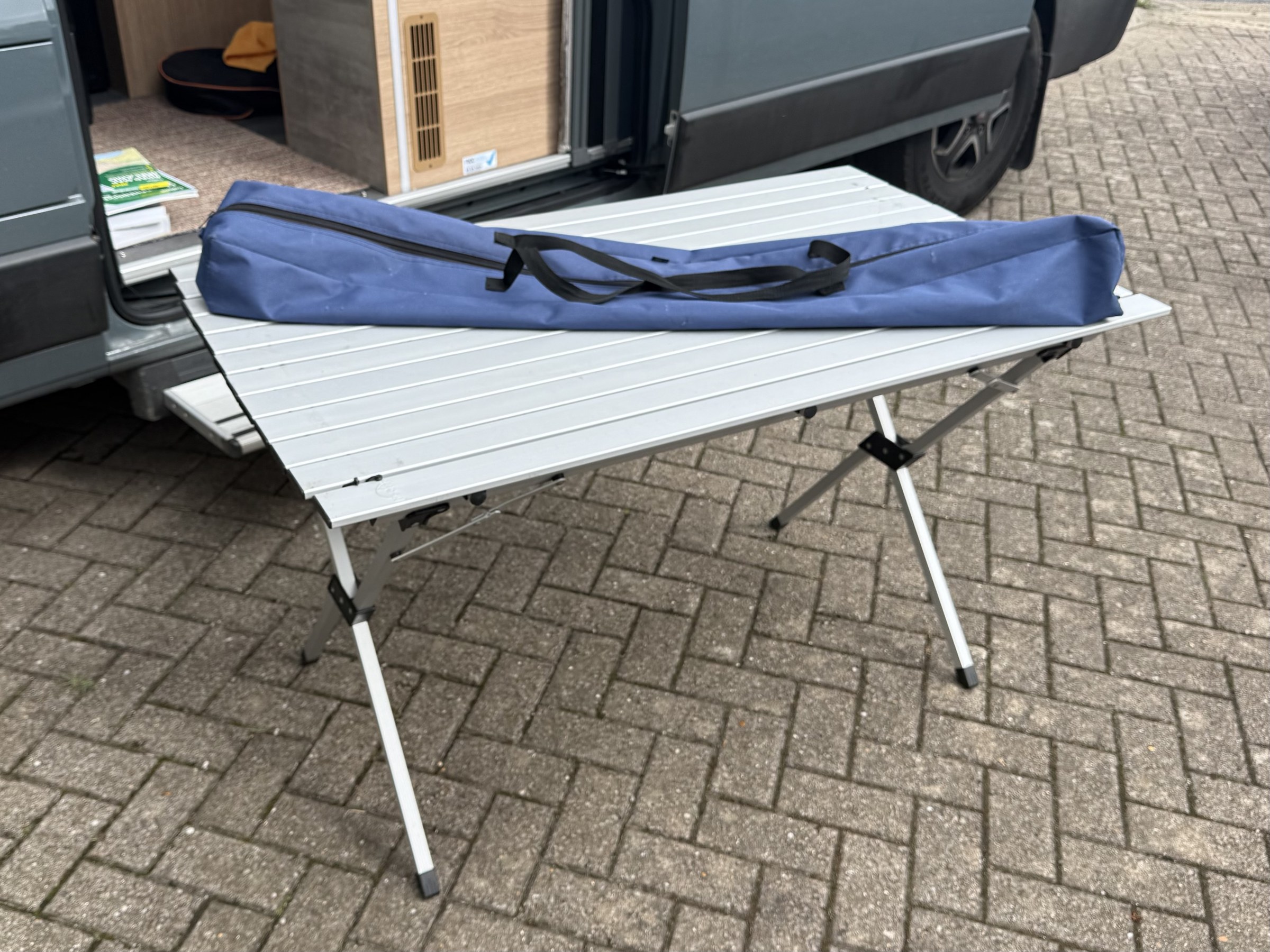
TBH, there weren’t many times when we wanted to set up the outside table. This was odd. We almost always set up the Cali outdoor table when we travelled in Ollie-I. But this year, the weather wasn’t on our side, and so we didn’t want to sit outside eating.
But the table was too much of a faff anyway. It was too big, and like the chairs, we stored it in the bathroom. So it needed to be taken out and stored under the van whenever we stopped.
We think we might be able to rig a folding table up above where the inside table is stored behind the driver’s seat. Perhaps that will work better.
Washing and drying
This isn’t really a van thing but the tumble dryer at Mannix Point failed to tumble-dry. We either put too much into it or the dryer wasn’t up to the job, but the clothes came out hot and soaking wet after reception had closed and we couldn’t buy another token.
The weather was windy and drizzly, so the awning didn’t make much of a drying area either. We ended up with washing lines strung through the van and had a very damp night. Another dryer token sorted it the following morning.
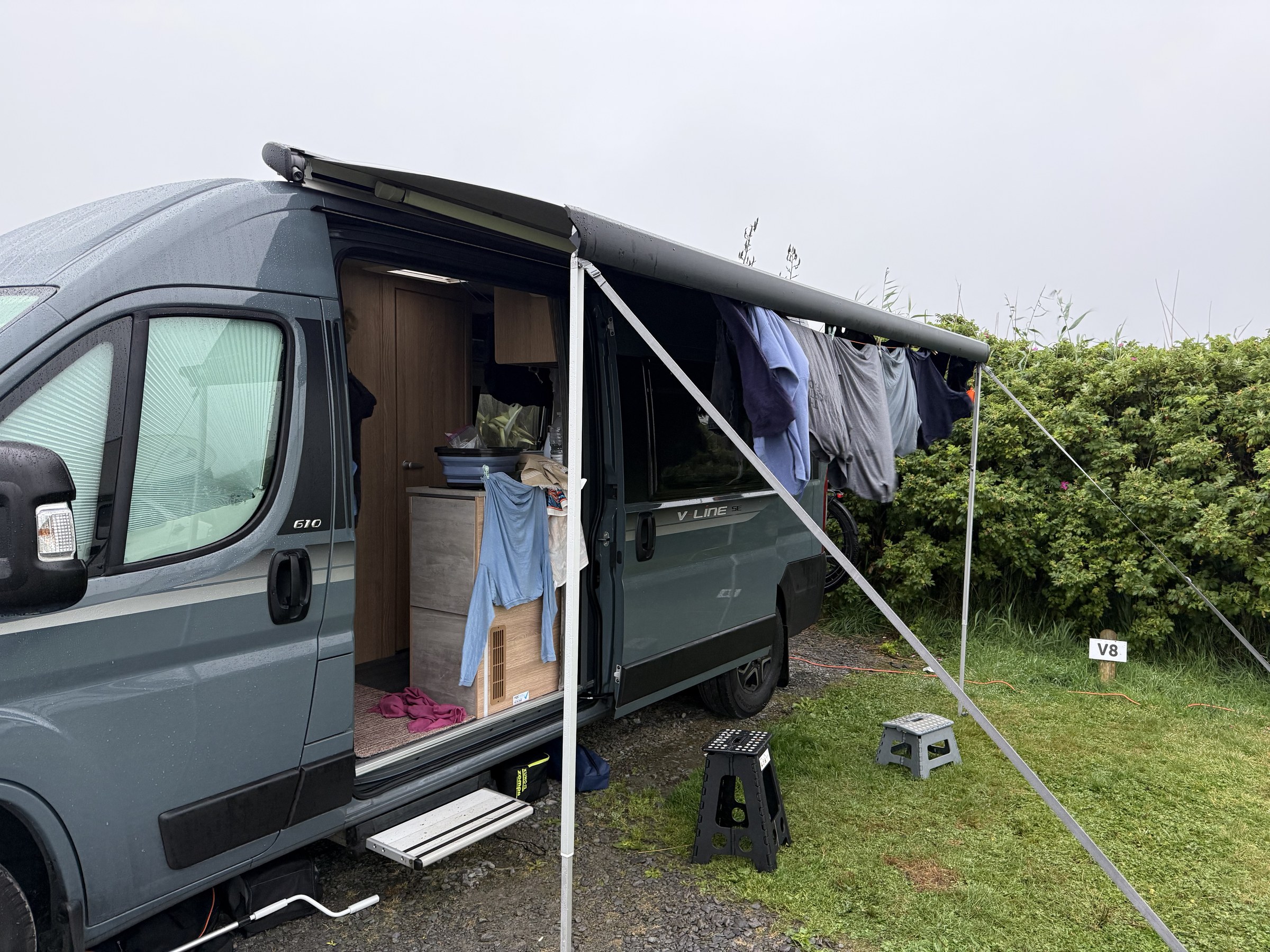
The lesson is probably smaller loads, start earlier and don’t assume that having a tumble dryer means having dry clothes.
We also need a better emergency drying arrangement for wet-weather trips.
Indoor lights
There’s a whole bunch of indoor lighting on the new van. Some of it works well and some doesn’t – both conceptually and practically.
We’re not big ones for having the lights blazing, so there’s more lighting than we need. Under-cabinet lighting – we don’t need that.
But the main lights in the back are strip LEDs that run along the van above each single bed. They’re fine, if a little bright, but the one on the passenger side flickers. And sometimes doesn’t even light up (it now doesn’t light up at all now we’re back). The whole strip flickers, so I suspect it’s an intermittent power feed. But I’ll have to figure out how to disassemble it at some point and fix it.
The other overhead lighting in the bed area is fine. The pointing spotlights on stalks work quite well. But each of them needs USB sockets in the bases so we can charge more stuff. Gotta be careful there though, running USB power-hungry stuff off the lighting circuit needs to be thought through and cable runs looked at for current ratings.
Infotainment head unit
Yuck.
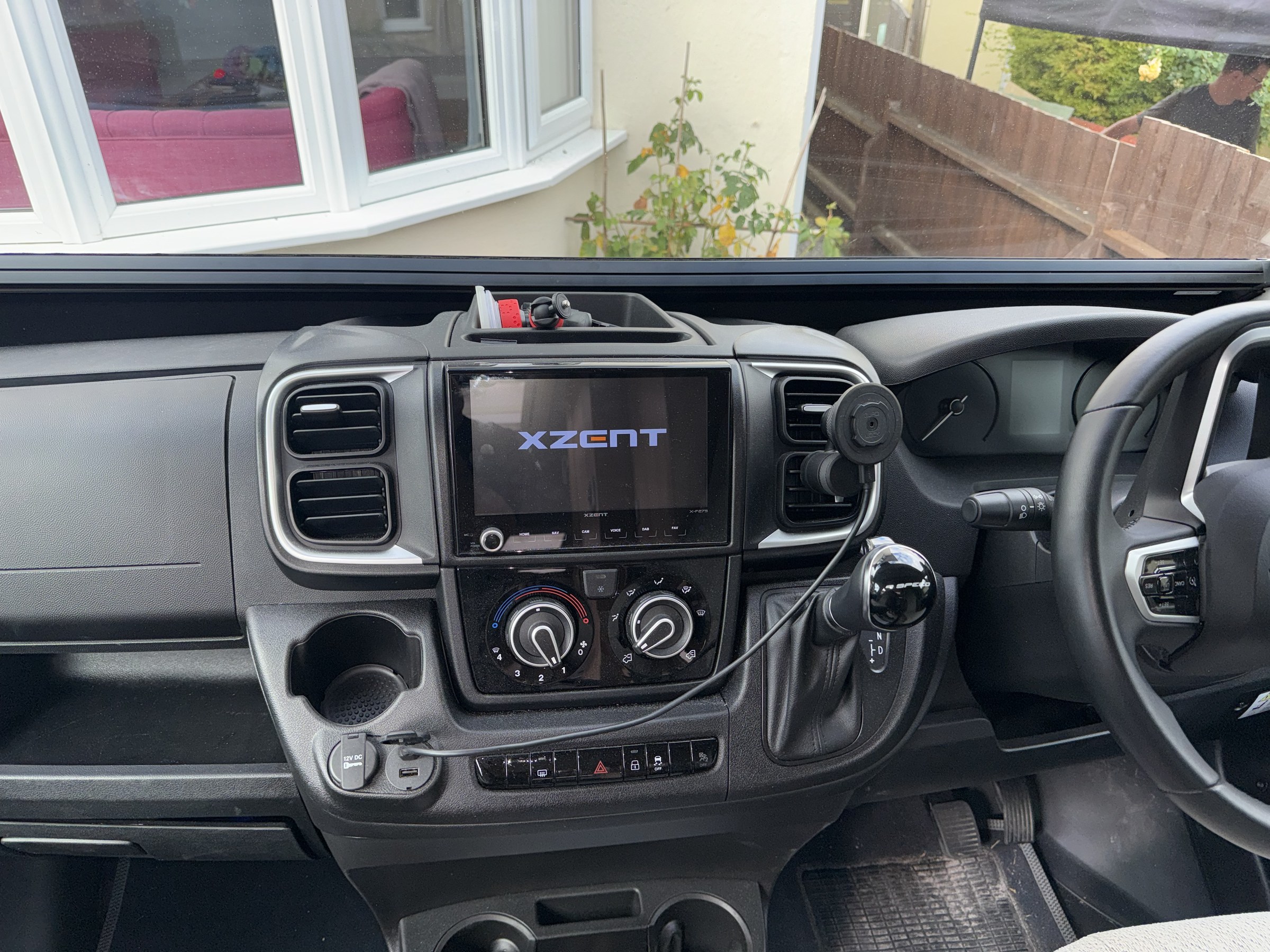
The Xzent factory-installed head unit sucks. The 9″ screen is way too dim and off-angle viewing especially from the driver’s side is poor. It looks very much like the unit is a left-hand-drive spec unit… Fiat specifying a LHD unit and not bothering (or even thinking it’s ok not) to provide the correct polarisation option for the display. Amateurs!
While the display is about the same size as Ollie-I’s, that was already a compromise and not ideal either. At least we could read the Ollie-I display.
There’s also:
- the CarPlay isn’t wireless (I used a Quad Lock wireless adapter, but it’s not the same as having the proper wireless-capable head unit)
- the head unit stays on when the ignition is off (that’s possibly fine if you were going to use the radio a lot when parked (if it worked) but it needs an option for it to power off automatically when the ignition is off – maybe there’s an option for that but I haven’t found it). I had to keep powering off the head unit when we parked up so: 1. it didn’t waste battery, 2. didn’t keep us awake being on and 3. didn’t steal the Wi-Fi all the time for CarPlay use when we didn’t want CarPlay
- the DAB is rubbish. It hardly works. Sometimes it worked when we were out in the open, but often it lost connection and barbled corrupted audio streams at us. We listen to the radio a lot, and this is a problem. The FM seemed to work better, but this is 2026 not 1986.
- The head unit doesn’t tilt or twist. That’s not usually a problem, except it’s set at a poor angle and the display is dim
- Slow response time. The GUI and touchscreen were laggy. Again… this is 2026 not 1986!
- There are head unit control buttons on the back of the steering wheel. Helpfully one is set to bring up the rear view camera. And another takes you back to the infotainment screen. Unfortunately, when you return to infotainment the CarPlay goes back to the home screen, not back to the maps. Which makes flipping to the rear camera an “only on special occasions” option.
- Audio quality. Very poor. It’s one of those sound systems that can get sort of loud enough but you still can’t understand what’s being played.
I dislike this head unit intensely.
Fortunately there are good upgrade options. The Alpine Halo 11 is probably the best I’ve seen, so that’s probably top of the upgrade list along with the lithium leisure battery.
Dashcam
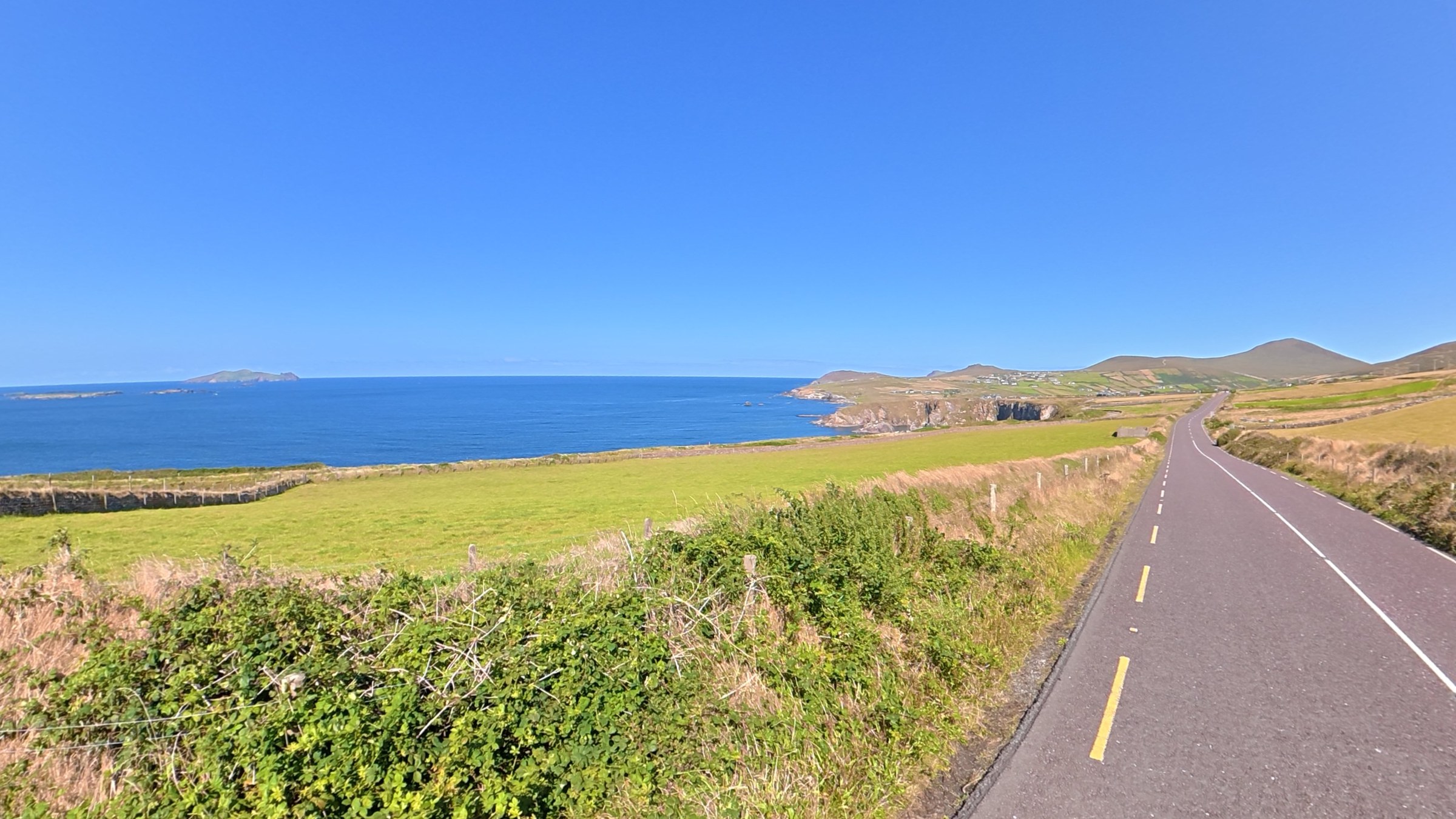
Not having a dashcam was a mistake. Some of the best scenery was seen while driving, when there was nowhere to stop a van and no sensible way to take a picture. I tried mounting the Osmo 360 behind the windscreen, but reflections from the blinds ruined most of the images and the exposure wasn’t great through the glass.
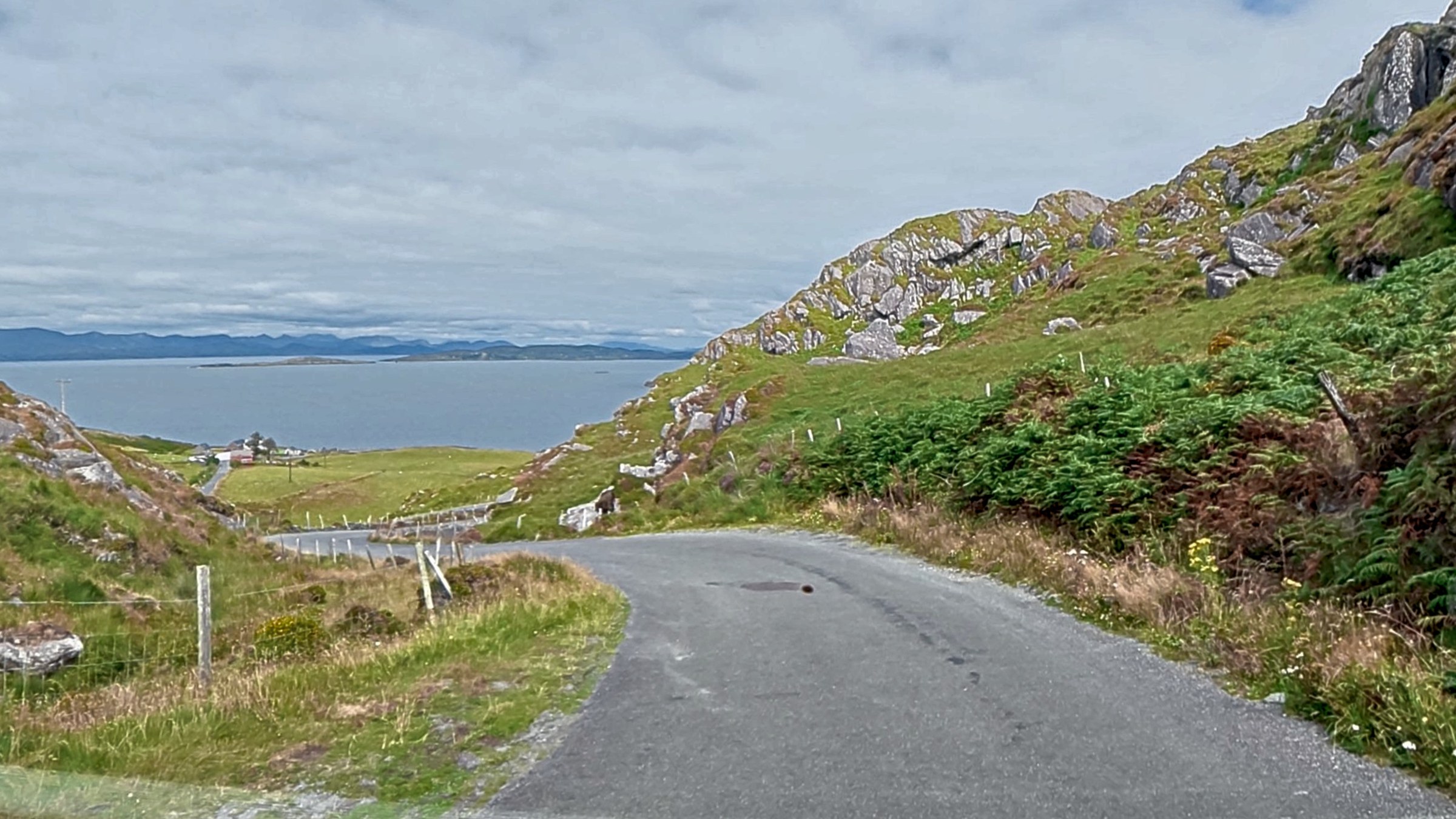
We tried very hard not to be the ones that stopped in the middle of the road to take a picture. If there was nobody else around then we did it. But if not then either Sue poked the 360 cam out of the window or we waited to stop in a layby.
We need a proper dashcam before the next trip. Not just for recording other numpties on the road, but so we can keep some of the roads and views that otherwise exist only in our increasingly unreliable memories.
USB sockets
See power above.
Extending bed
See beds above.
No hooks
There are nowhere near enough hooks in the van.
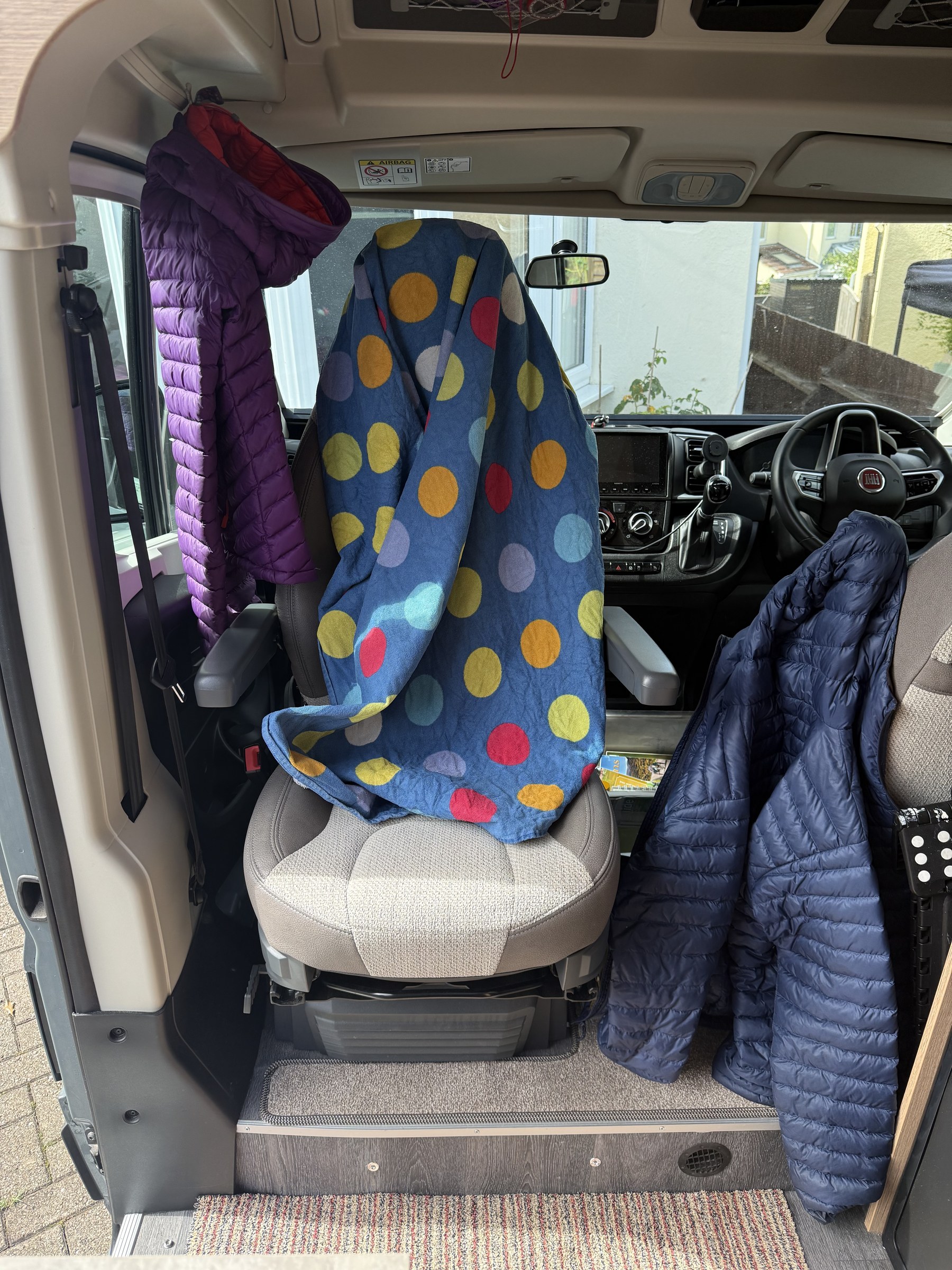
Ideally we’d buy a bunch of hooks and screw them into the woodwork.
If we decide this is our “forever” van then we may do that. But for the moment we’re going to try some stick-on hooks.
We want hooks for coats, towels and tea-towels.
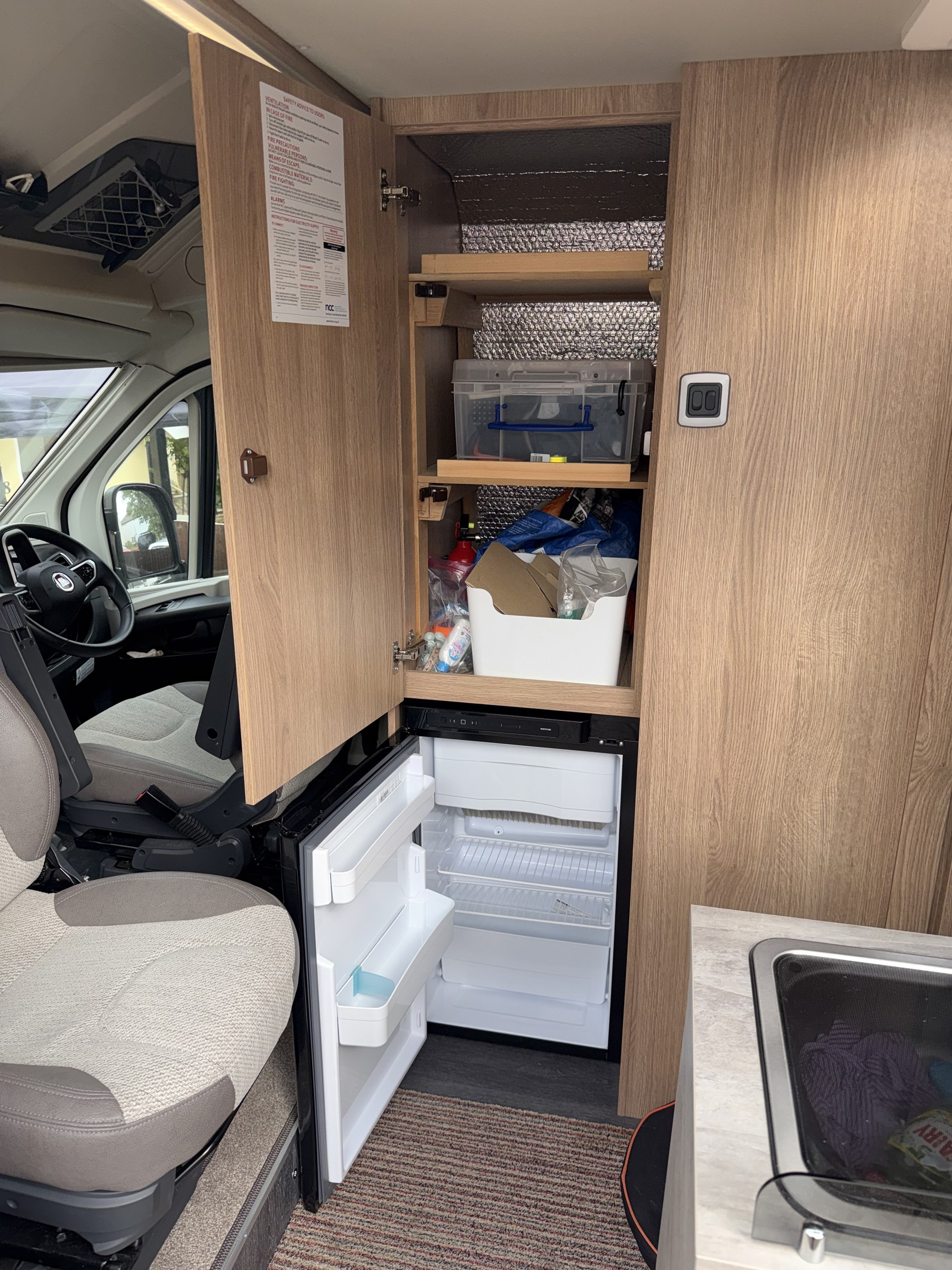
Fridge
Mostly ok (see above) but could do with being a bit bigger. Some Auto-Trails have the larger cupboard section above our fridge as the fridge. But it’s probably thousands to change it, so it’ll probably be fine.
Rubbish bin
We just hung rubbish bags from the knobs on the hob. Not ideal.
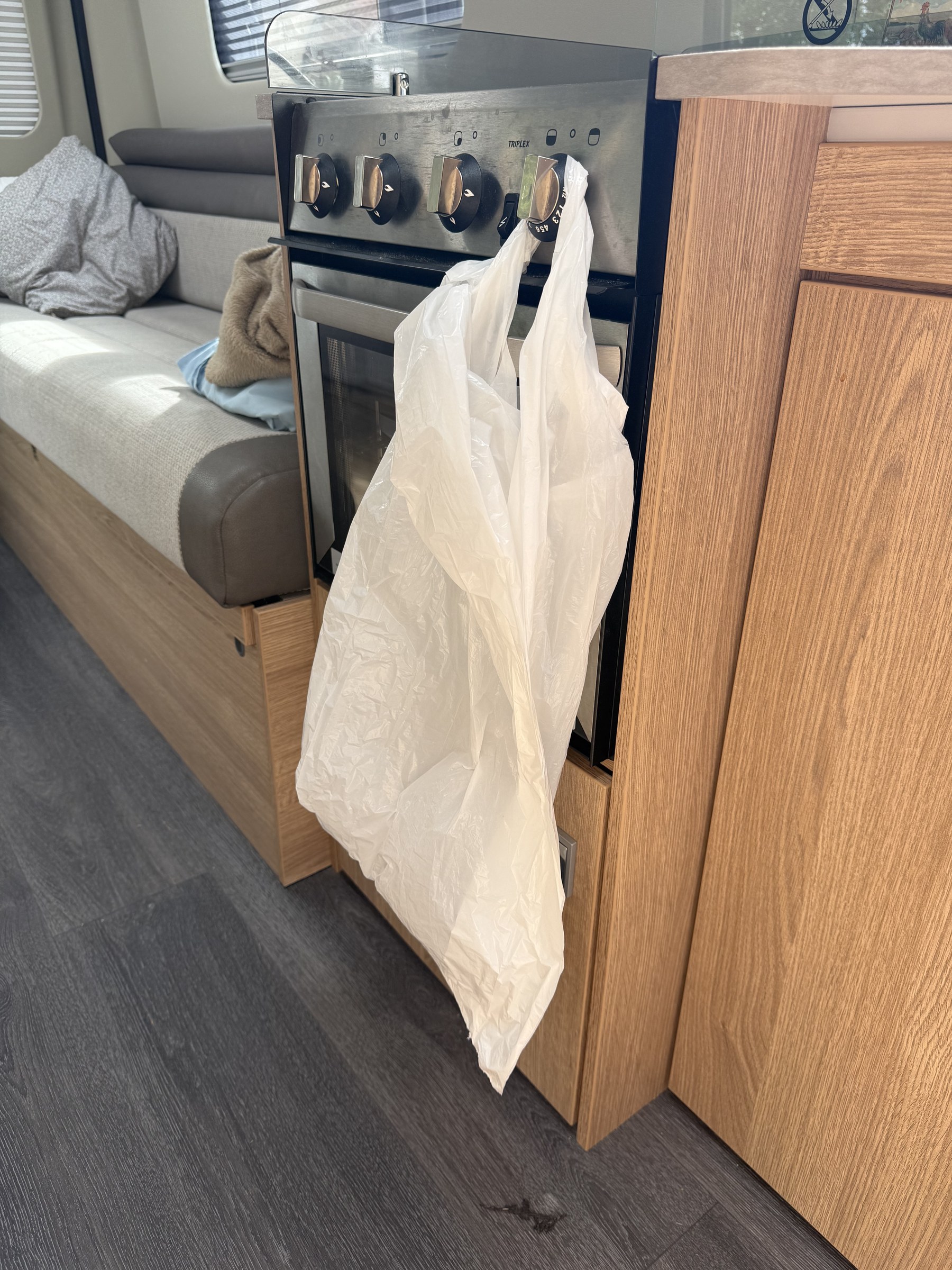
We need a better rubbish bin solution that doesn’t need you to keep opening doors all the time.
We had a small bin / caddy in Ollie-I, and it never really had a good home. The same applies here, no good home for a bin.
Perhaps something where we take off the door under the cooker and fit a bin box in there??
Shoe storage
We just ended up with a bag of shoes lying in the walkway between the beds. We need a better shoe storage option.
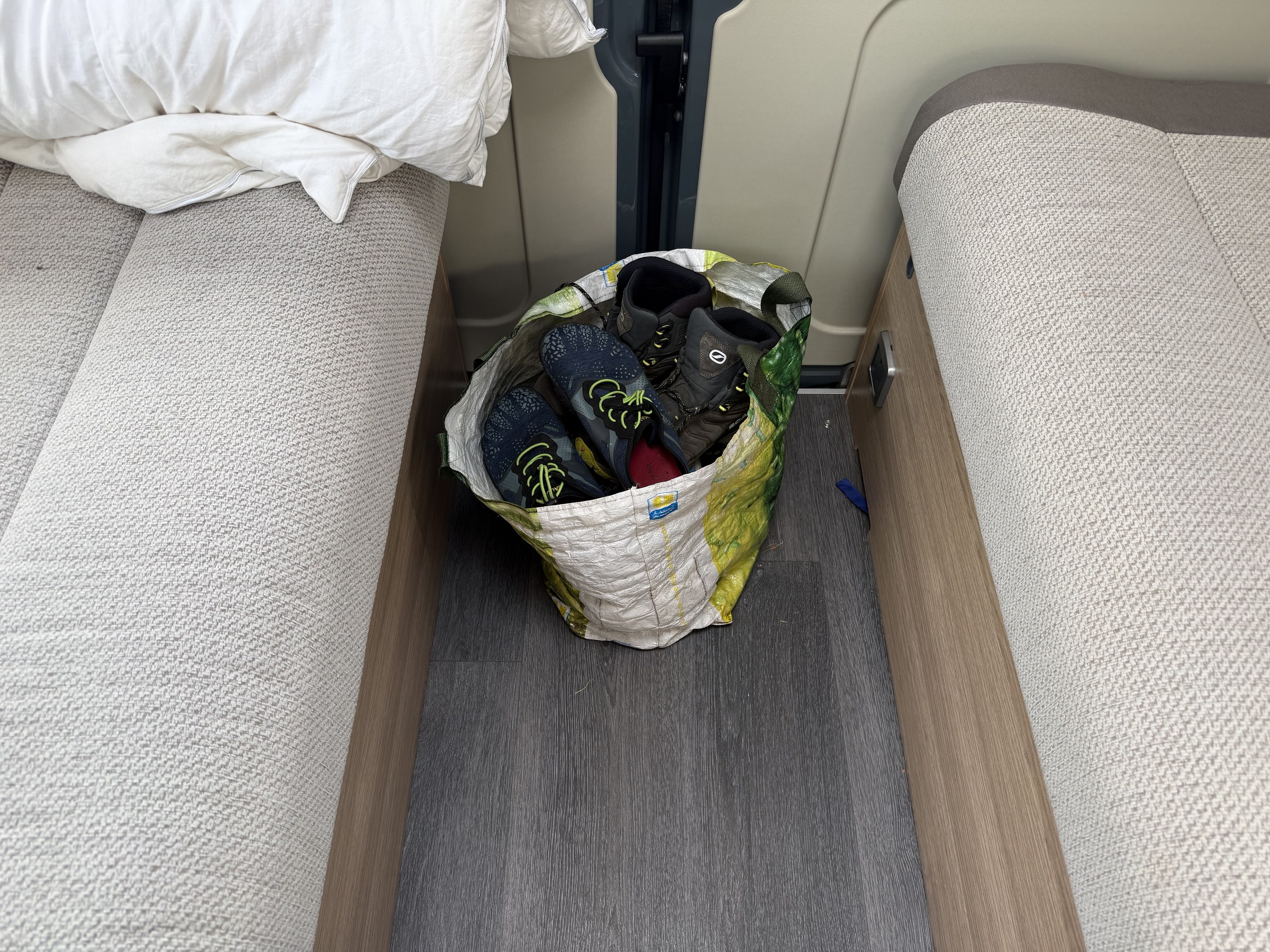
Shoes are one of those things you want to have access to quickly. Just going for a yomp on a headland… grab the walking boots. Just going to the shower block… grab the Crocs. Just wanting to paddle on the beach… take the beach shoes.
The best way we’ve seen people do this is with string pouches attached to walls, but we can’t think where we can do this in this van.
Coat Storage
We ended up just stuffing our coats into a small cubby in the cupboard above the fridge. It worked but wasn’t a great use of the space.
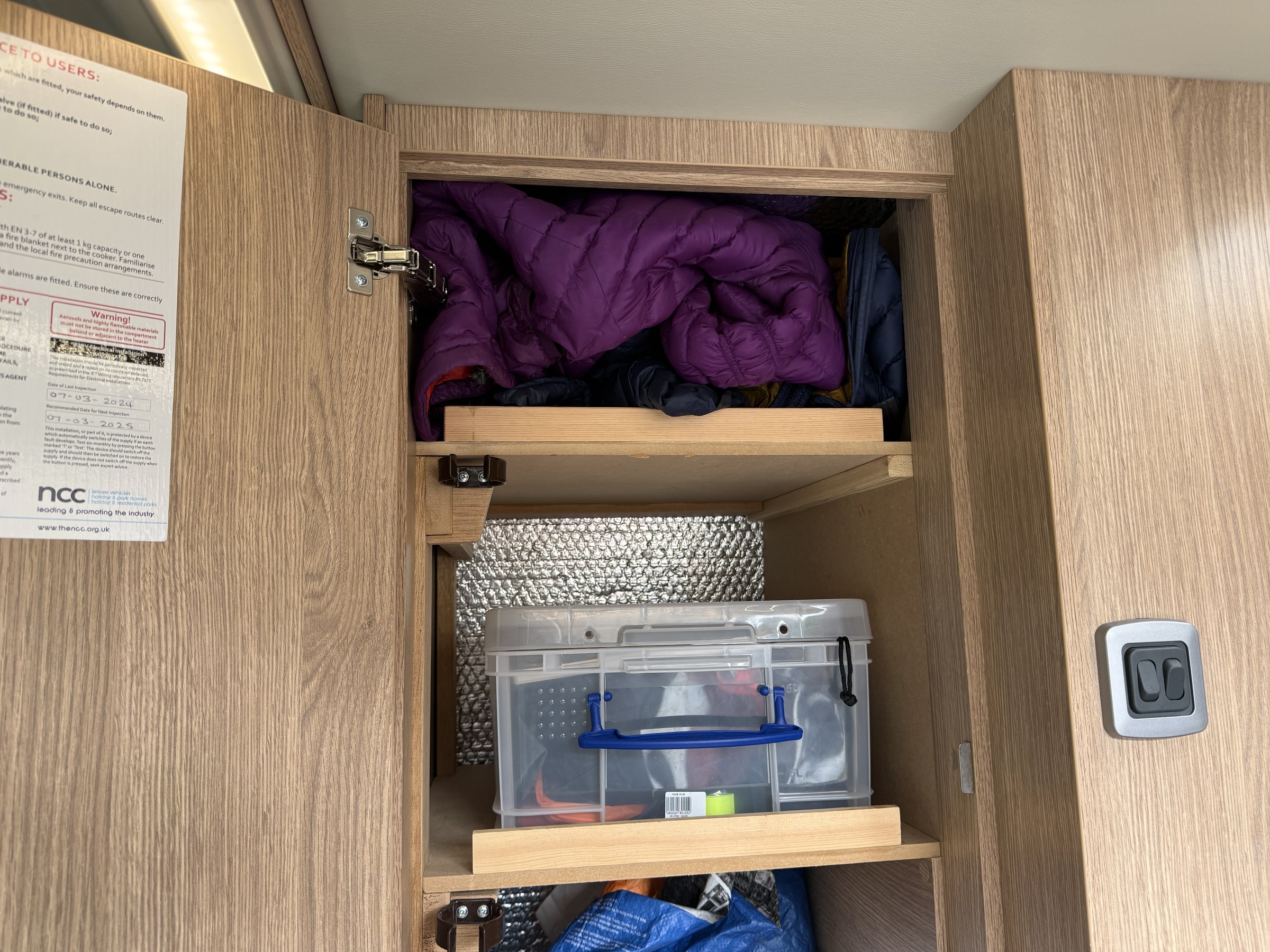
We’re thinking we’ll try and set up some sort of hammock arrangement above the two front seats so we can stuff coats and hats in it. Older vans than ours, that we looked at buying, had shelves above the two seats, but I suspect people complained too much about banging heads when you try and get from the back into the driver’s and passenger seats.
But that whole “volume” above the front seats is badly used in our van, we can definitely use it for something.
Underbench storage
We had loads of space to store stuff in here.
But, this is one of the compromises of having two single bench-seat beds. We have to lift the bed to access the storage.
There are gas struts on the storage lids (bed base) but they don’t really hold the lid in place when the bed “mattress / seat” is on. And it’s a royal faff to take the mattress-seat off every time you want to get to the storage.
So, I’ve made a wooden prop that we can use to keep the bench seat up. And of course we only put stuff into the “pods” that we don’t need access to very much.
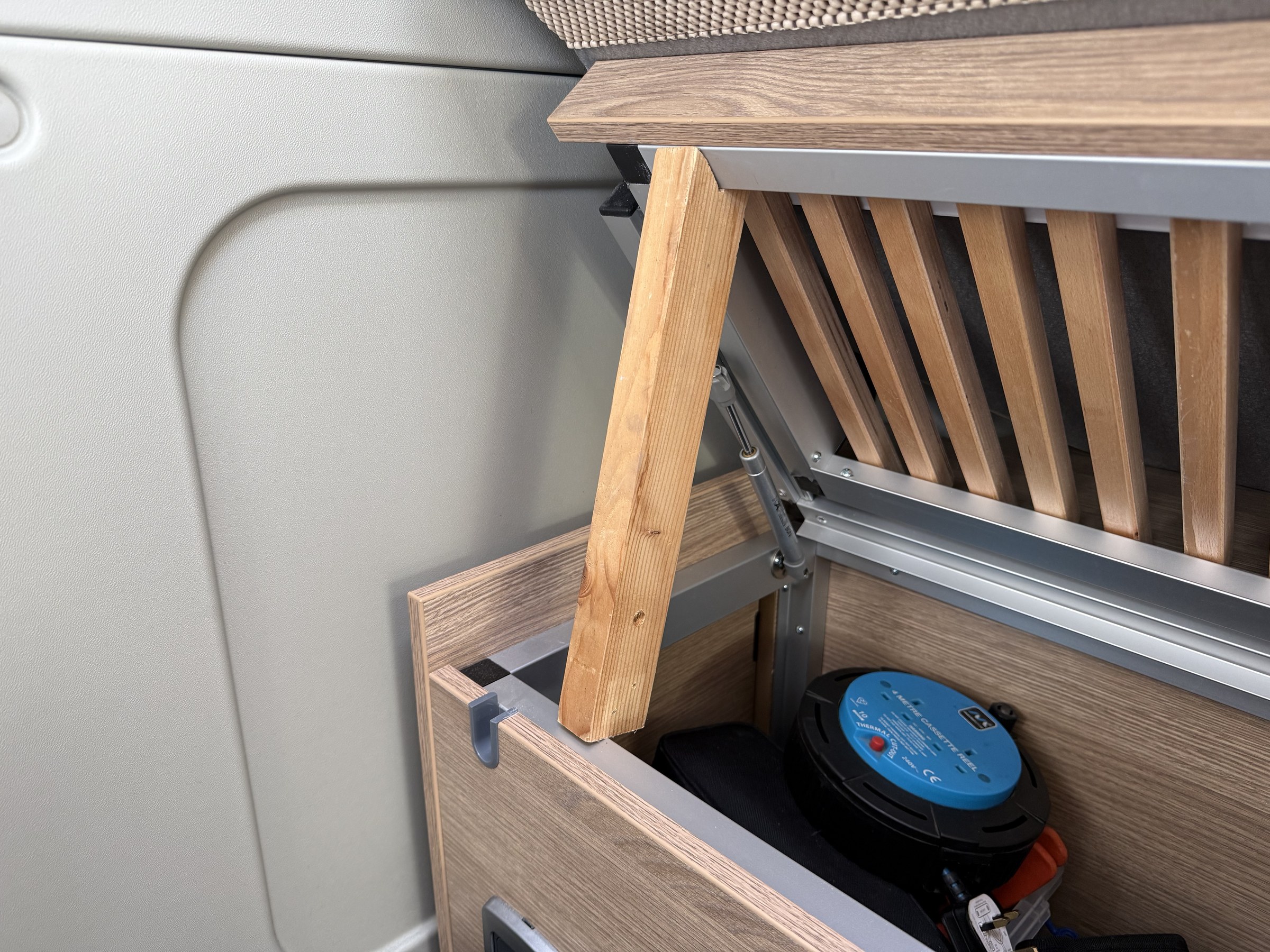
Early on we realised the tool storage (screwdrivers, spanners, etc) that I have to have with us, could be removed from the cupboard over the fridge and put in the passenger-side seat-bed pod. That meant I could put my camera bag in the fridge-top cupboard and stop it cluttering the living space.
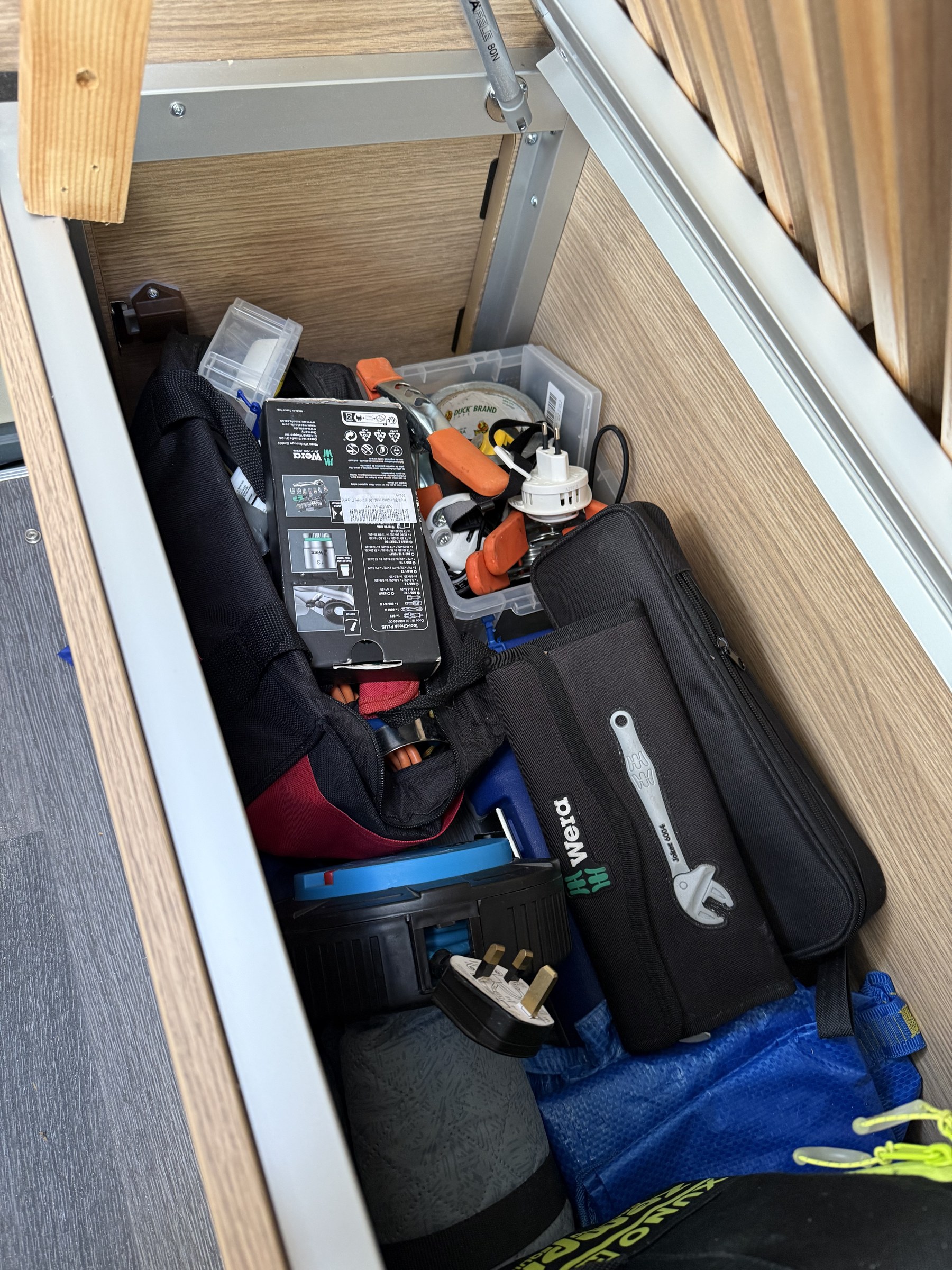
Sue would like front doors on the bed-seat pods, instead of top openers. But a) that’ll be quite a rejigging of the structure of the pods and b) I don’t think it would give a very big aperture. Ideally she’d like pull out drawers, but that would waste even more space I think.
We’ll persevere with the top loading and see how we get on.
No window in bathroom
Sue’s not happy that the wet-room / bathroom doesn’t have a window or skylight. There’s no natural light in that room and the ventilation could be better. There’s a vent but no skylight.
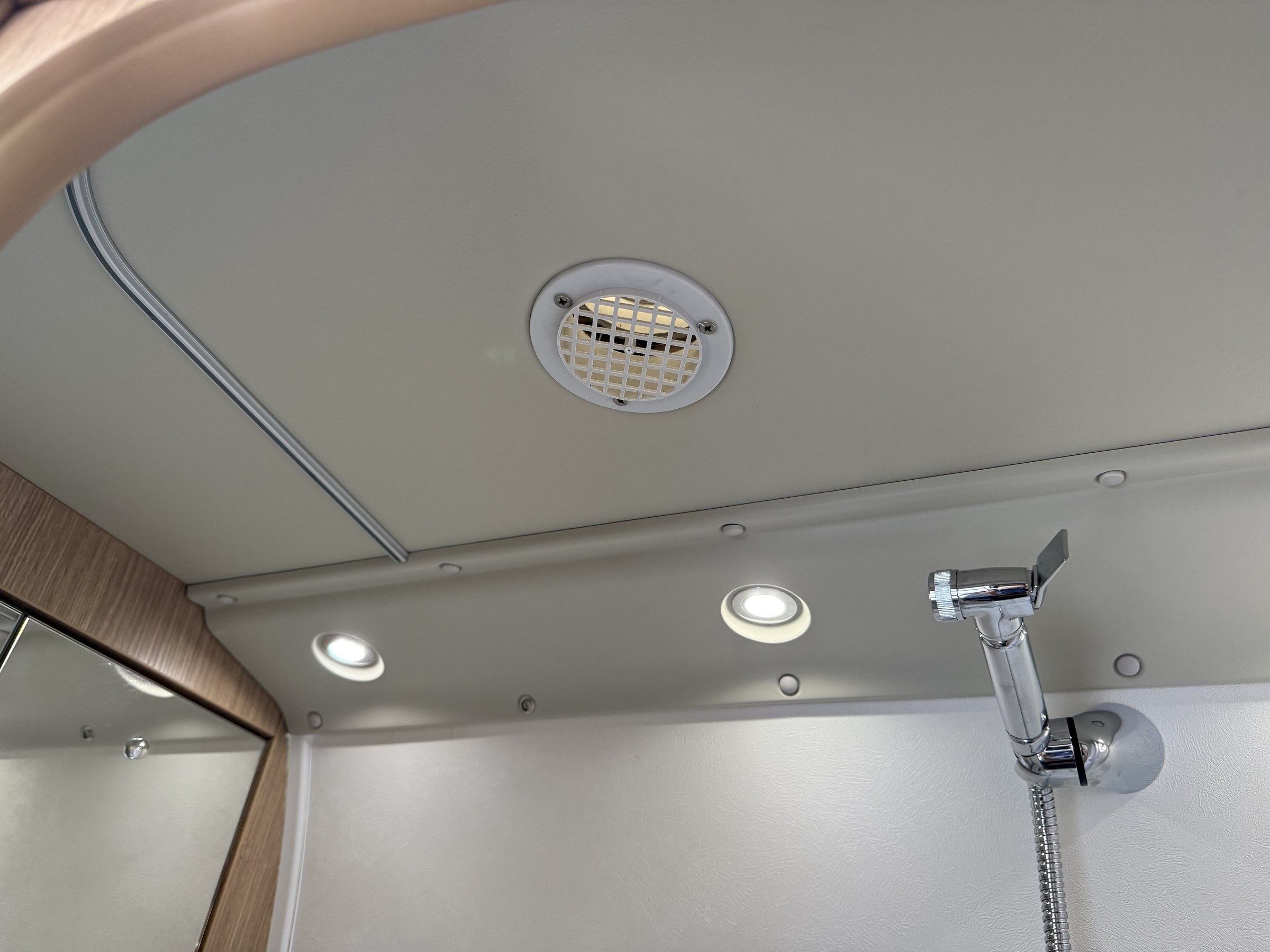
We’ve asked a couple of campervan dealers if it’s possible to fit a new skylight and they thought it was a big job. One thought you could put a side window in, but it would have to be done by Auto-Trail. I think they’d be very unlikely to take such a job on, and anyway, that would mess with the shower setup.
This will be an ongoing thing we want to look at and may need a chat with a campervan conversion specialist who might be able to help.
Space heating
We only tried this on one evening. And it worked well.
However, the LPG gas gauge went from about 80% to 20% over that night. It was probably just the way the gauge works that it has big drops for small pressure changes, but it shocked us enough to not use it again.
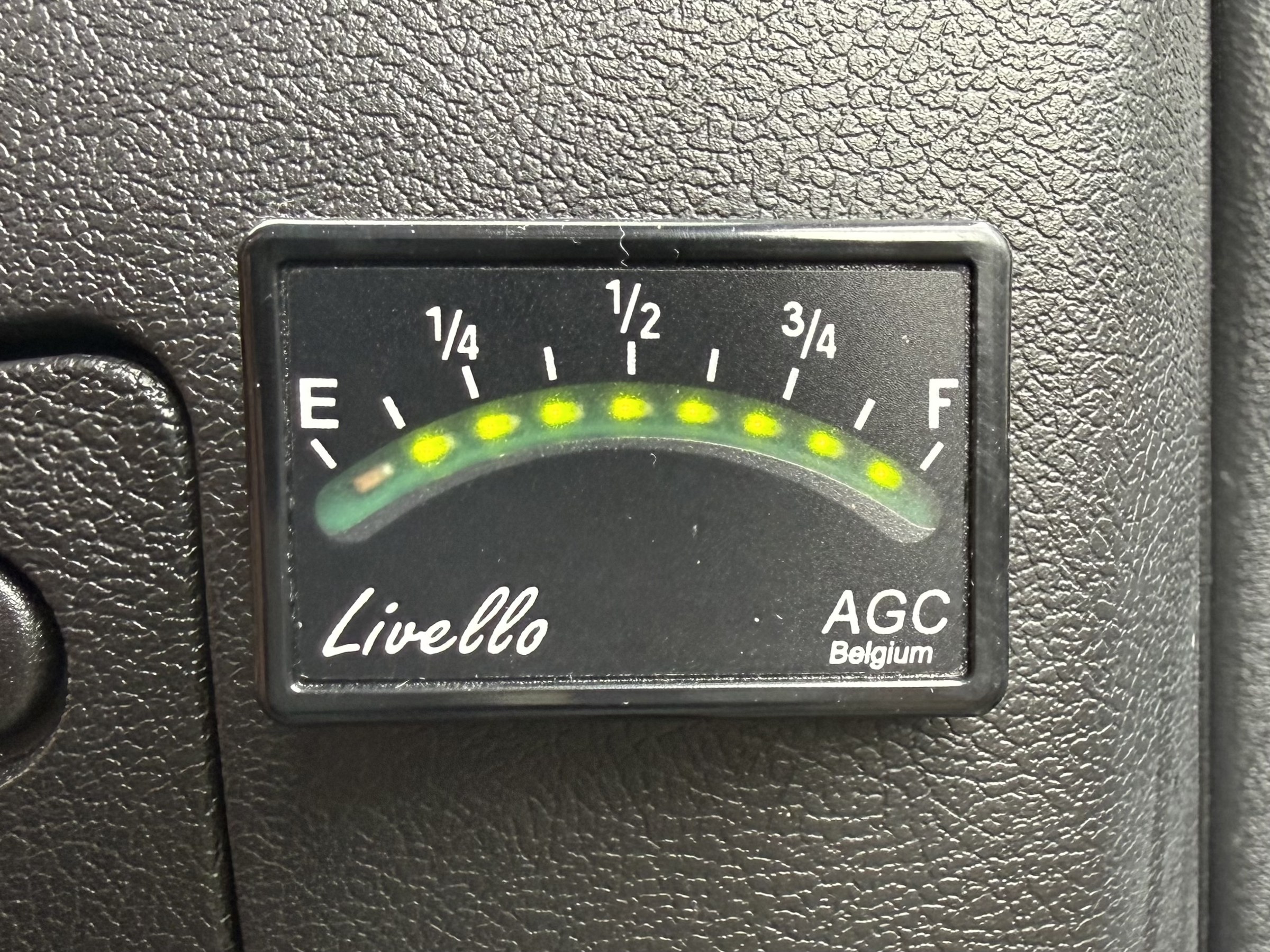
The refill in Killarney didn’t make understanding it any easier. The nominally 25-litre tank accepted about eight litres before the pump stopped. The gauge then showed about 40%, followed by 100% once we’d driven away. So the gauge is currently more of a random-number generator than a useful indication of how much gas we have.
The filling station also needed a brass adapter between its nozzle and our tank. They had one, but the guy thought we should be carrying our own. More investigation required before we take the van abroad or depend on the heating in winter.
We’ll have to experiment a bit with this at home when it gets cold and see how it affects the gas usage.
Side blind rattle
A smallish one this. The front side-window blinds (on the front doors) both rattle when we drive.
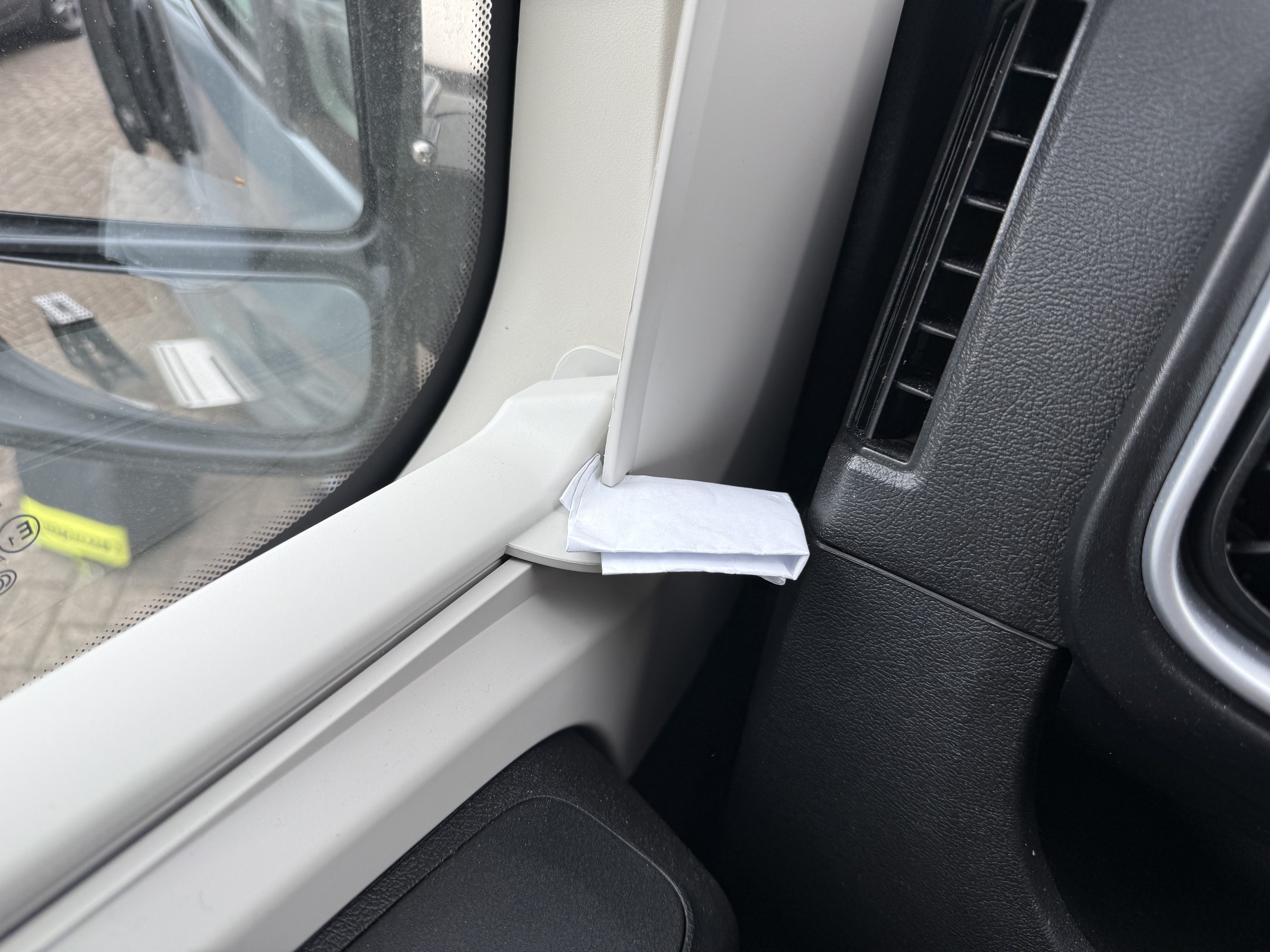
The van is far from rattle free anyway, but these blinds are close to us and bug a bit. We ended up stuffing wads of paper into the latch to stop the rattle.
Kitchen cupboard storage
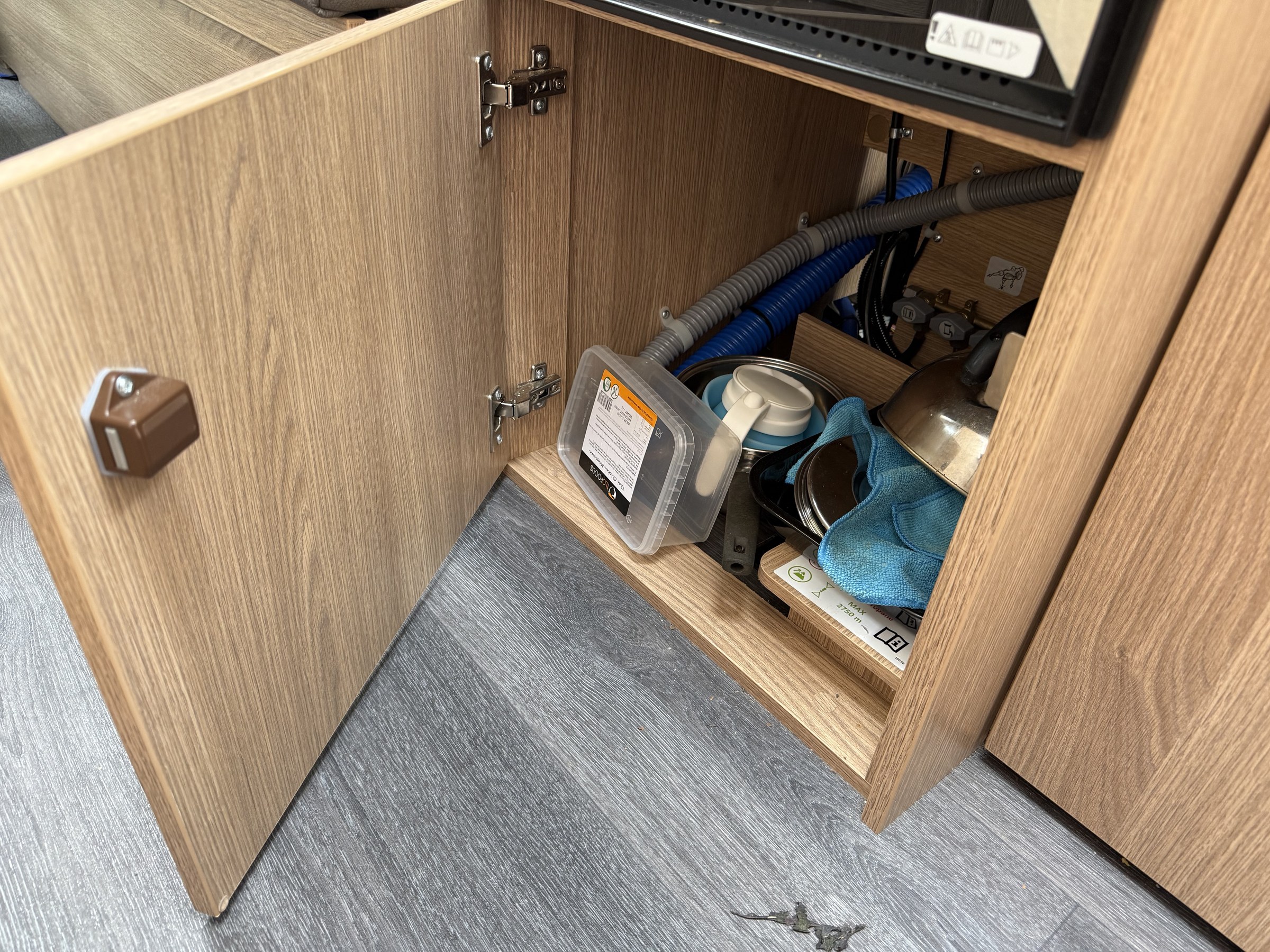
Care needs to be taken with ANYTHING that’s stored in a cupboard, to try and avoid rattles. So there’s a lot of tea-towels get used to pad kettles, pans and cooking racks so they don’t rattle against each other. We need a much better way of storing everything so they can’t rattle. I’m thinking I’ll try and come up with some sort of 3D-printed system to slot everything into its own cubby (a bit like Gridfinity).
Awning
We only used the awning once (twice if you count it being unwound by a metre when we needed to try and dry our aborted washing/drying at Mannix). But the whole awning is much bigger than on the Cali and flaps a lot more.
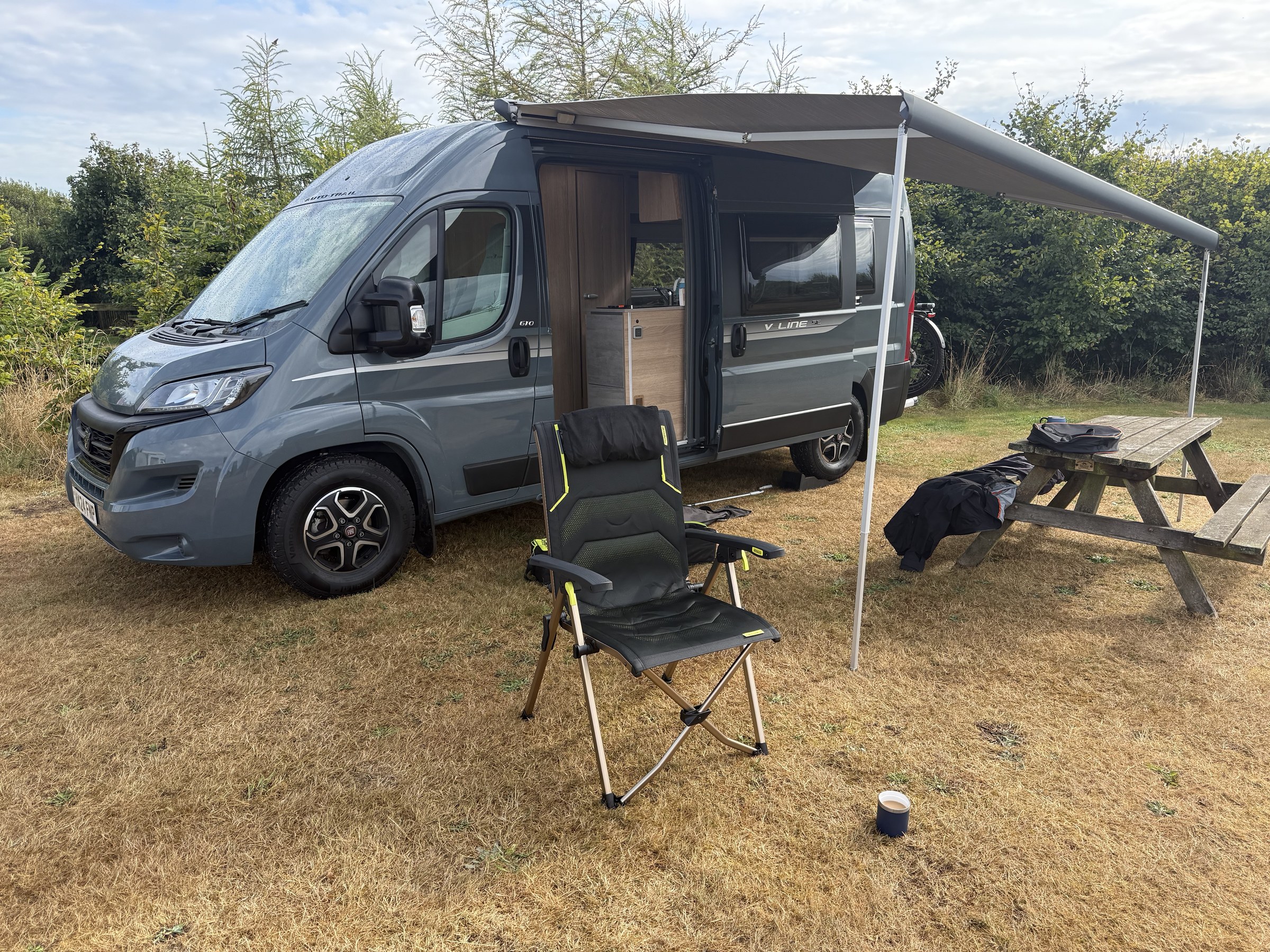
At least it flapped without the guy ropes. For the aborted drying I found that tying the pole-tops and stretching the awning out stopped it flapping considerably. This will need some investigation to see if that’s how we’re supposed to make it work.
We also got the first-night lesson at Hilton Court. The wind got up after midnight and the awning sounded like someone repeatedly slamming a van door. At 1:30 a.m. we got up and pegged the legs down. Five minutes later we got up again and wound the whole thing in, which is what we should have done in the first place.
The lesson is that the awning doesn’t stay out overnight just because the weather looked fine when we went to bed. Check the wind, use the guy ropes and, if in doubt, wind it in.
The End
And that’s it, our thoughts on the van and the trip.
Hope someone got something out of all this drivel!
TTFN

Leave a Comment