

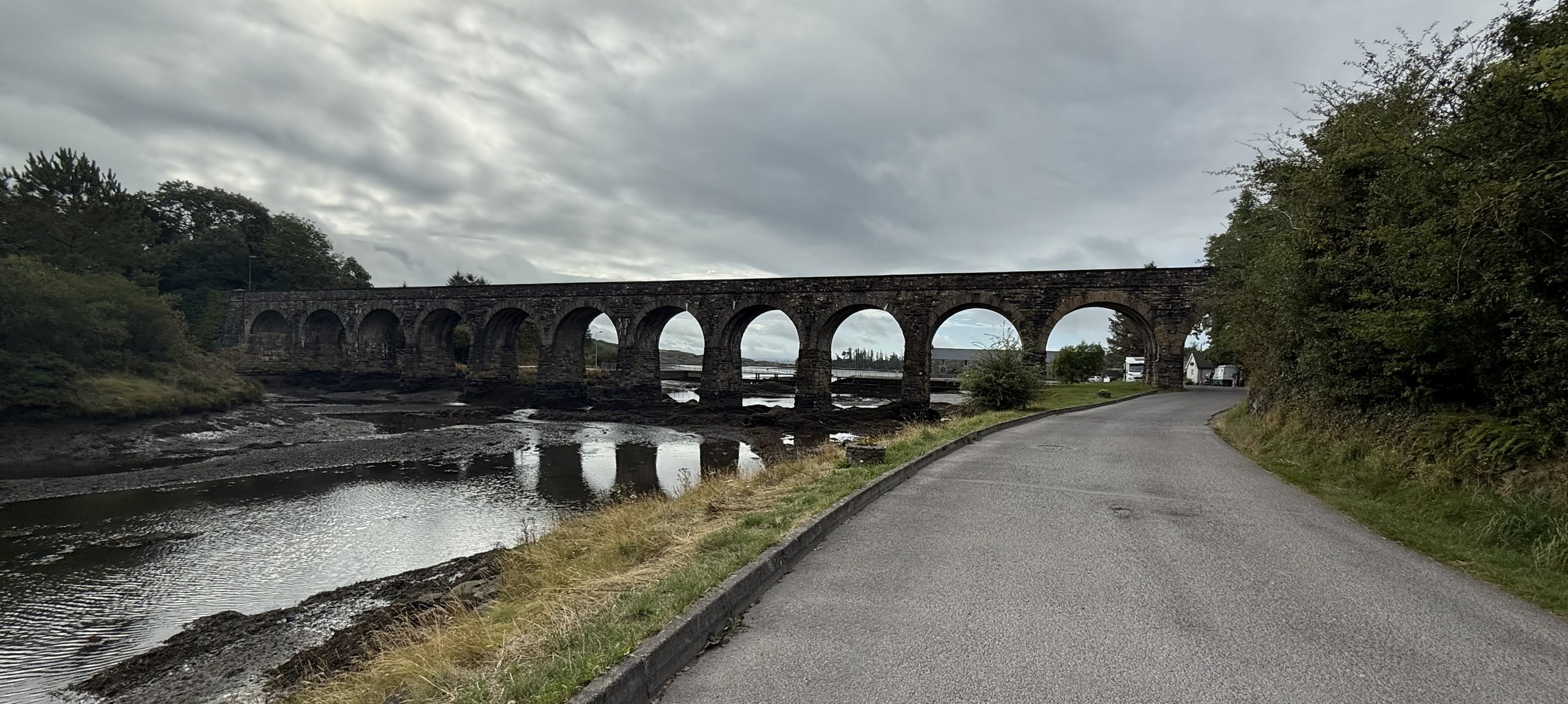
Starting in Ballydehob
We chatted with a couple from the UK who were on a one-week trip and parked in front of us. We also got a bunch of suggestions from a Northern Irish guy parked opposite us.
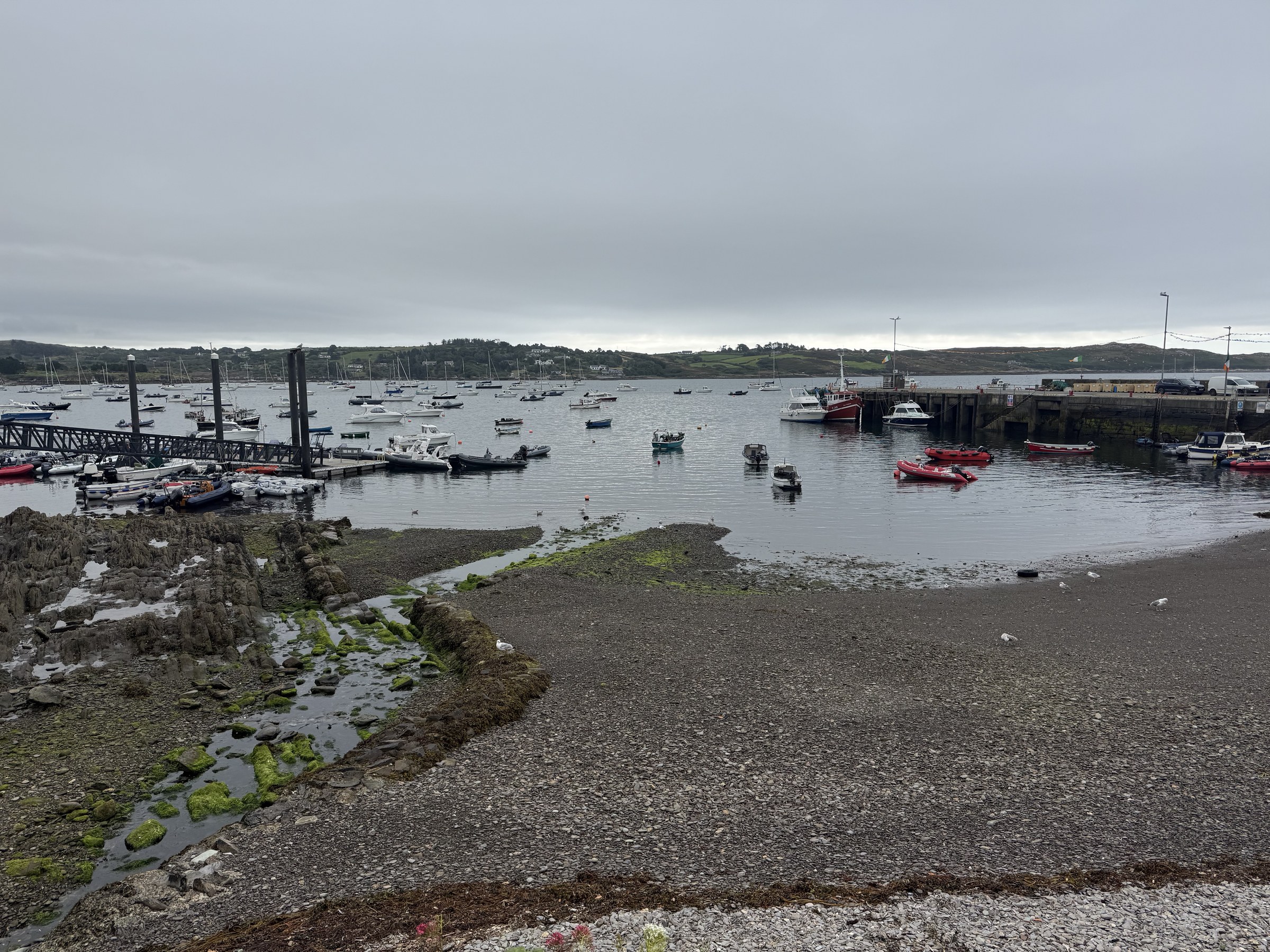
Coffee at Cameron’s Café in Schull
Most car parks in Schull are height-limited to less than 2.1 metres, so we tucked Ollie into a corner of the Centra car park.
Cameron’s Café loos: 5.5/10.
We went for a shop in Centra to pick up a few bits and pieces.
Harbourside loos: a surprising 7/10.
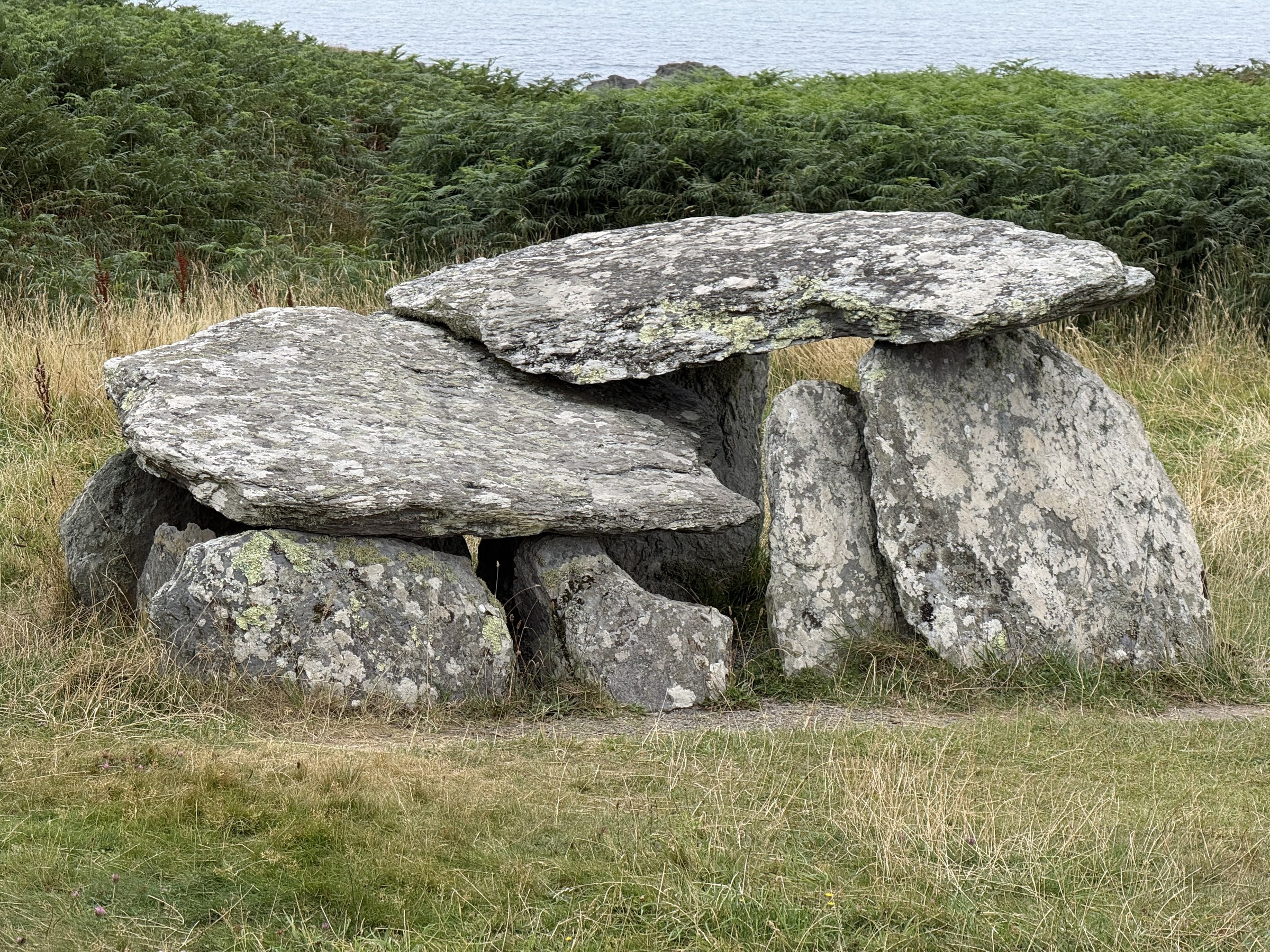
Altar Wedge Tomb on the Road to Mizen Head
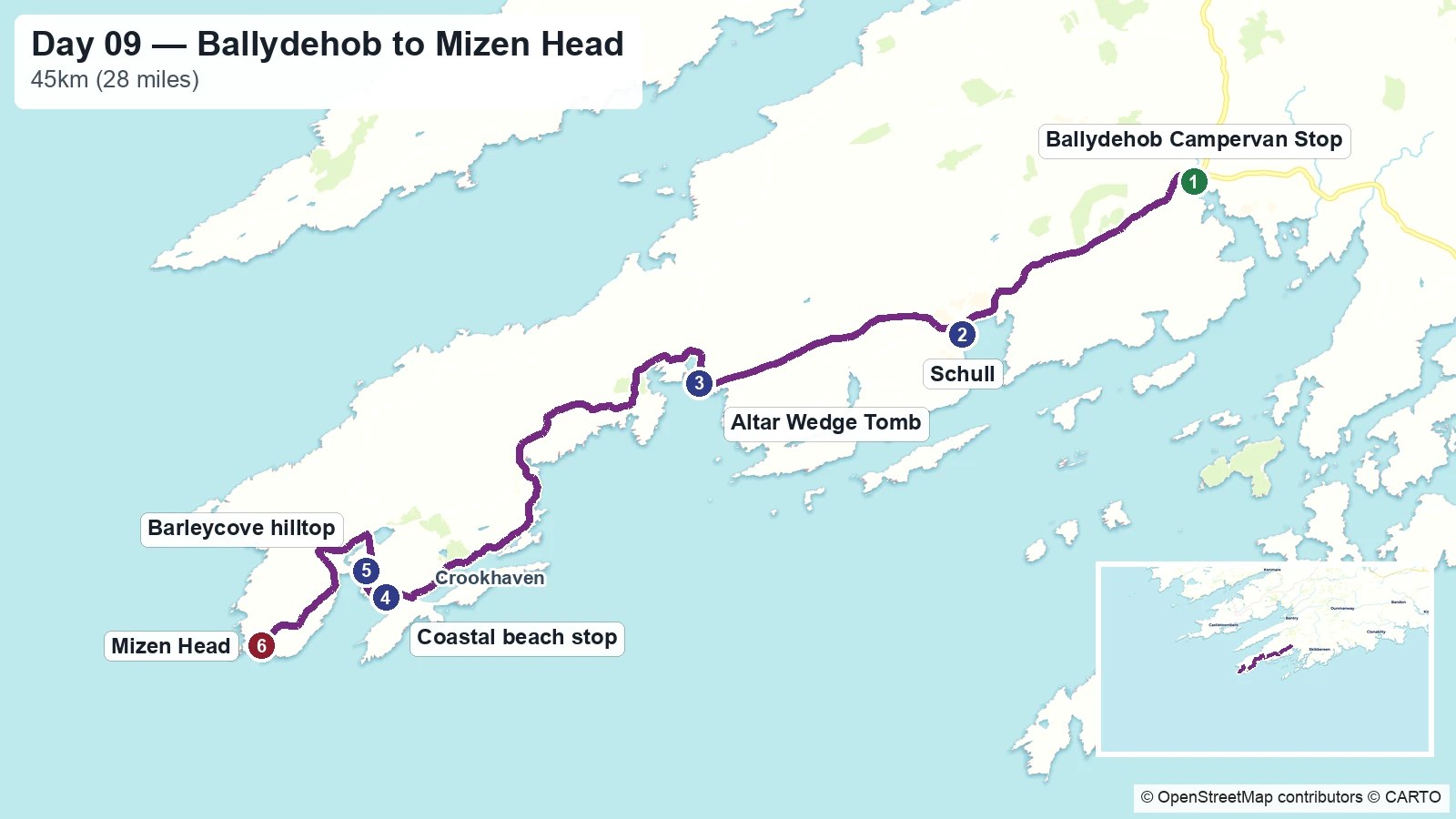
After coffee and a shop in Schull, our destination today is the car-park of the Mizen Head Signal House Museum. The car-park is fine for over night campervanning and they don’t mind you using the site loos as long as you buy something from the cafe and visit the site.
A beach view from our stop.
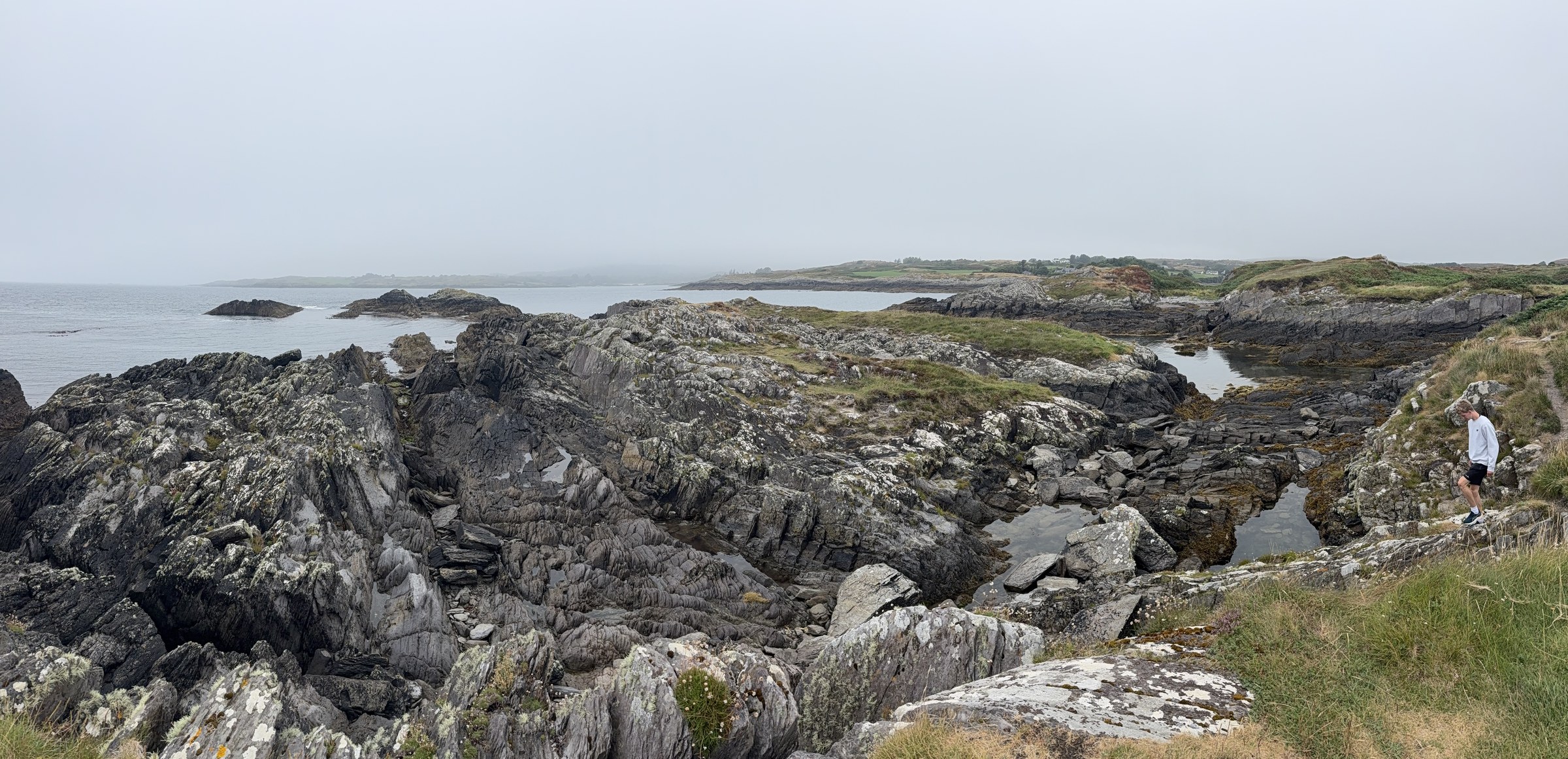
A Beach Between Crookhaven and Barleycove
Another beach stop — nice, but not as nice as the next one.
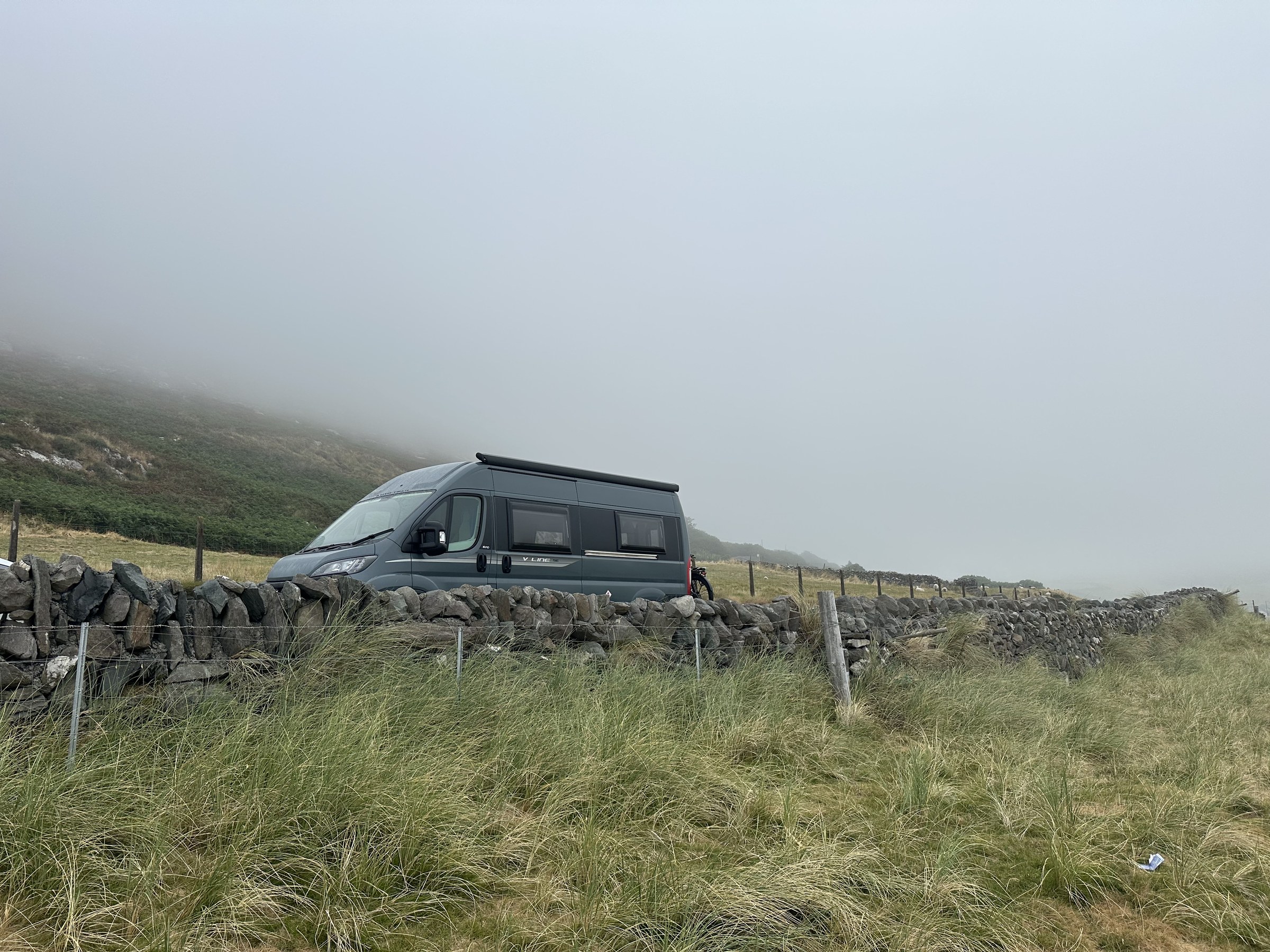
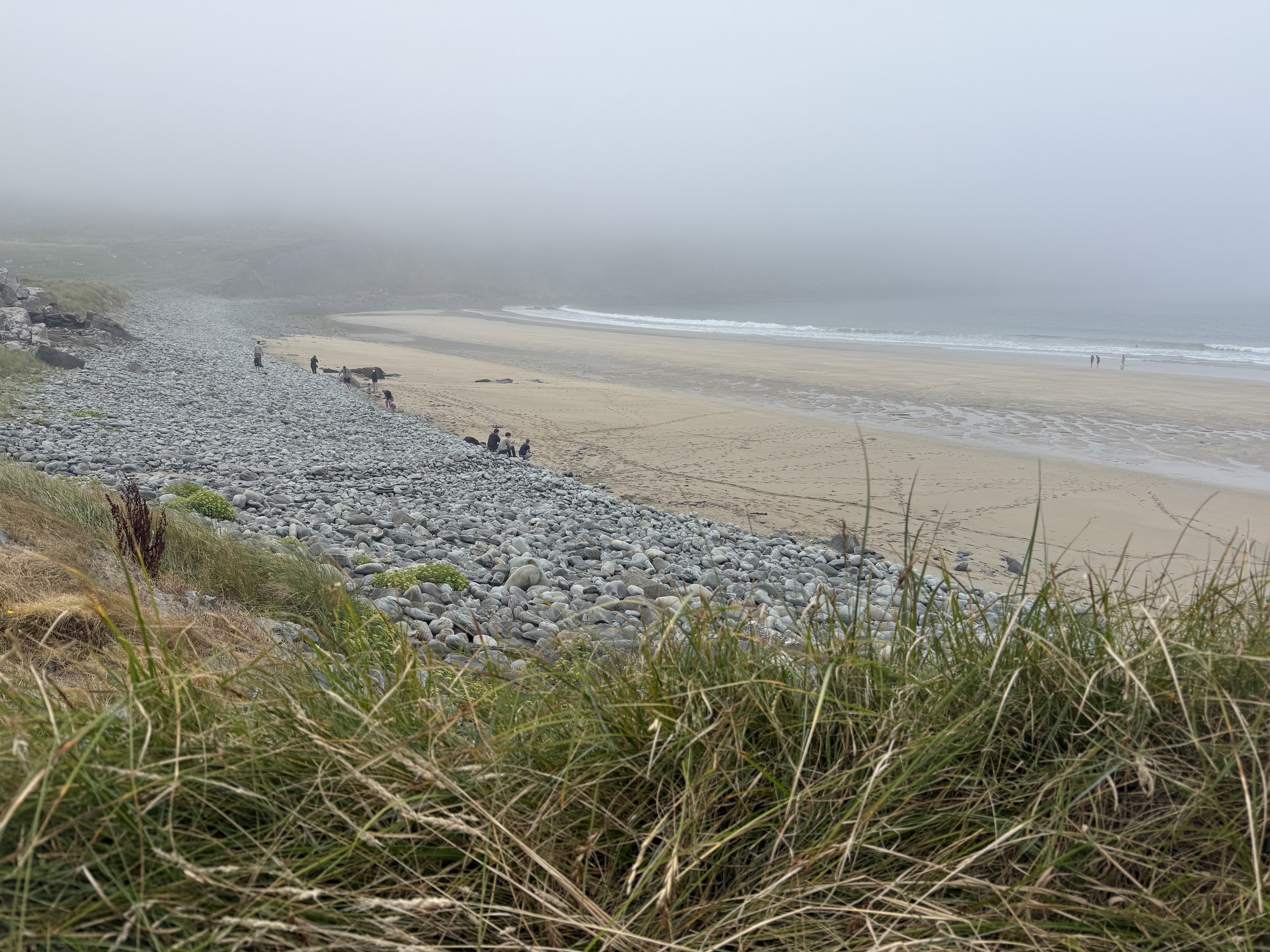
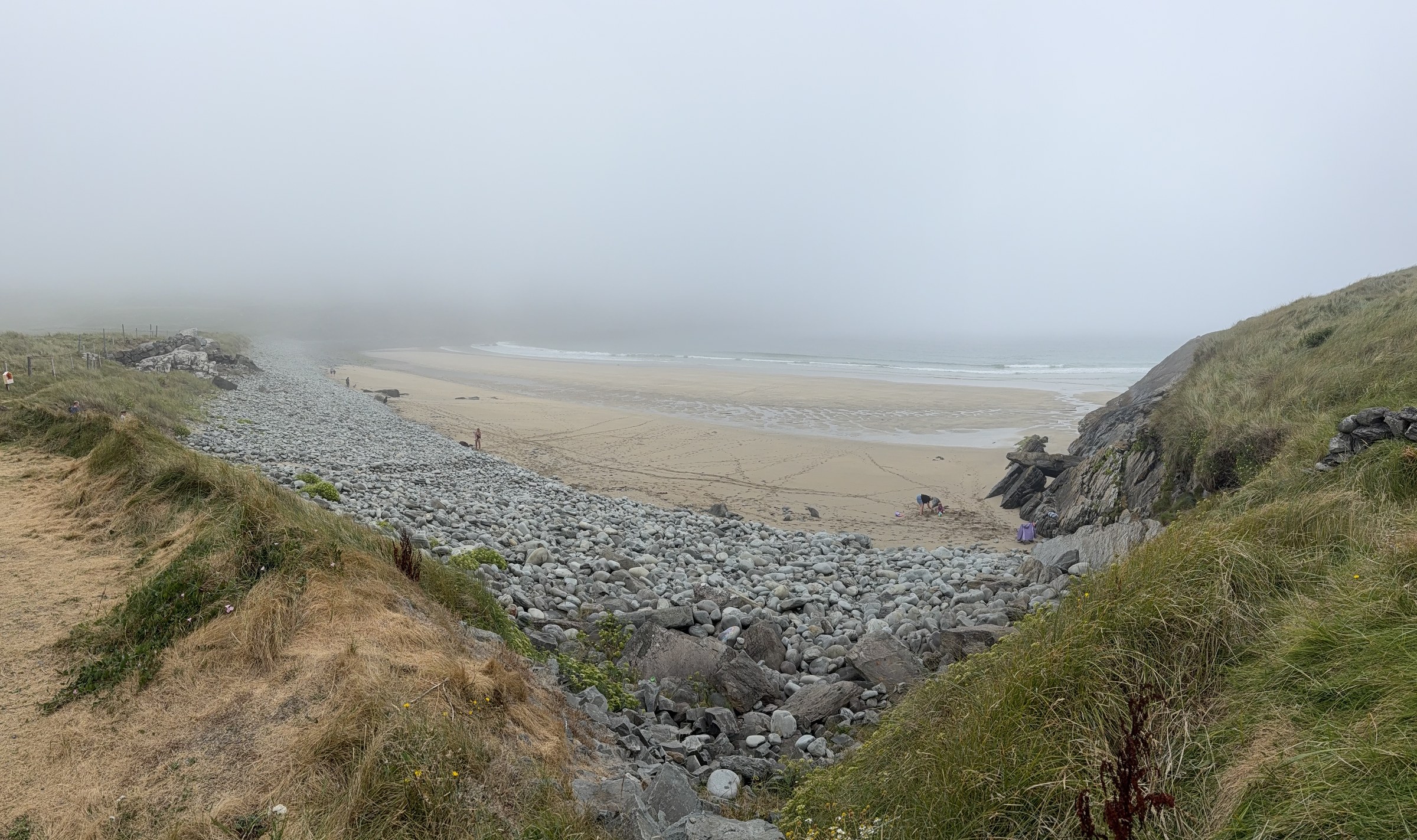
Barleycove Beach
This one looked good as we rounded the headland before it. After passing our eventual stopping place, we headed for the main car park at the bottom of the hill, only to find a height restriction. The beach looked a cracker, so we turned around, parked at the top of the hill and walked down across the dunes.
There was a sign saying, “No tunnelling in the dunes.” The rabbits clearly hadn’t read it.
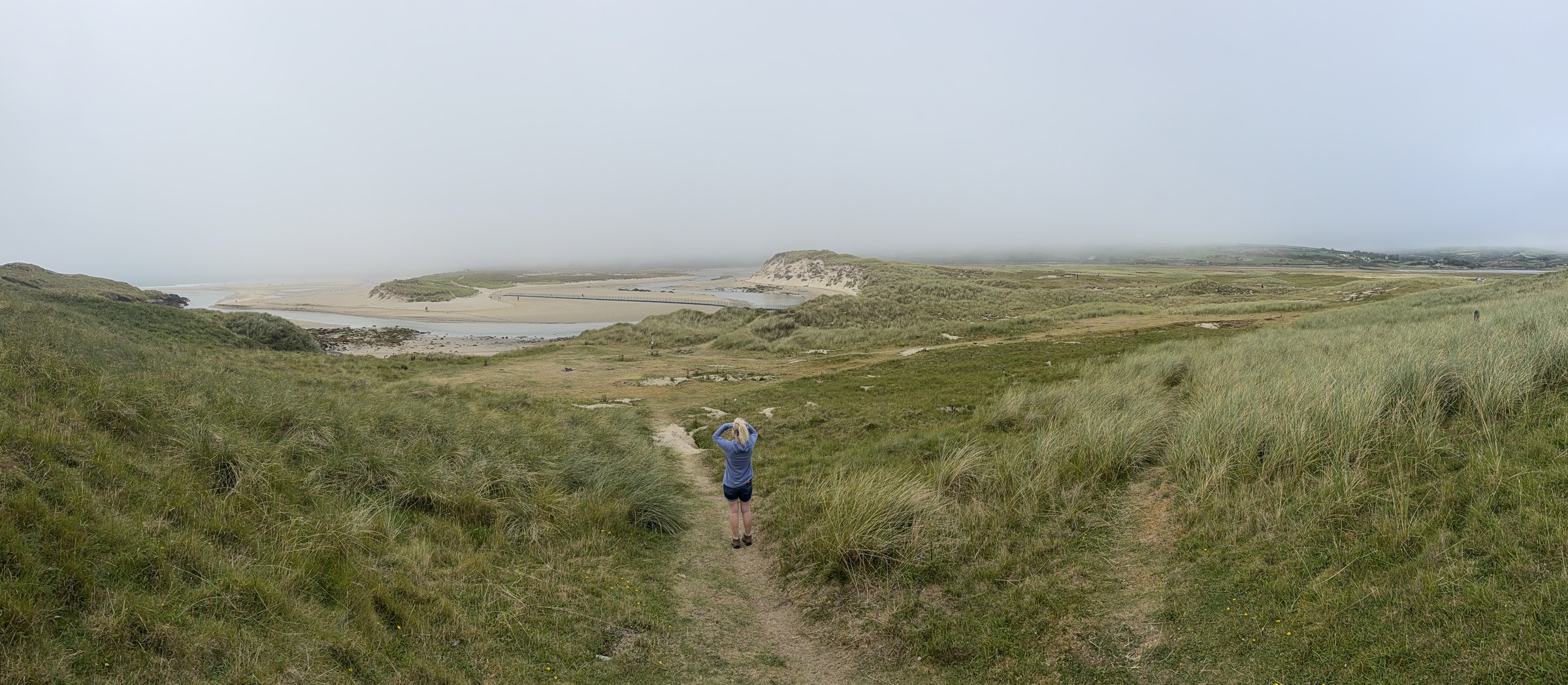
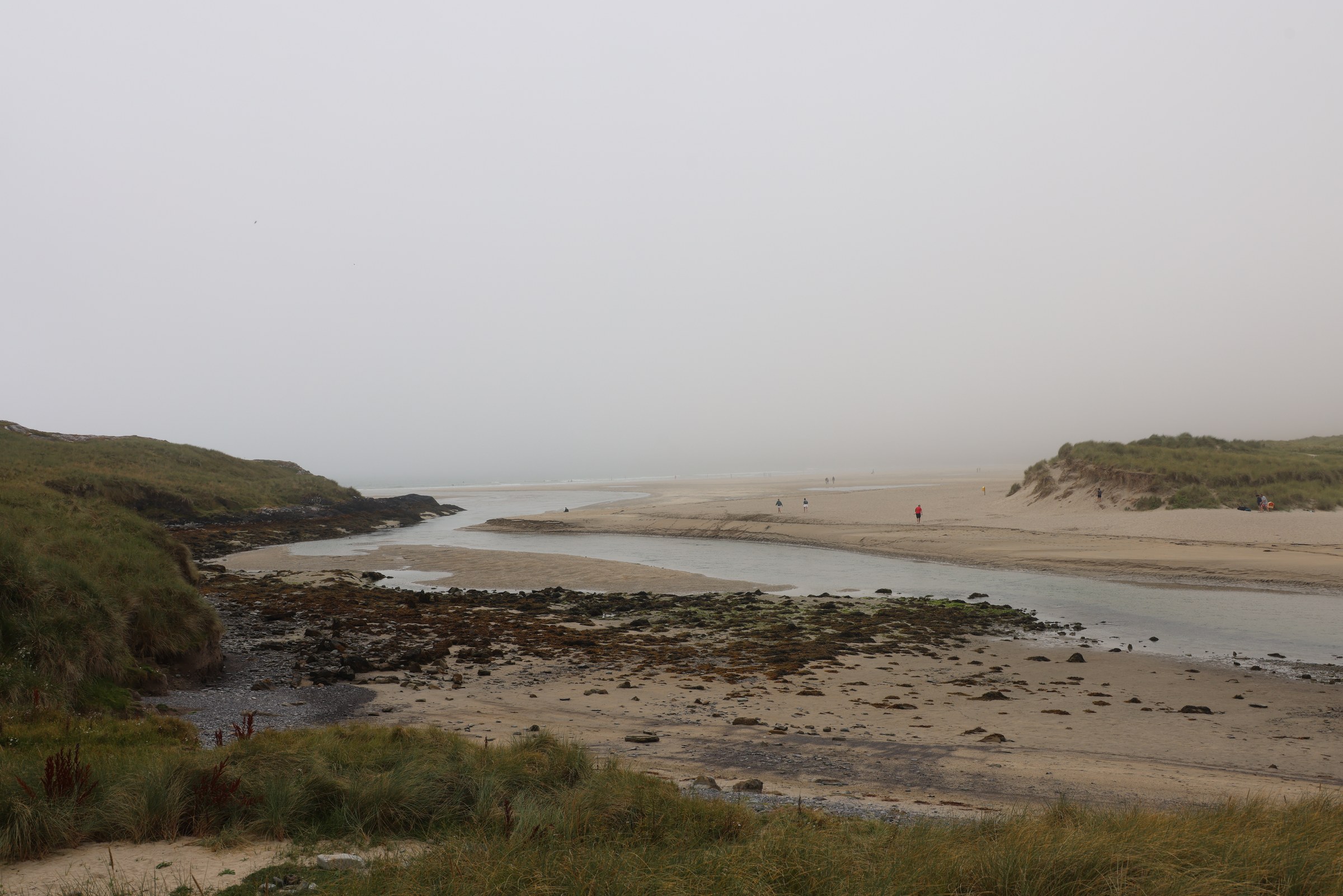
Even in the mist, the beach looked stunning. The next day, it looked even better!
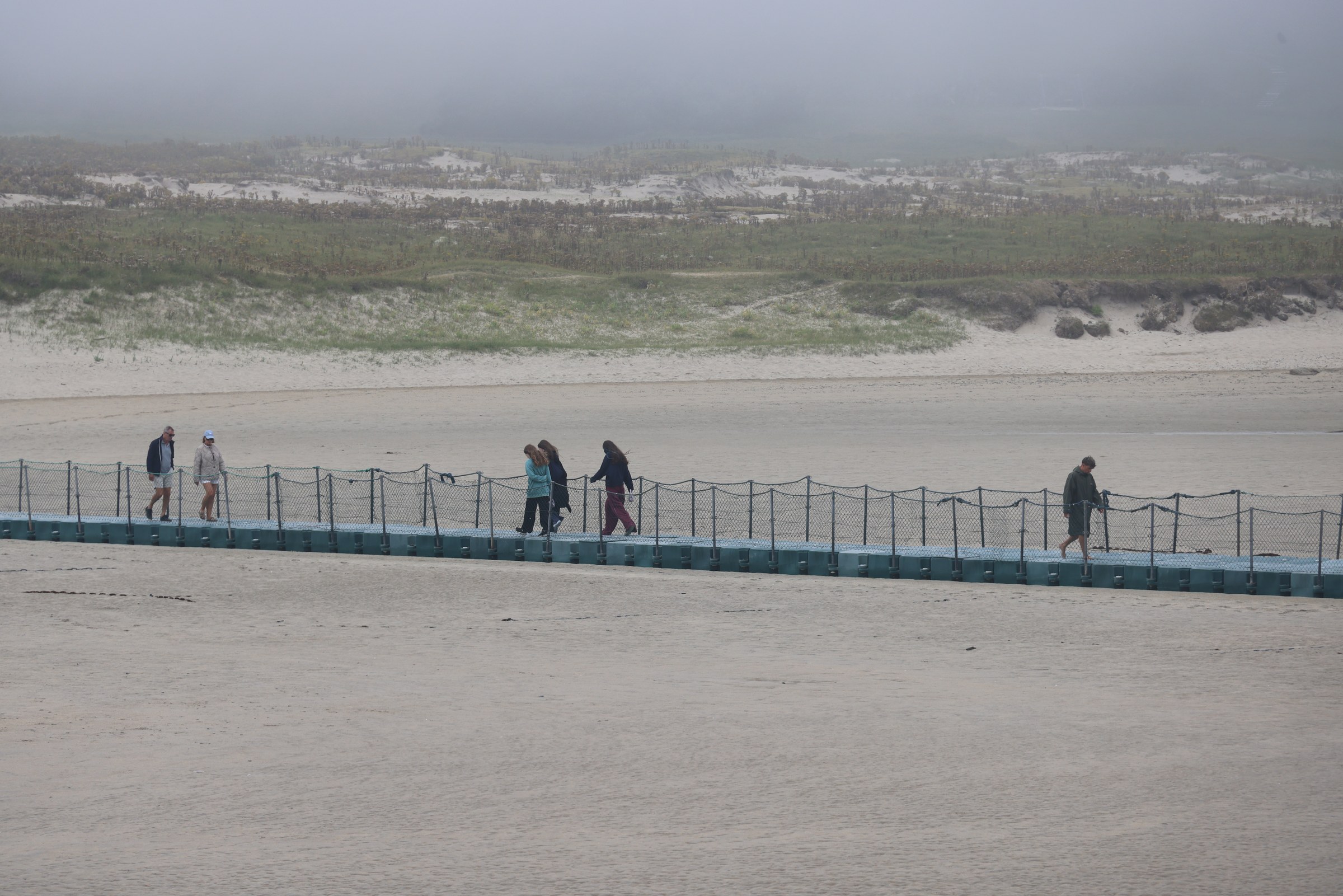
The bouncy causeway, made from buoyant tiles connected together, was fun to walk, or bounce across.
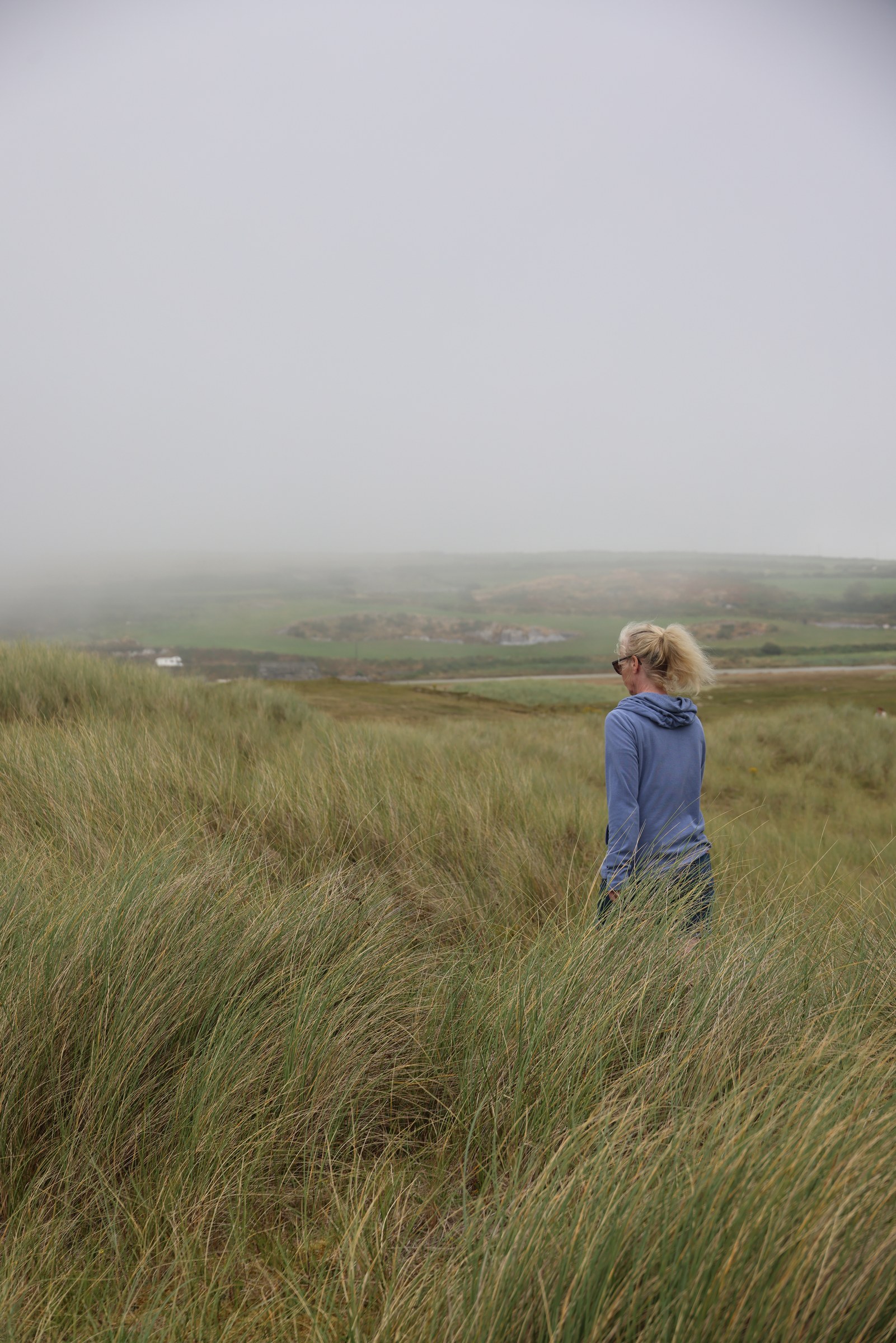
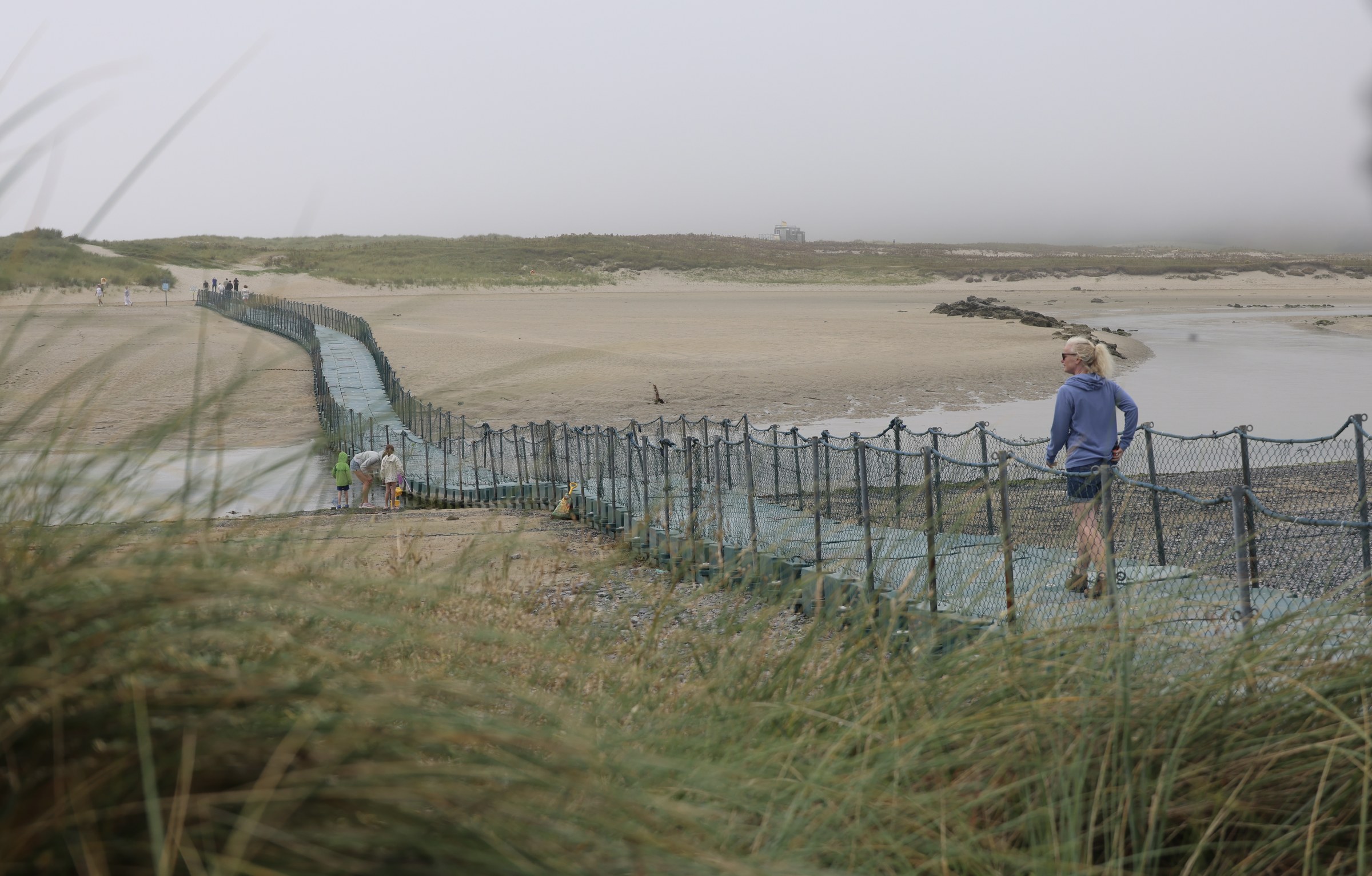
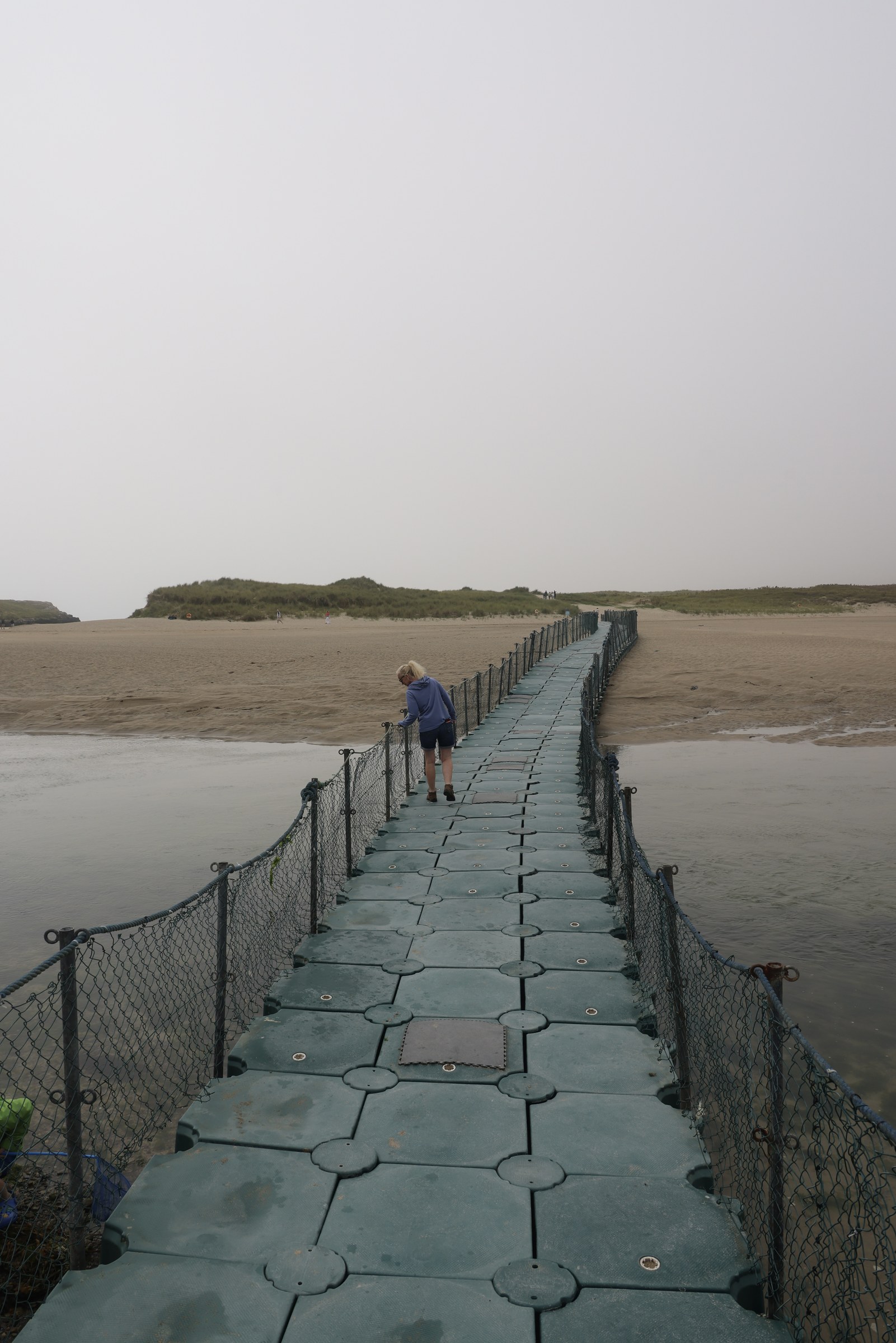
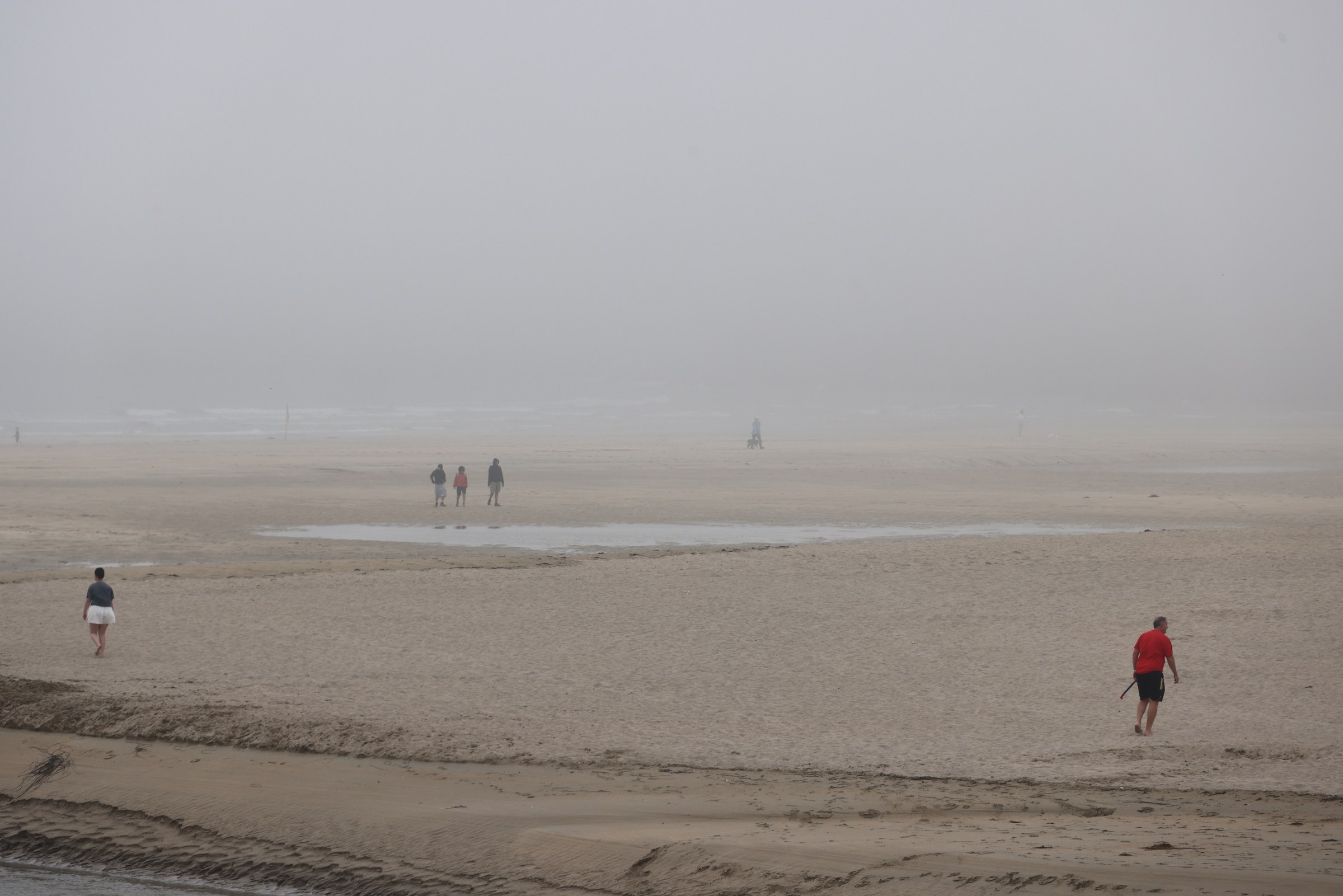
There were people surfing when we reached the shoreline, but it was so misty that I didn’t bother taking pictures. Lifeguards were looking after the beach; in Ireland, beach lifeguarding is overseen by Water Safety Ireland rather than the RNLI.
Back on the road to Mizen Head, I took a quick snap through the windscreen. I wish I’d had time to fit a dashcam.
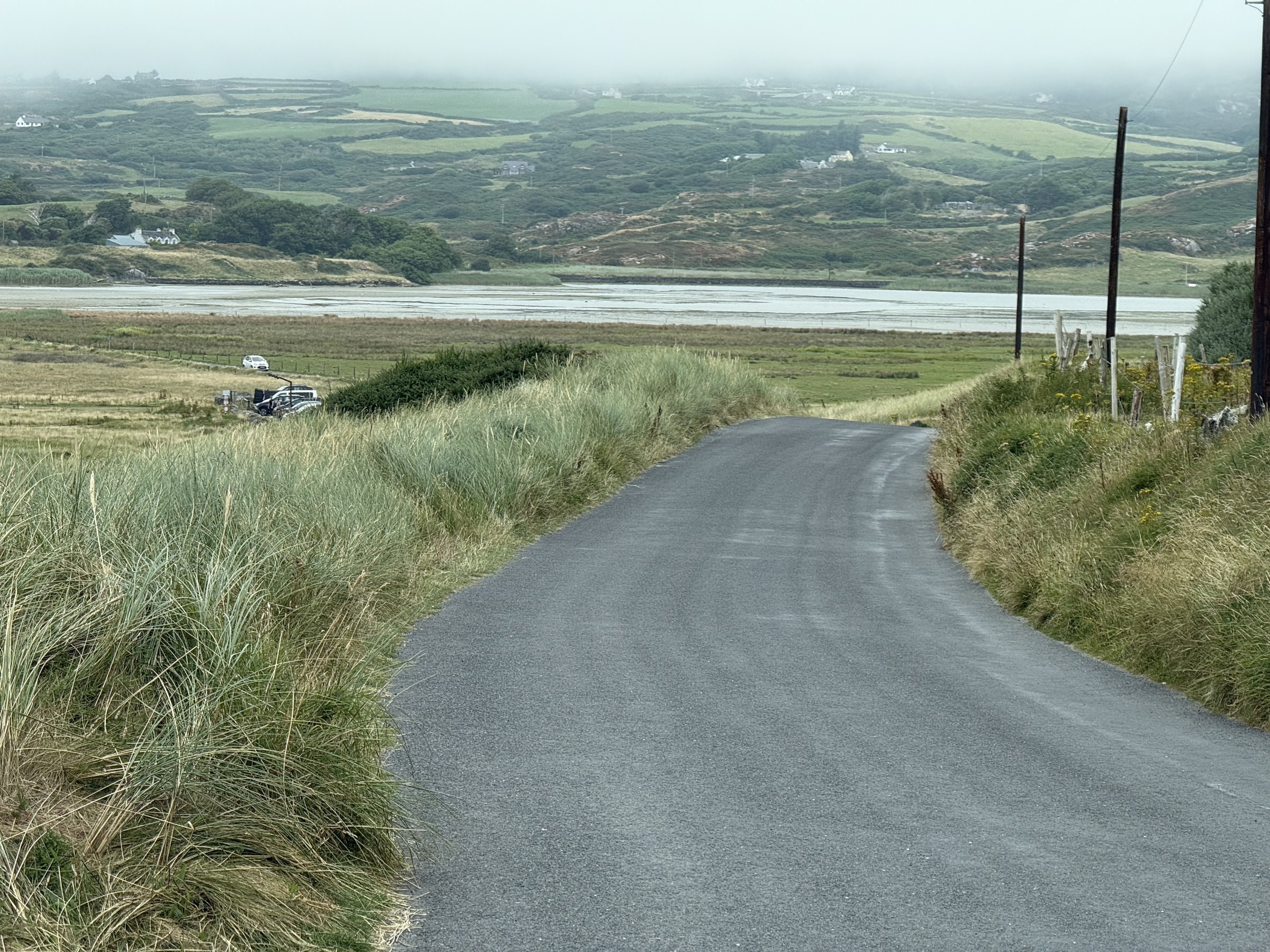
We hadn’t planned to stop at any of these beaches; we just hit the anchors when something took our fancy.
Mizen Head
That’ll need chocking before we go to bed.
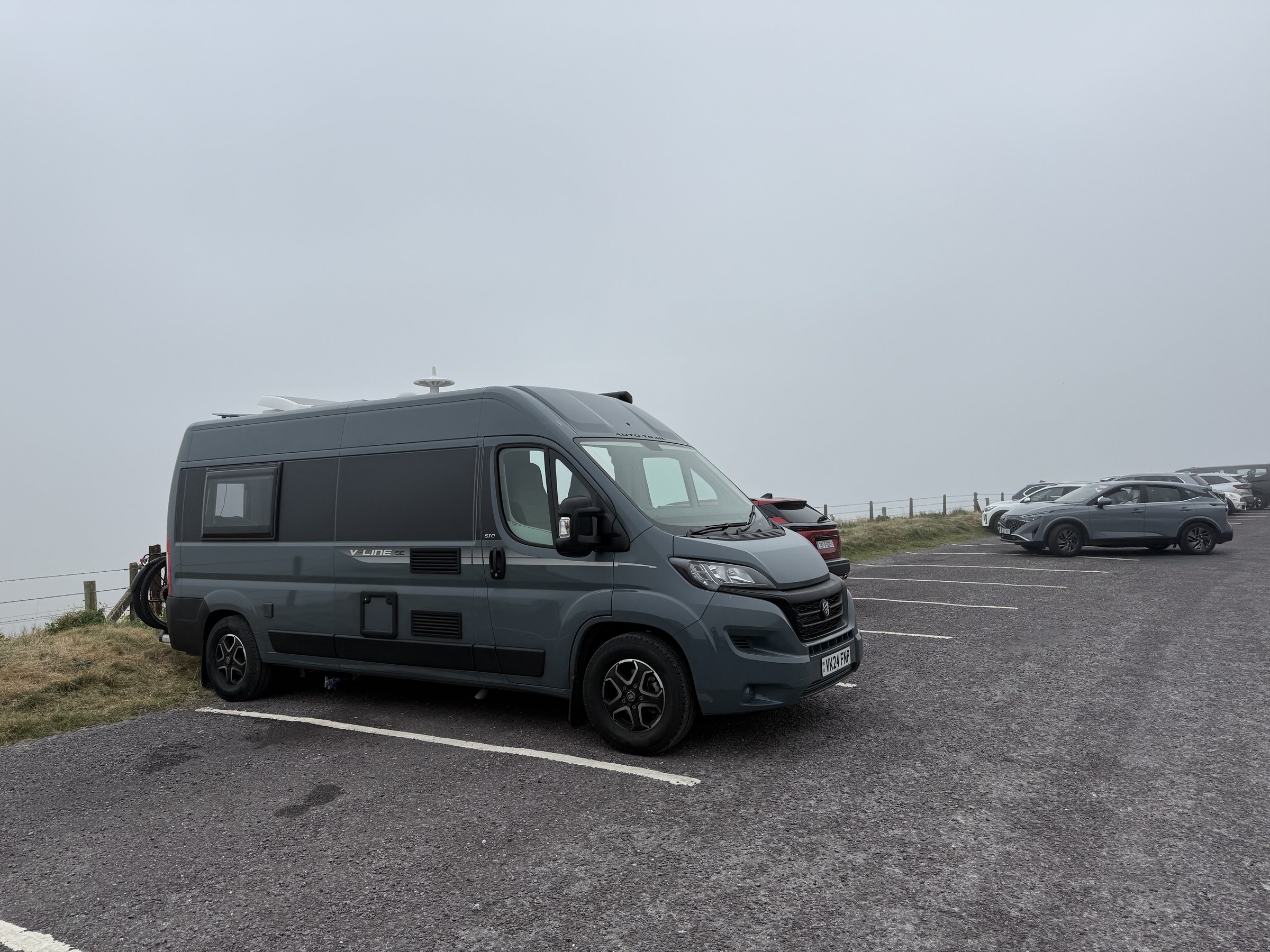
That picture is a bit deceptive. The slope wasn’t as bad as it looks, but it definitely needed a couple of chocks at the rear.
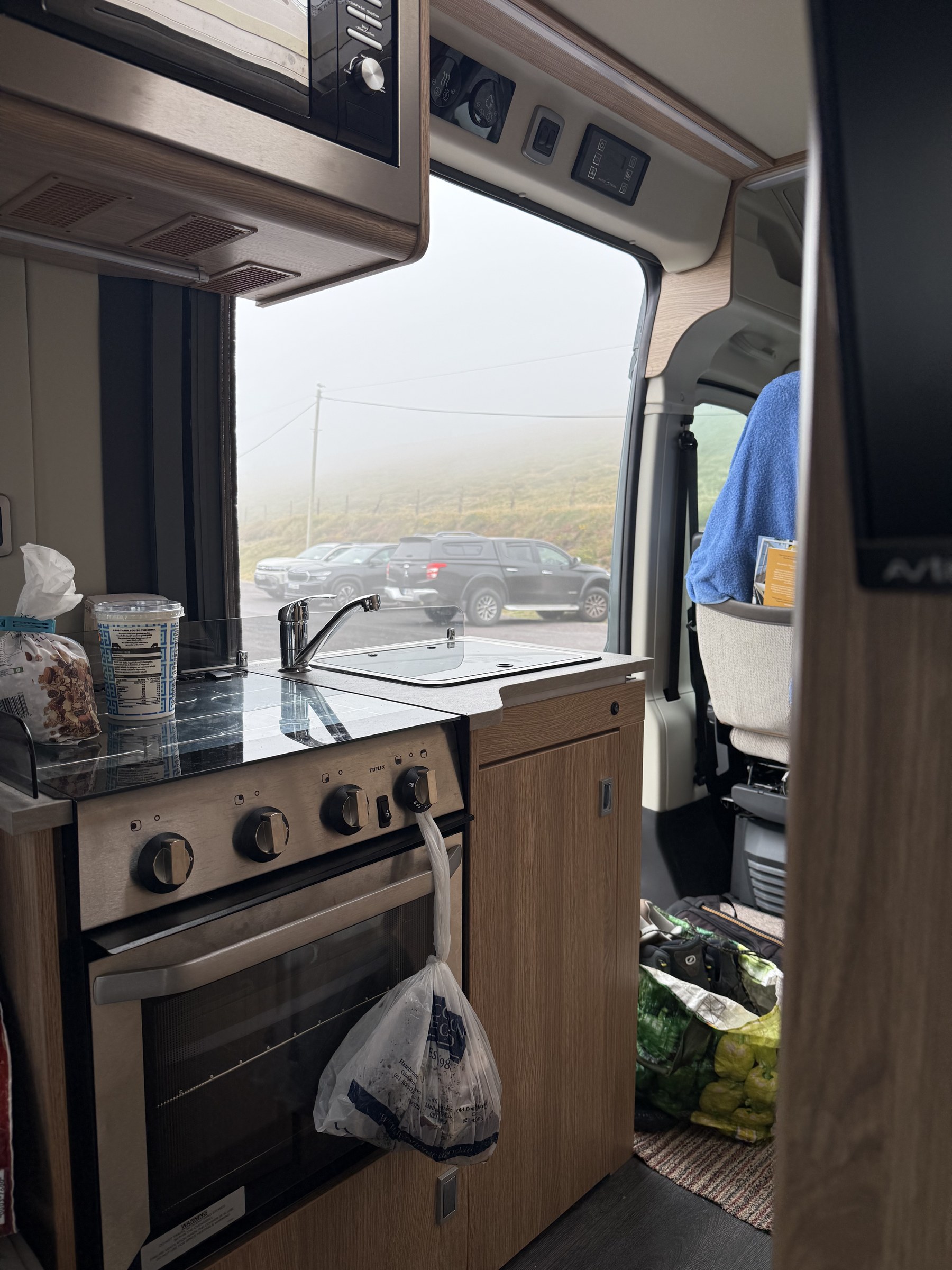
After a quick sit-down, we headed over to the entrance, museum and café. The museum was a bit of a non-event. There was a bit to learn about how the Fastnet Lighthouse was built and why its cast-iron predecessor was eventually replaced, but it all looked a bit dated. Some of the interactive displays were only half-working.
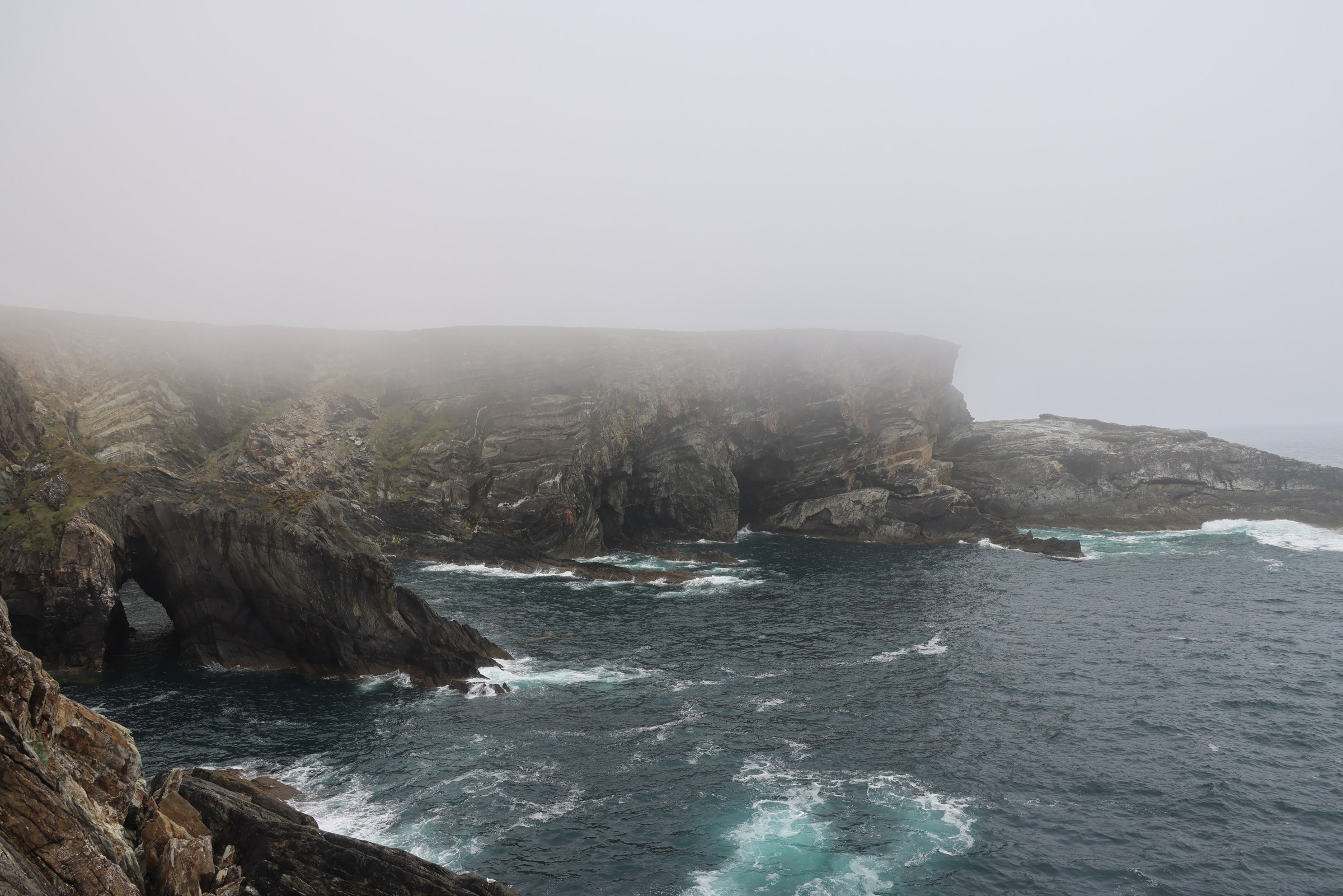
Arch View
The first thing to do on the site, once you’ve finished with the museum, is Arch View. A winding path takes you down, down, down until you reach the steps. It’s another 70-odd steps then down to a viewing platform where you can see a sea arch.
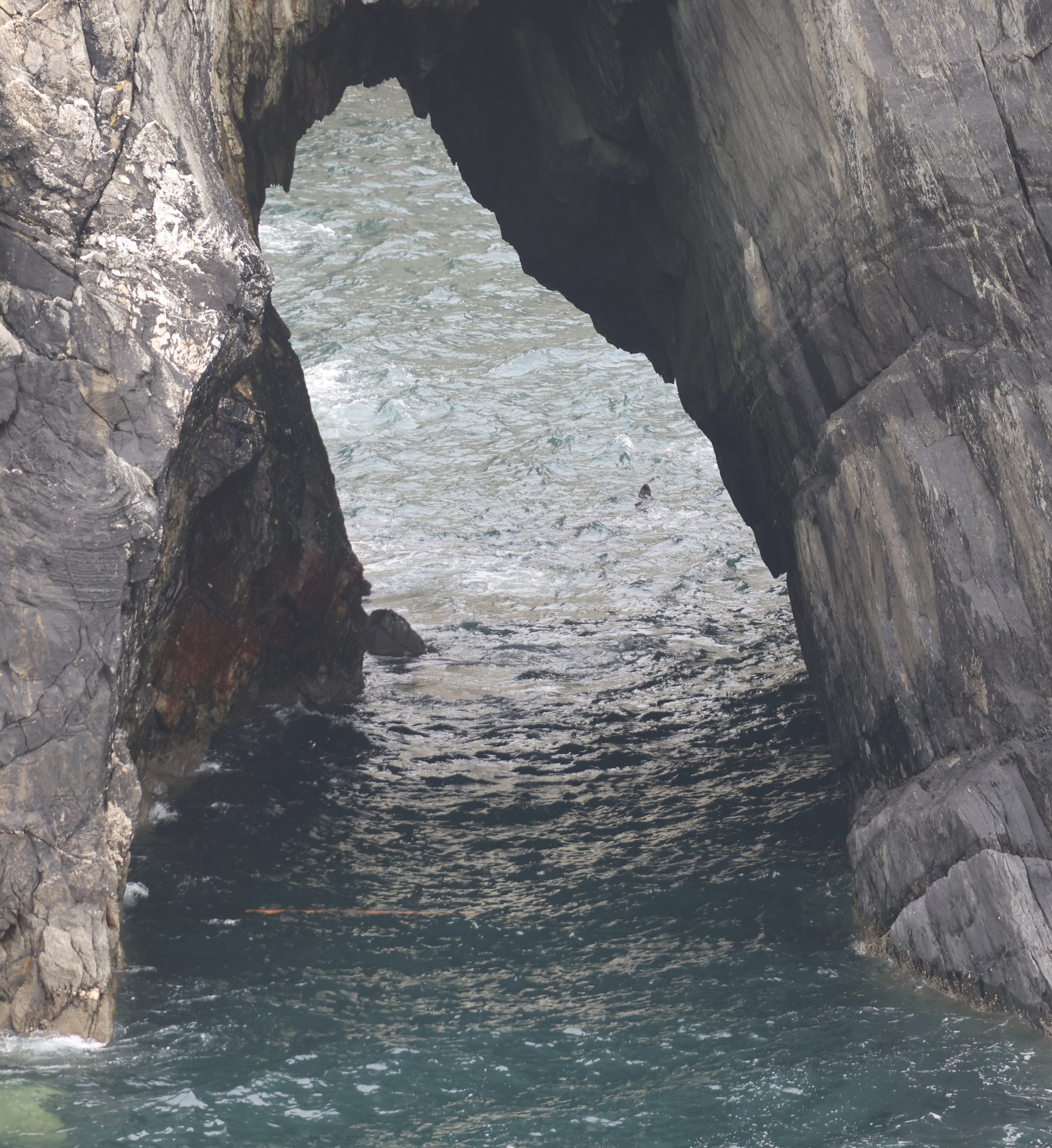
That black spec through the arch is actually a seal, honest.
There’s also a view of the bridge to the signal station, but it wasn’t so great today.
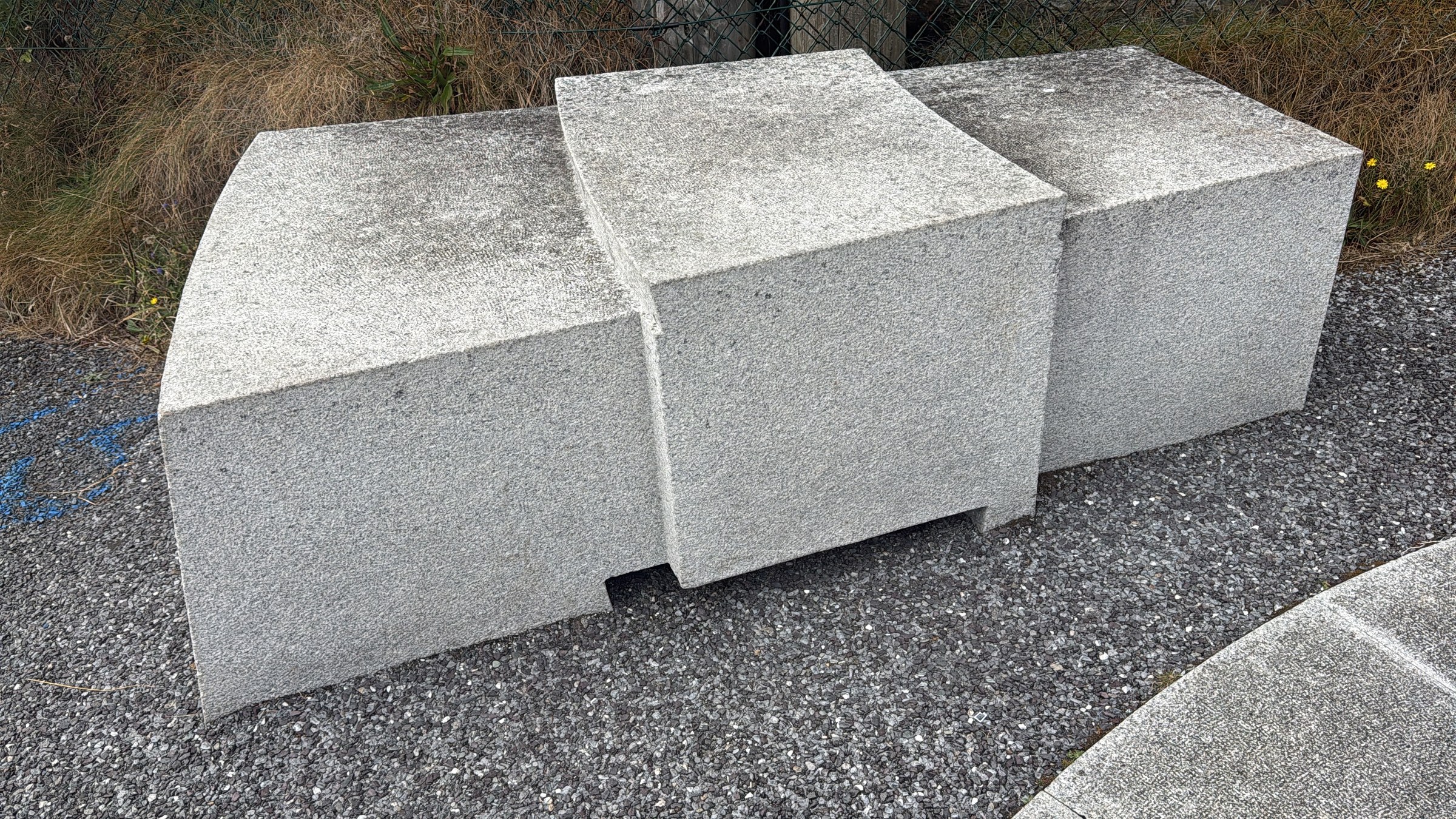
On the way to the bridge is a reconstruction of one course of the Fastnet Lighthouse. Its granite blocks were cut with interlocking dovetail joints in Penryn, Cornwall. Sections were assembled there for inspection, then dismantled and shipped out for the lighthouse’s construction on Fastnet Rock.
This is a copy of one of the interlocking stones that makes up a course of the lighthouse…
The Bridge
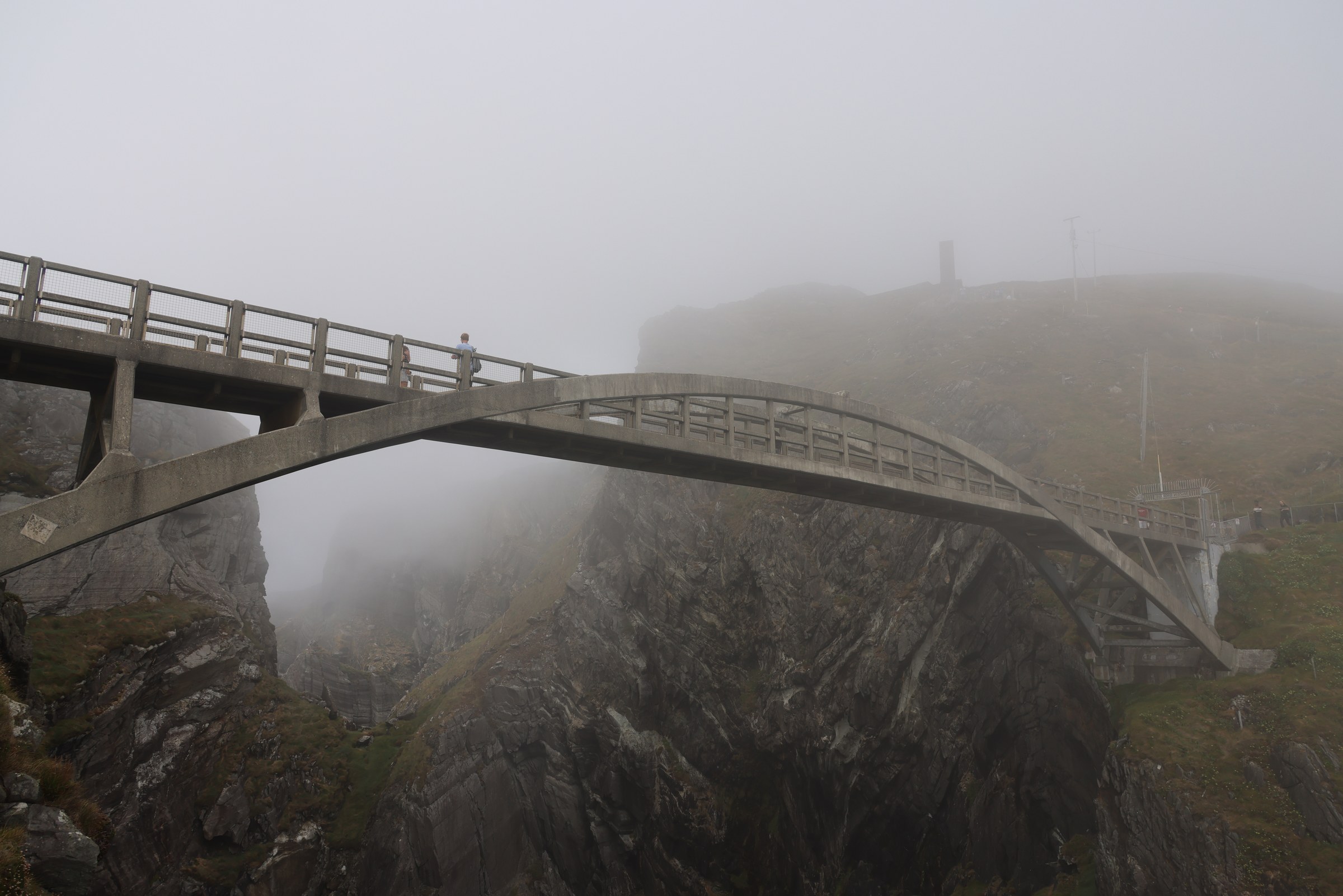
The signal station is technically connected to the mainland rather than sitting on an island, but you need a bridge to cross the sea gorge. The bridge has a clear span of about 50 metres and stands roughly 45 metres above the waves.
Not such a great view today.
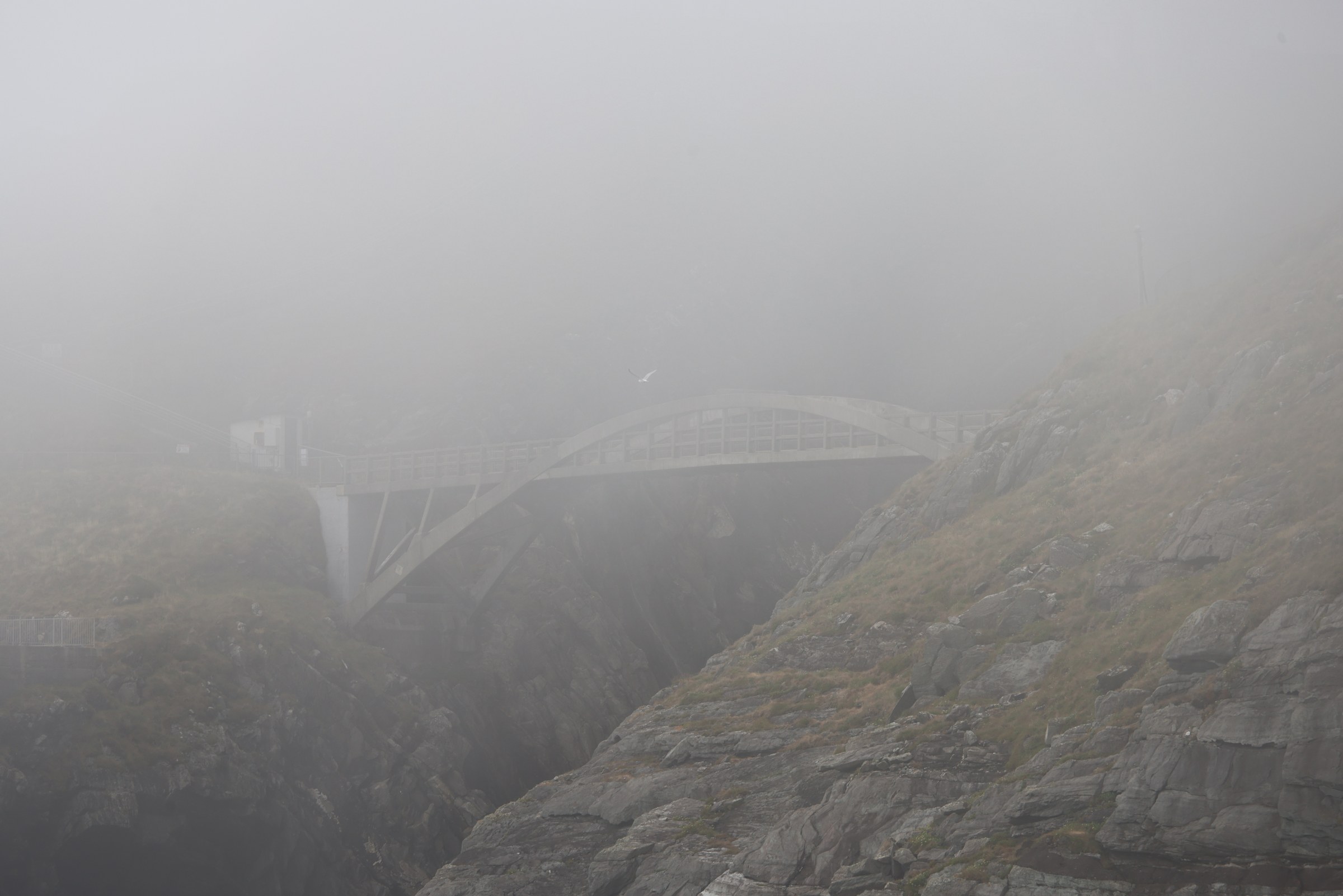
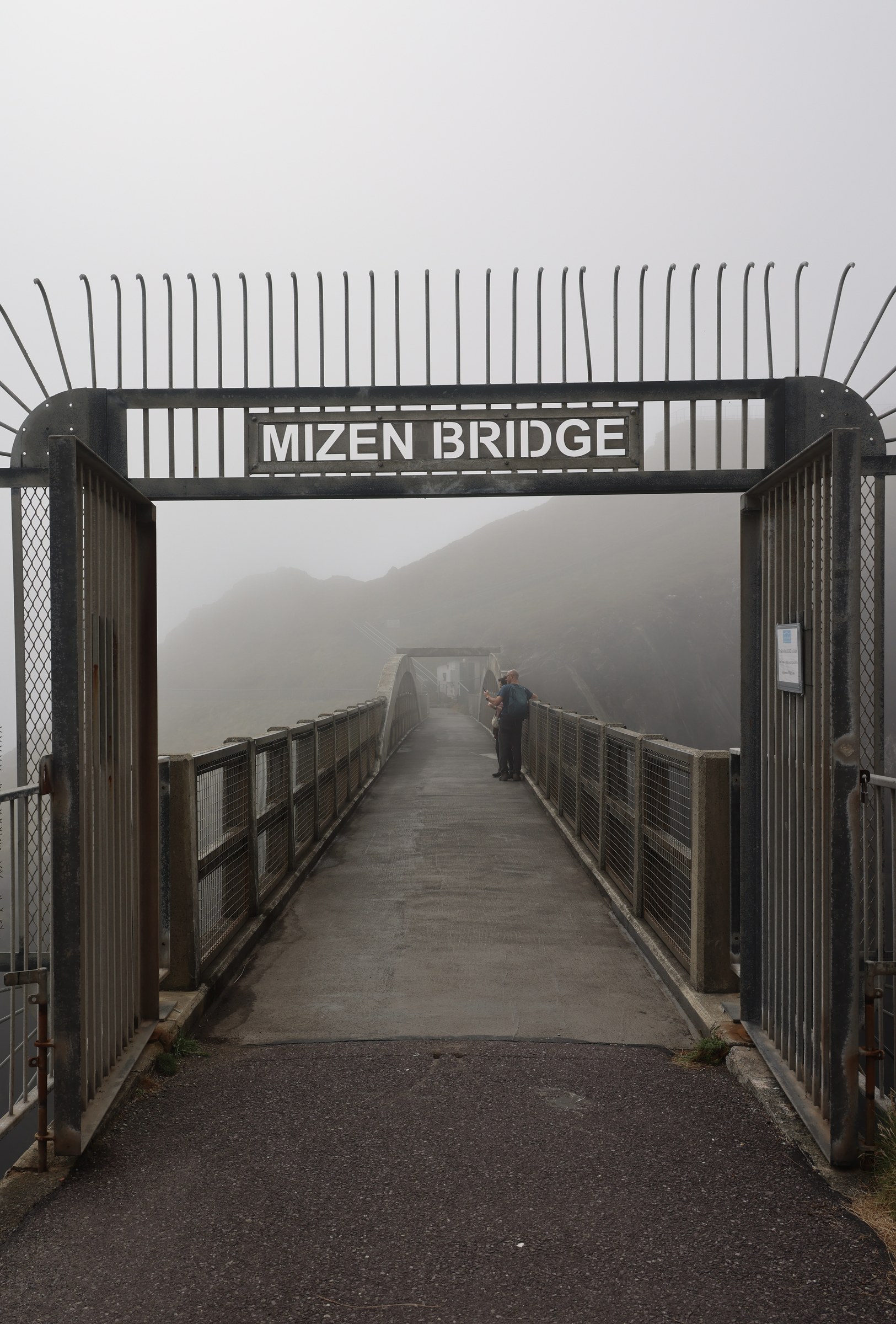
The present bridge, a replica of the 1909 original, was completed in 2010, so there was no fear of it falling down. But the “Keep out… no, really… KEEP OUT” gate at its entrance looked a bit forbidding.
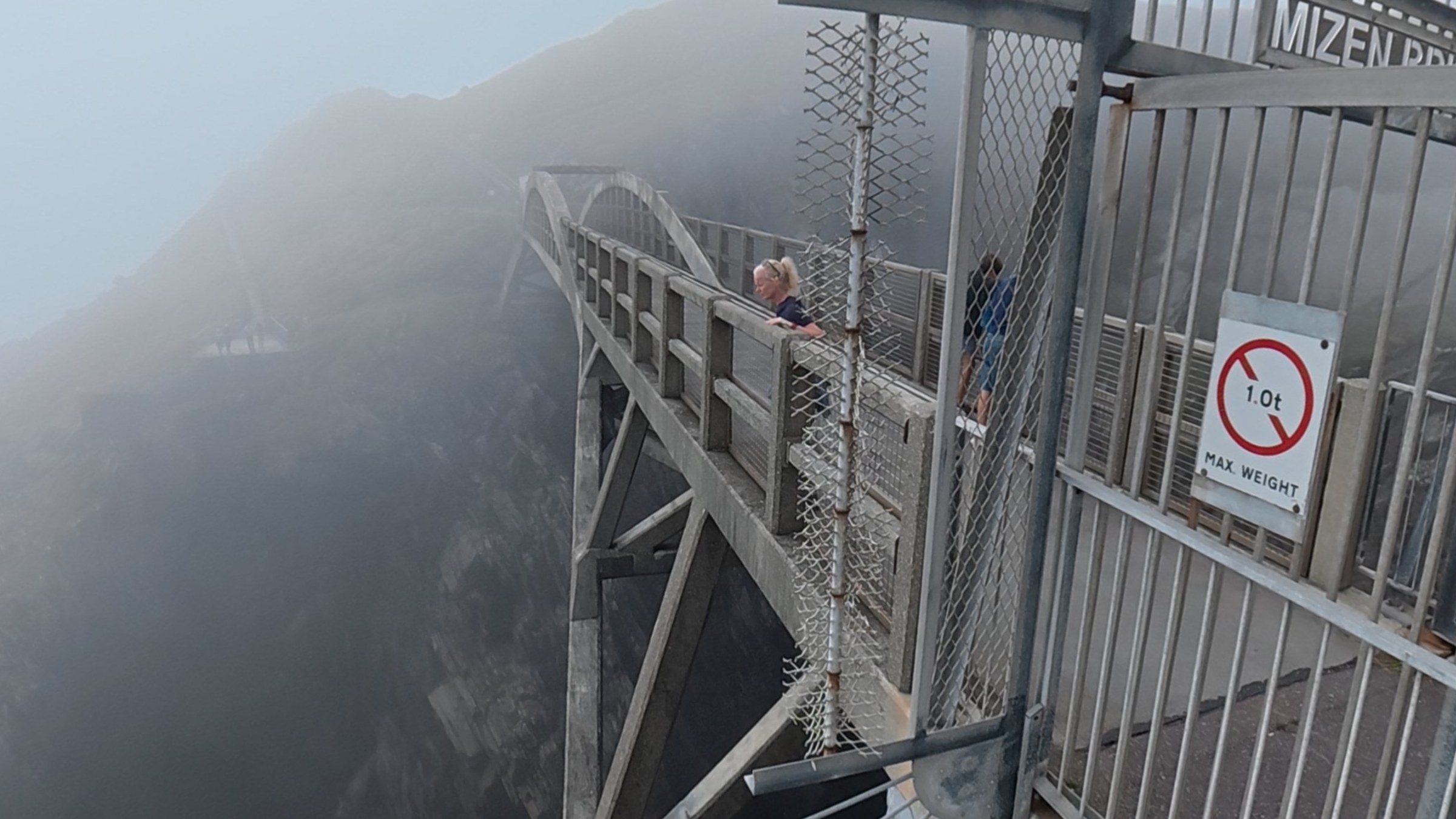
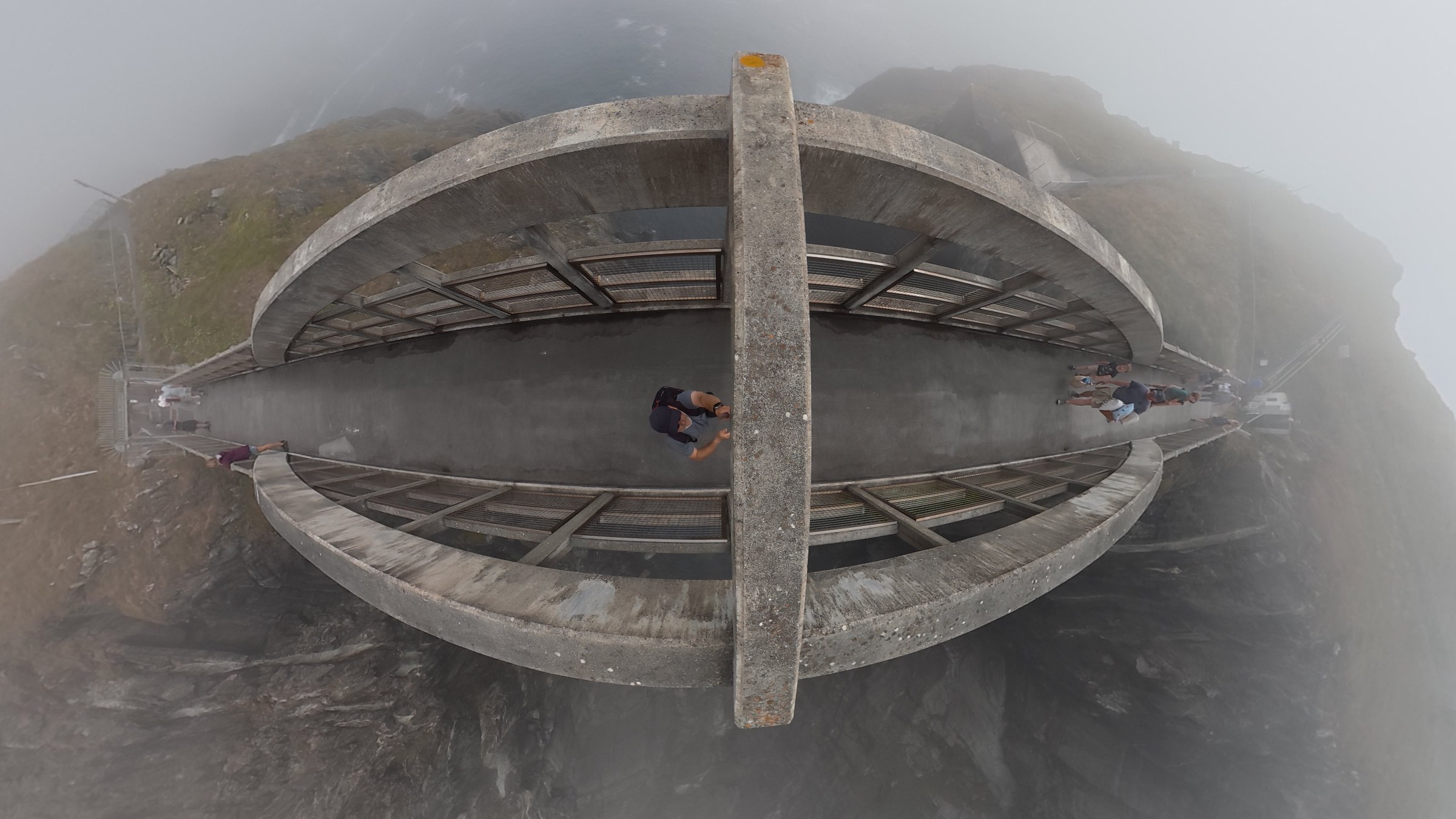
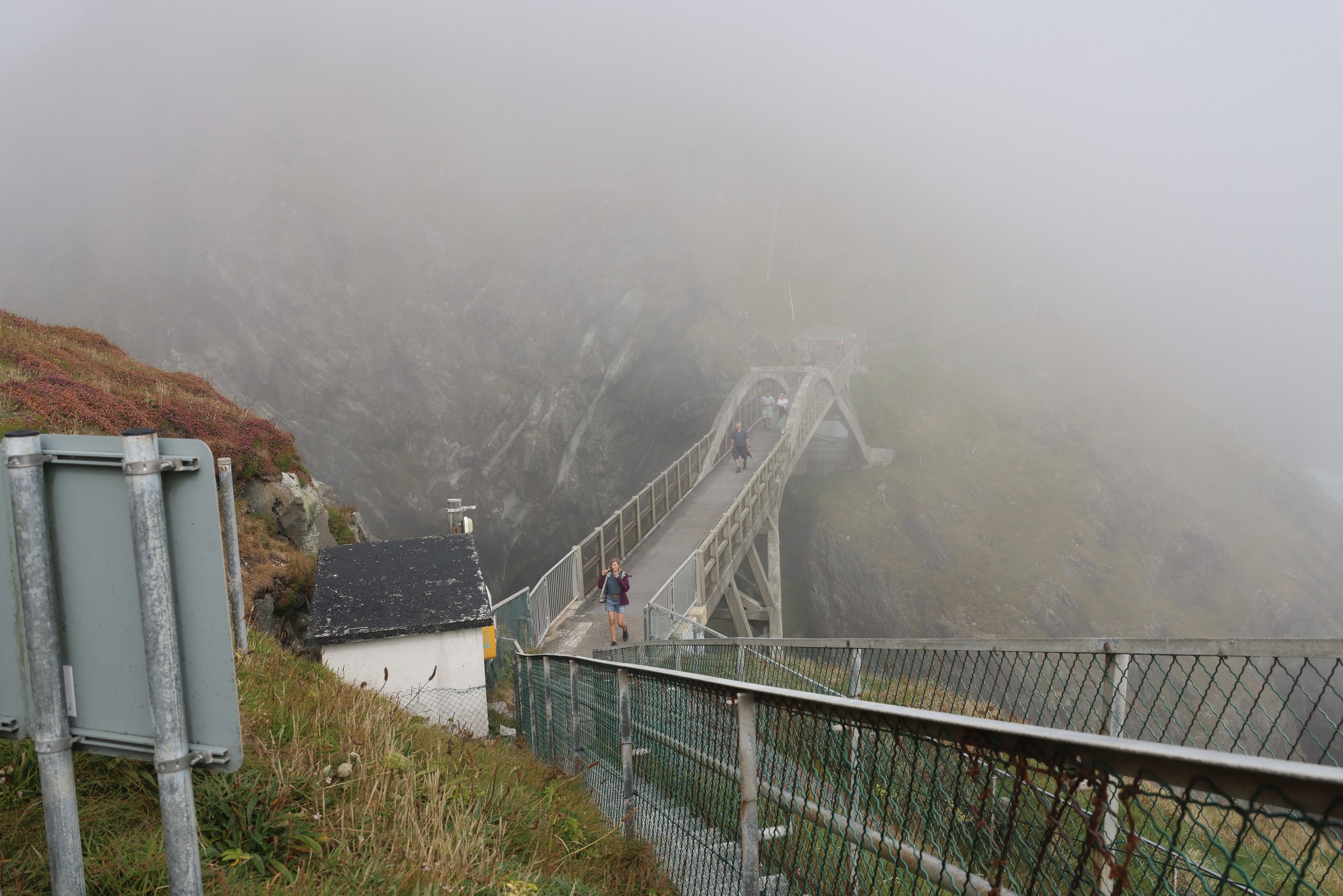
Once you get across the bridge you can head down to you left where there’s another walkway that takes you to a viewing platform looking back beneath the bridge.
Viewing Platform
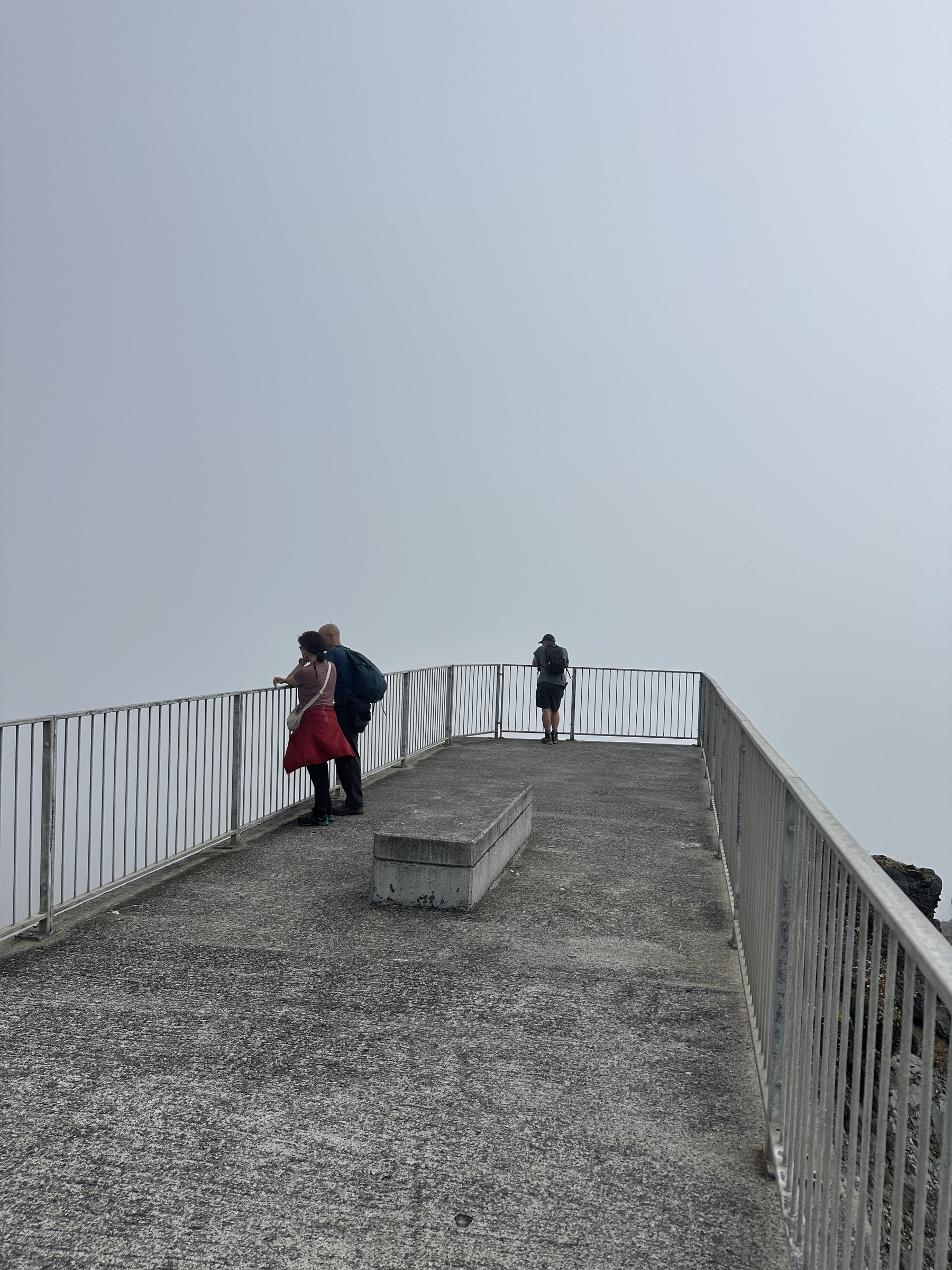
Above the level of the bridge and signal station, which lies farther along the site, there’s a viewing platform. I’m not sure what else to call it, but it’s a long rectangular platform stretching from one side of the site to the other. It’s a LONG WAY UP and gives great views across the site.
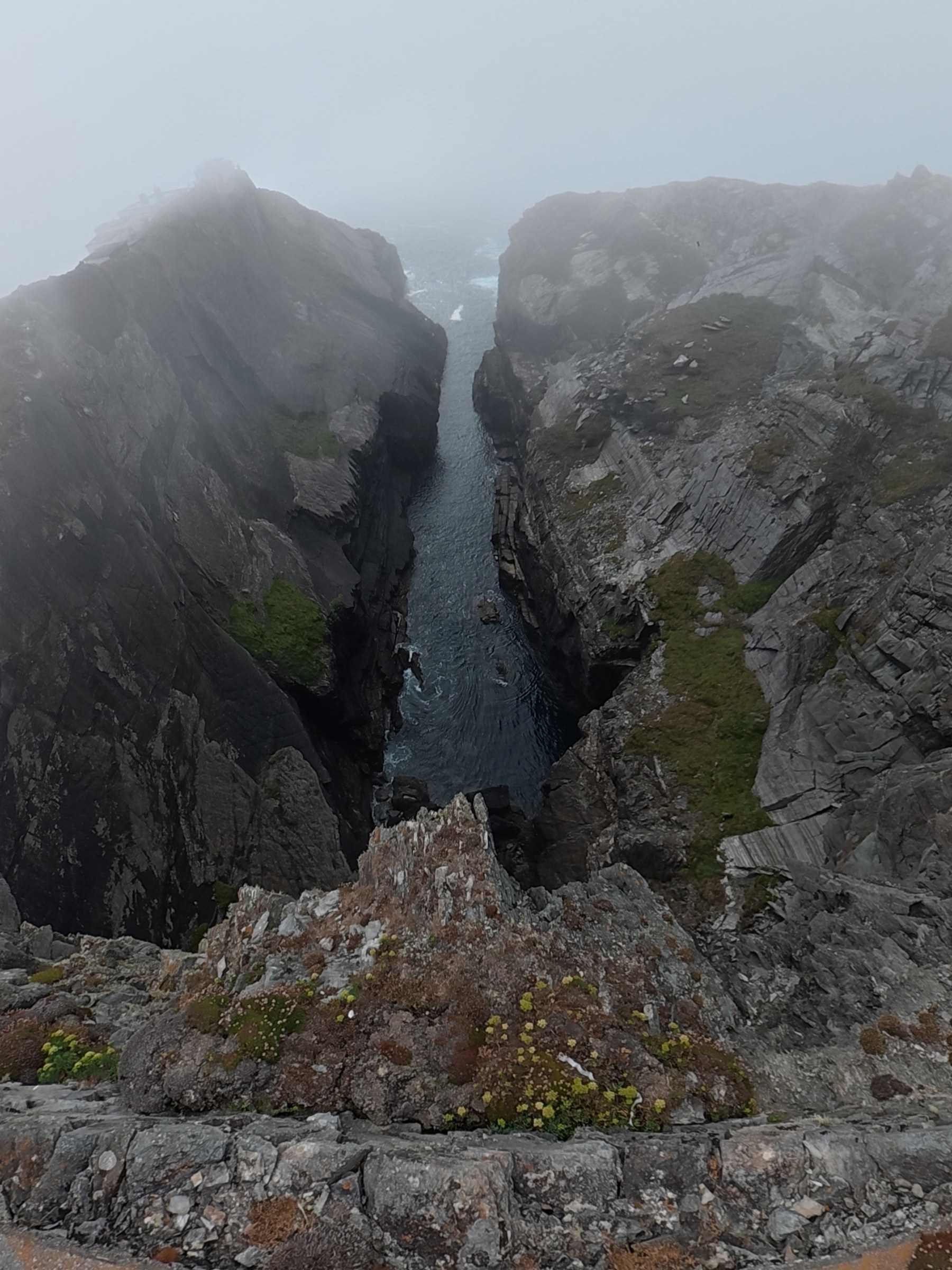
Signal Station
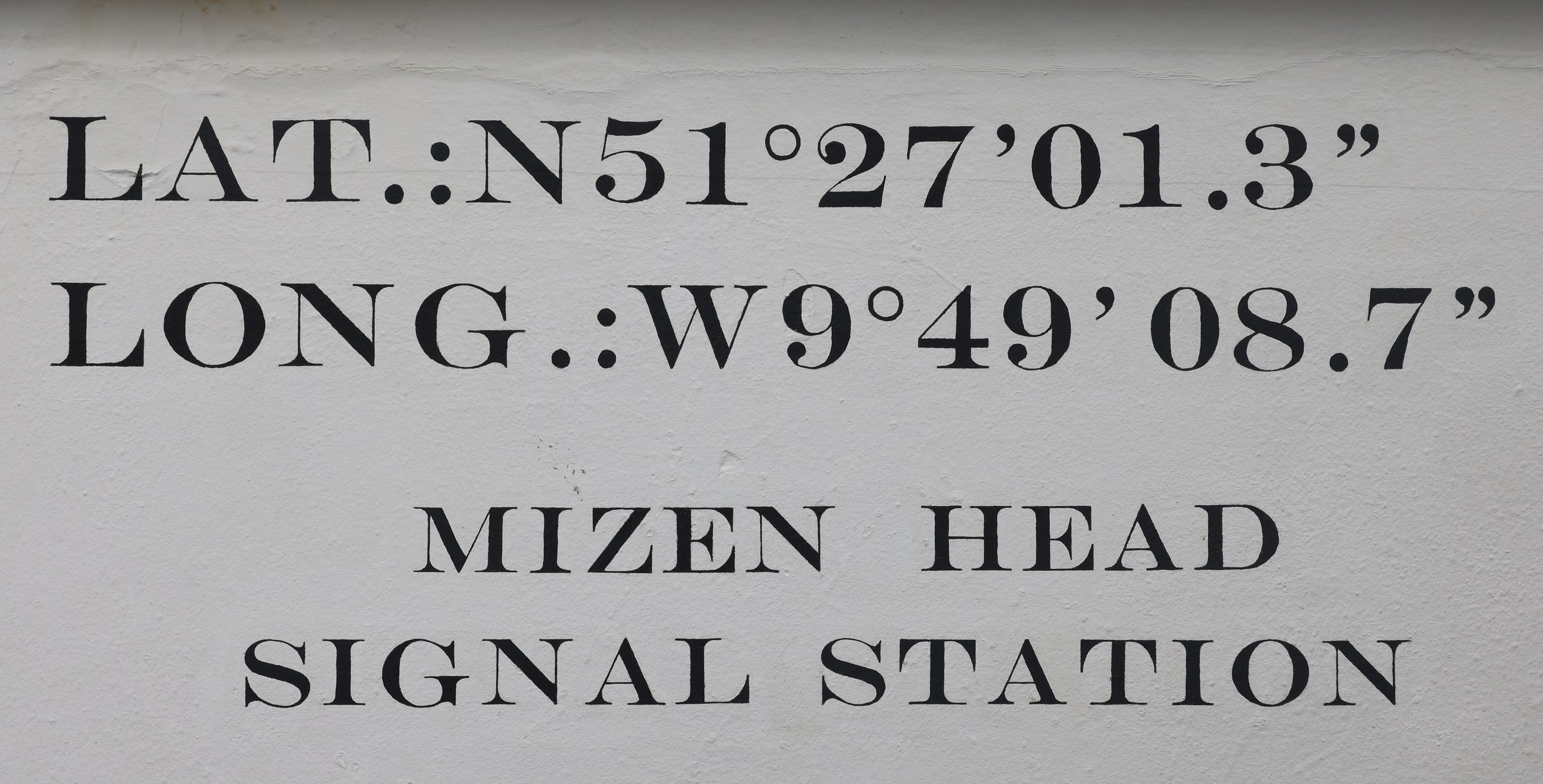
The best informational display on the site was at the signal station, which is where the latitude and longitude were marked on a plaque shown in the picture below. In the generator and engine room, they were showing a film, probably made in the 1950s, about the lighthouse — complete with Cholmondeley-Warner-style narration. Sue and I sat engrossed and watched it for about ten minutes. It contained lots of great stills showing the lighthouse’s construction, video of the resupply work and how the lighthouse network operated.
And that was it for Mizen Head and the signal station museum. We wandered back to the entrance and café. The place is definitely worth a visit, even with visibility in the 100m or so range. You do get a sense of what it might have been like to work at this place and the lighthouse over 100 years ago, but it woulf have been better for us in the sun. Didn’t see any dolphins or whales (both of which you can see) but we did see a seal, honest!
The café was OK, though the coffee was actually really good. There were gluten-free options for the morning if we were still around when it opened at 10.
Mizen Head Visitor Centre loos: soap, hot water and a loo seat… but only 5.5/10.
The 2026 Eclipse
That evening, we were due an eclipse. Not a total eclipse here, but close: the path of totality passed just to the west of Ireland, and the eclipse at Mizen Head had a magnitude of 0.976. That meant the Moon’s apparent diameter covered 97.6% of the Sun’s — not that 97.6% of its area was obscured.
BUT…
The weather had been bad since we arrived and wasn’t improving. Every once in a while, the clouds would thin and we’d see the Sun through them. This made me quite hopeful: if that happened during the eclipse, we’d see the Moon covering at least part of the Sun. We still would not have looked at it directly or photographed it without a proper solar filter, though; apparently cloud is not safe eclipse protection.
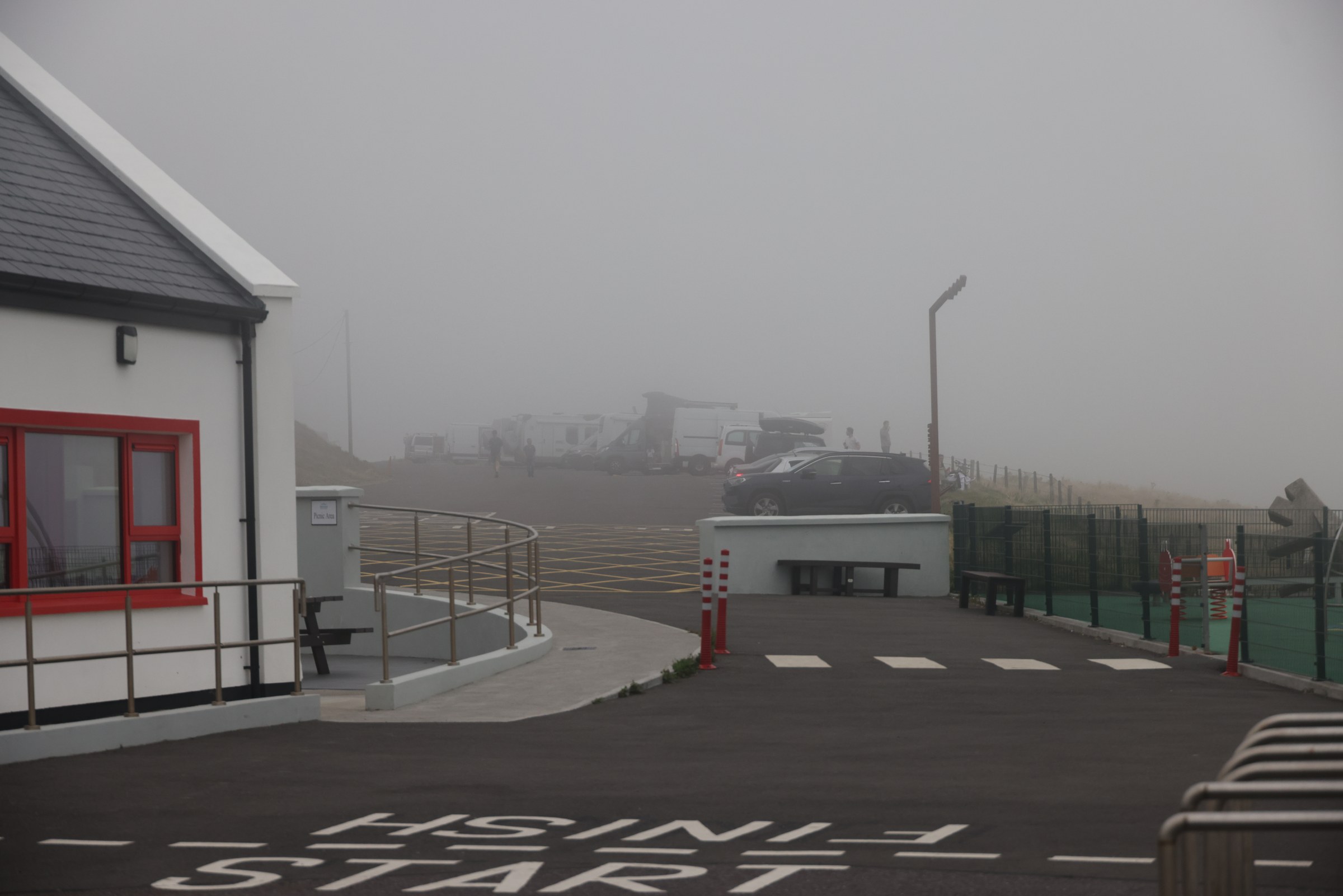
As we waited for the eclipse, we met a bloke from Milton Keynes who had retired from the railways. He had owned a bungalow in Genloo for 14 years. He had a 5.5-metre WildAx that seemed to have all the stuff you’d want, but he wasn’t happy with the build quality. He gave us a bunch of maps and tourist bumf. About half of it was useful, but he’d already said it wasn’t all any good and to ditch the rest.
Anyway, we waited for the eclipse, but the cloud just got worse. All we saw was the light dimming and that spookiness you get from both the strange light and the fact that all the birds stop flying around.
I did set up an action camera on the roof of the van. I programmed it to make a two-hour time-lapse, taking an image every 30 seconds, and set the exposure manually. That meant the camera wouldn’t adjust its image settings as it grew darker during the eclipse, so the time-lapse should dim and then brighten again. If the cloud thinned, we might even capture the eclipse itself.
An image every 30s for 2 hours gets you an 8 second video at 30fps.
I didn’t know what to set the manual exposure to, so I simply exposed it correctly for the normal light and hoped it would show some dimming. It probably became a bit too dark, but it perfectly demonstrated how much light we lost. Our eyes—and even the iPhone selfie we took—adjusted to the low light and didn’t really convey the full dimming effect. The action camera, set to manual, certainly did.
The Osmo was set to manual exposure at ISO 100 and 1/500 second, so automatic exposure wouldn’t ruin the sense of it getting dark. I probably could have used 1/250 second so it didn’t go quite so dark, but you only get one go at these things. I got it about right to show that it really did grow dark during the eclipse.
The selfie we took didn’t show the darkening that our eyes perceived. The picture was taken at the height of the eclipse and should have shown the eclipsed sun over our shoulders. It became a bit spooky, and the birds all landed and stopped singing, but it didn’t get dark like it did during the 1999 eclipse.
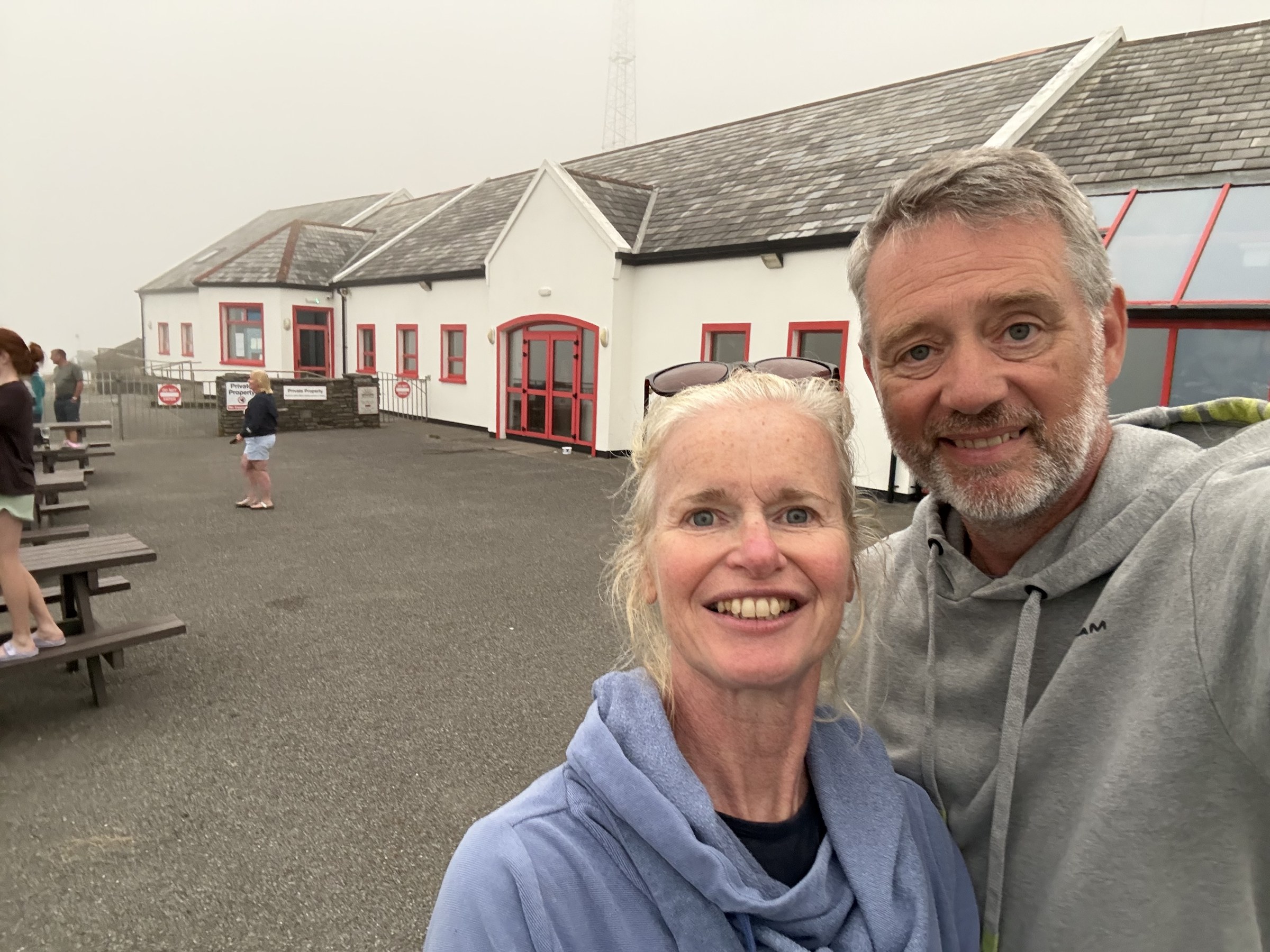
Even if the clouds had lifted, the visitor centre and the hill behind it would probably have obscured the eclipsed Sun as it set. If there had been any chance of the cloud lifting, we’d have cycled to another cove to watch the eclipse from there.
Everyone else we were messaging on WhatsApp seemed to be getting much better shots (they actually got shots) of the eclipse in the UK and France.
That was the non-eclipse for us. 1/10 🙁
Other Notes
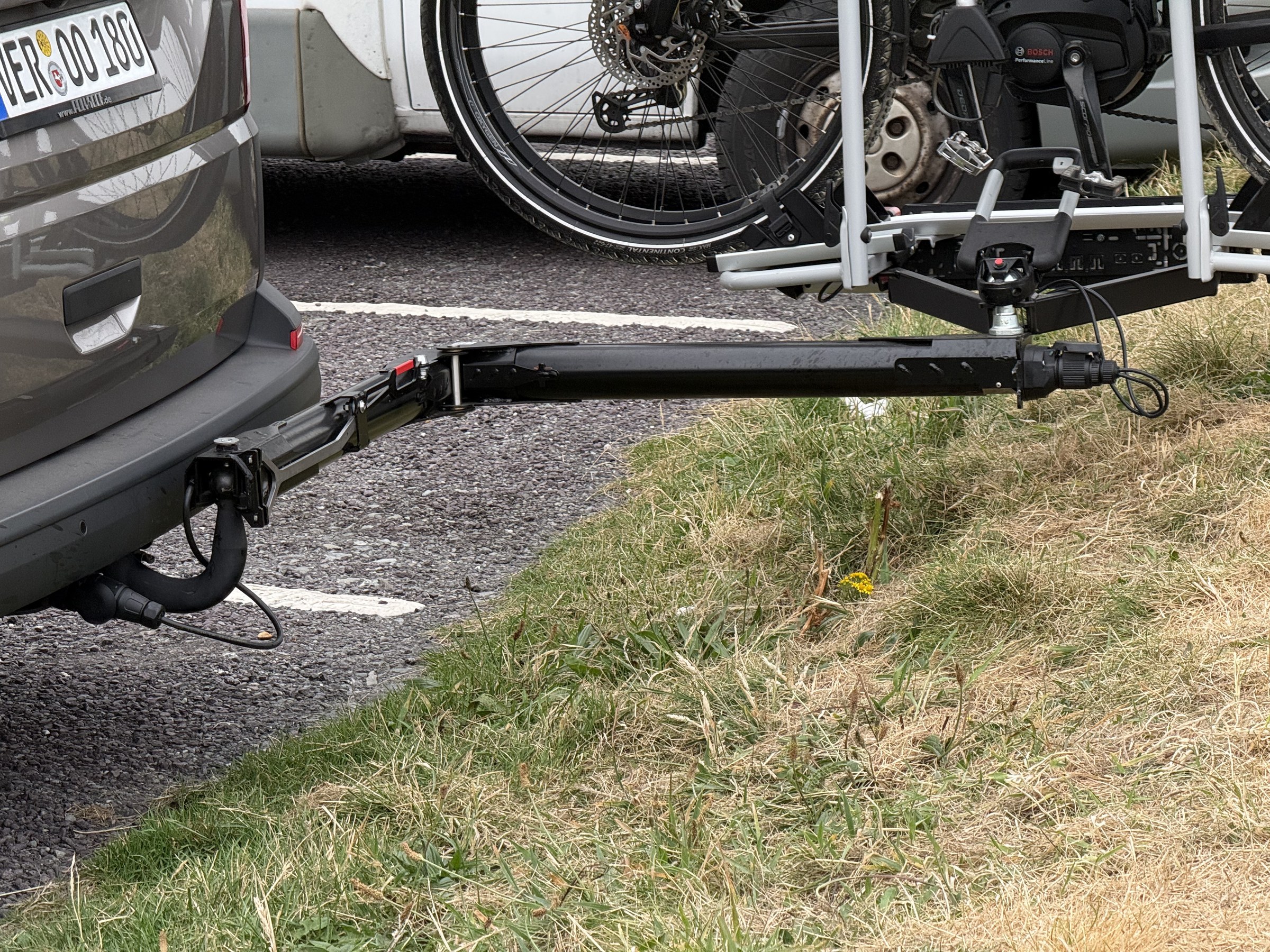
The German Grand California next to us had a Space Maker swing-away arm between its towbar and bike rack. Not cheap, but it looked really good and might solve a problem that’s been bugging me about the new van: we can’t open the rear doors with the bikes attached.
The Mizen Head car park probably has about 40 spaces. There were only a few campers when we arrived at two, and the car park was about 60% full, mostly with regular cars. By bedtime, there were probably around ten vans parked for the night and no cars.
J

Leave a Comment